

Why Do Tree Roots Target Sewer Pipes?
Tree roots target sewer pipes because the pipes leak tiny amounts of moisture and nutrients through joints and hairline cracks. Roots can sense that moisture through the soil and grow toward it. Once they find an opening, they push inside and keep expanding.
According to a U.S. Forest Service research study, tree roots are responsible for more than 50% of all sewer blockages. At The Sewer Kings, we remove roots from sewer lines every week across South Jersey. Visit our root removal from drains page for service details.
Which Trees Cause the Most Sewer Line Damage?
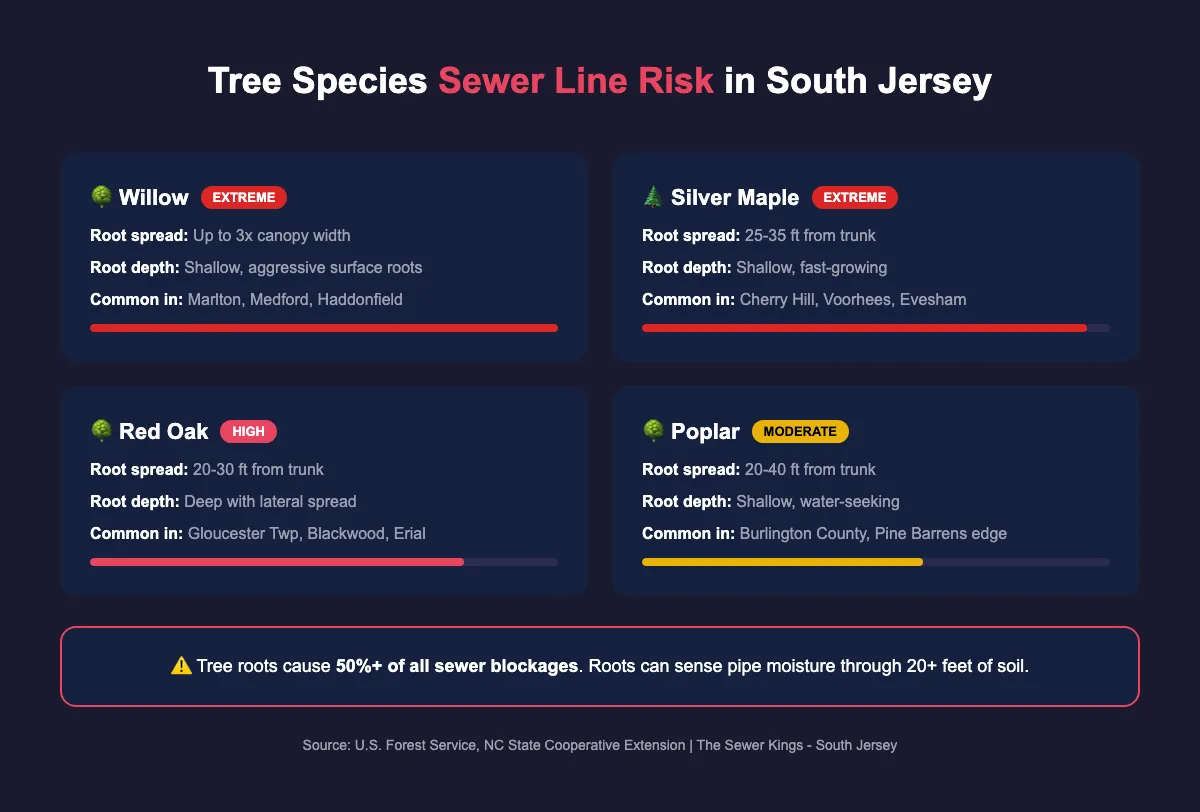
Willow trees cause the most damage because their root systems are aggressive and spread far from the trunk. Silver maples are a close second with fast-growing, shallow, wide-reaching roots. Oaks, poplars, and elms also cause frequent sewer line problems.
In South Jersey, the biggest offenders are red oaks, silver maples, and willows. These species are common across Evesham, Medford, Mount Laurel, and Haddonfield. Many of these neighborhoods were built in previously forested areas, and the trees left standing during construction are now 40 to 60 years old.
Even smaller ornamental trees can cause damage if planted close enough to the pipe. The general rule is that a tree’s roots extend at least as far as its canopy, and many extend much further.
How Do Roots Actually Get Inside the Pipe?
Roots enter through joints where two pipe sections meet. Older clay and cast iron pipes have joints sealed with mortar or rubber gaskets. Over time, these seals degrade. The joint separates slightly, and roots find the gap.
According to NC State Cooperative Extension, clay tile pipes installed through the late 1980s are especially vulnerable because they have more joints per linear foot. PVC pipes with properly glued joints are more resistant, but a poorly installed joint or an impact crack can still let roots in.
Why Is Root Intrusion So Common in New Jersey?
South Jersey’s sandy loam soil drains well but does not create much resistance to root growth. Roots spread easily through this soil type. Combined with high water tables in parts of Burlington and Camden counties, roots have extra motivation to seek out underground moisture sources.
The freeze-thaw cycles common in the mid-Atlantic shift soil and crack pipe joints, creating new entry points for roots every winter. Many homes across South Jersey have mature trees within reach of the sewer lateral that were planted decades before the homeowner moved in.
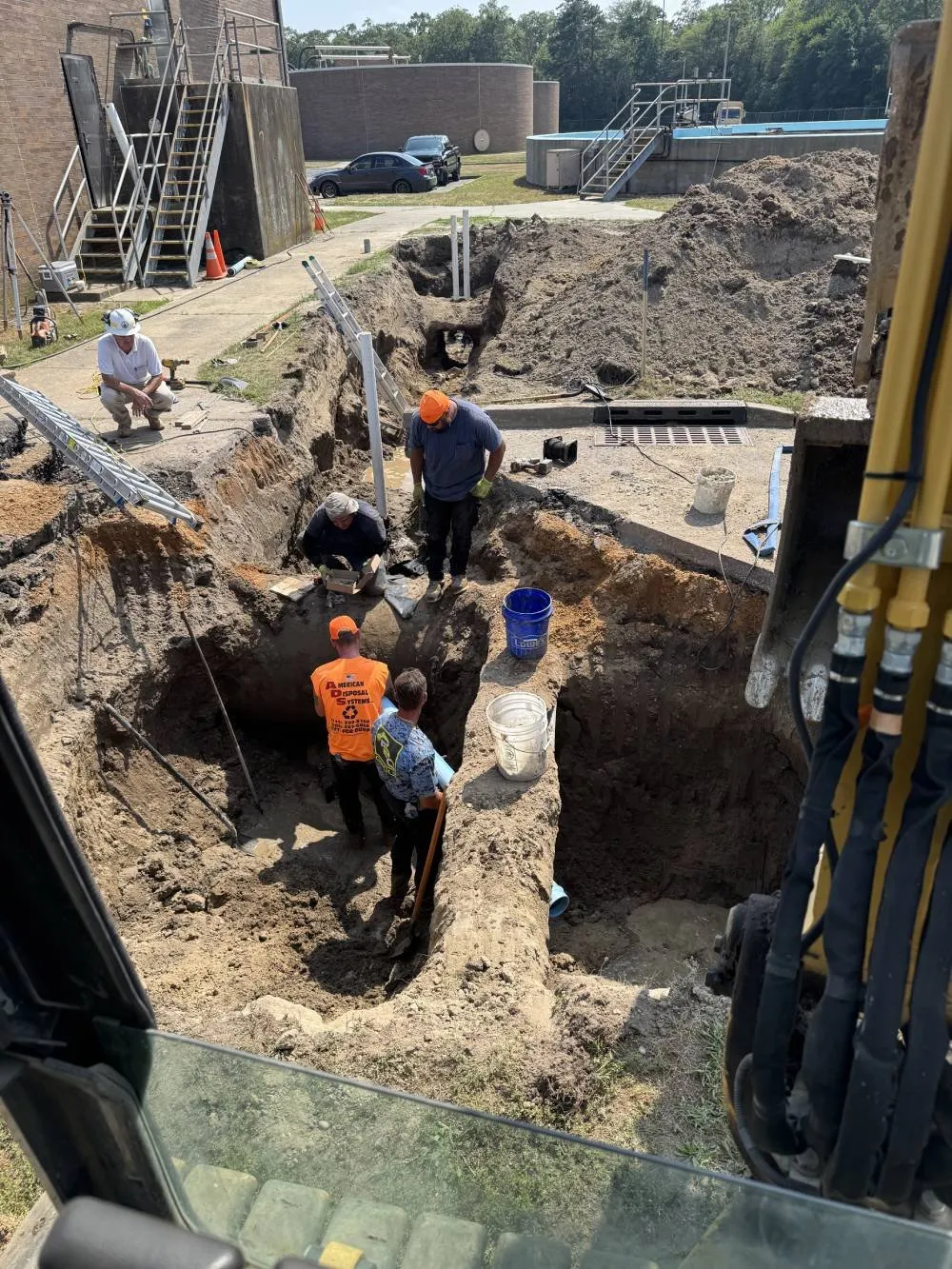
We worked on a South Jersey home where the property had root intrusion and a sewer belly. The homeowner had been snaking every few months. After we cleared the line with hydro jetting and completed the excavation repair, the problem stopped completely.
How to Spot Root Intrusion and Protect Your Pipes
Slow drains that get worse over time are the most common sign. You may also hear gurgling sounds from toilets or drains. Frequent backups that keep returning after snaking are a strong indicator. In advanced cases, you may notice a foul smell in your yard or patches of unusually green grass over the sewer line.
Your pipe material is one of the biggest factors in root intrusion risk. Clay pipes have mortared joints that deteriorate over time. Cast iron corrodes from the inside. Orangeburg pipes become soft and deformed after about 50 years. PVC with properly glued joints is the most resistant.
If you suspect root damage, read our guide on how to tell if your sewer line needs replacing. For long-term solutions, check can a sewer line be replaced without digging and how often sewer lines need replacing.
Frequently Asked Questions About Tree Roots in Sewer Lines
Yes. Roots that enter through a small crack or joint can grow thick enough to break the pipe from the inside. Over time, expanding roots widen cracks and can cause sections to collapse. Early detection with a camera inspection is the best way to prevent this.
Not always. Removing roots from the pipe and applying a chemical root barrier can manage the problem without cutting down the tree. If the tree is very close and root intrusion keeps recurring, removal may be the most practical long-term solution.
Roots can regrow into a sewer line within one to three years after mechanical removal. South Jersey’s sandy loam soil and mature tree canopy mean regrowth can be faster in areas like Gloucester Township, Erial, and Blackwood. Regular camera inspections help you stay ahead.