

How Does Pipe Relining Work?
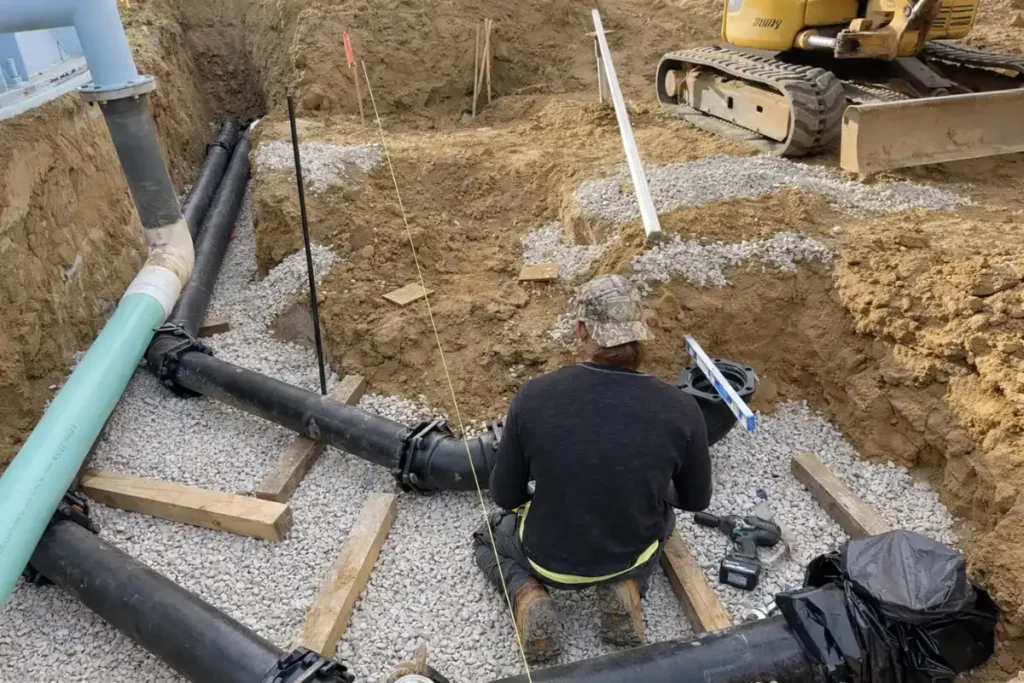
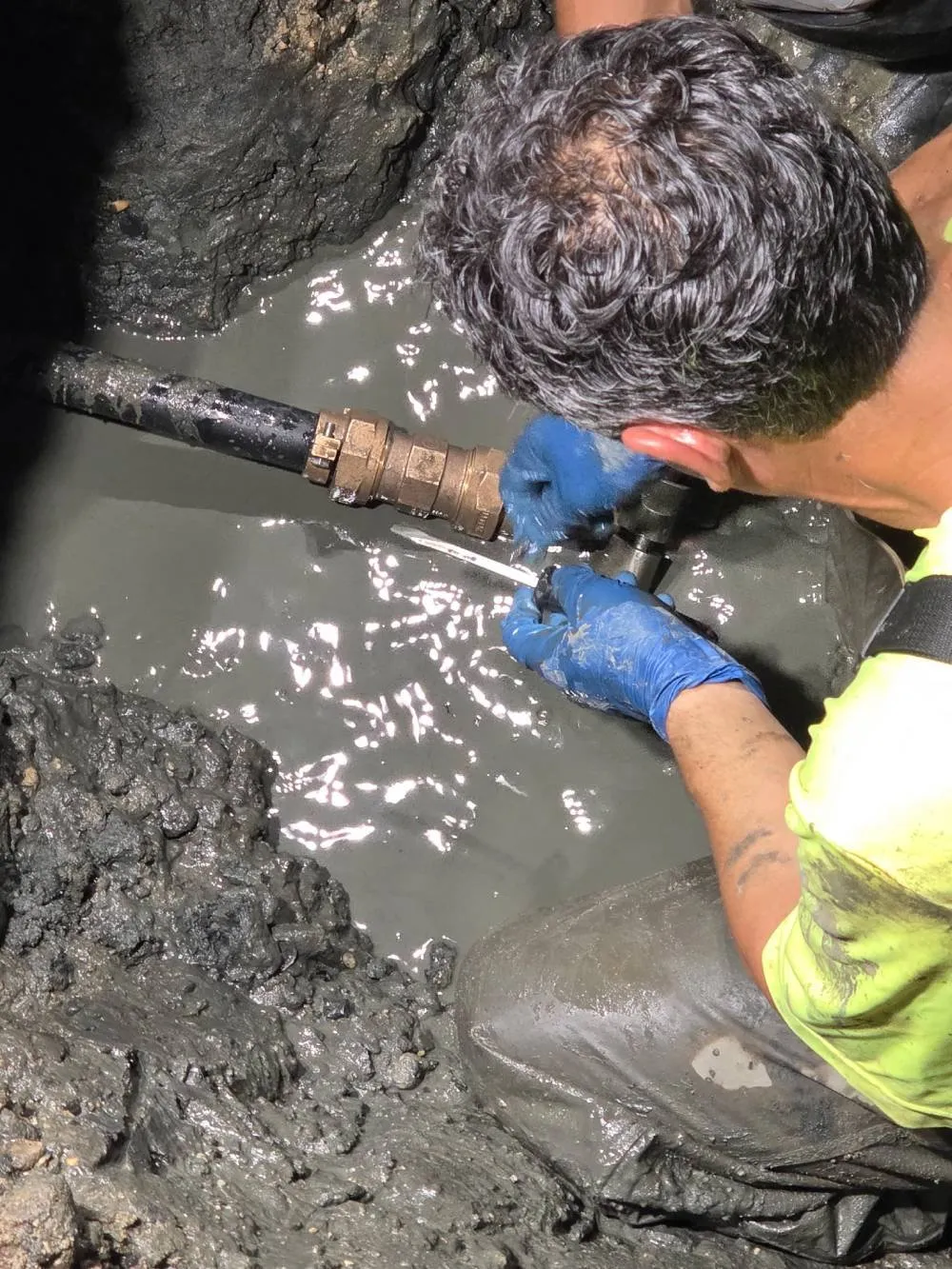
Pipe relining works by inserting a flexible liner coated with epoxy resin into your existing damaged pipe. The resin hardens and creates a new pipe inside the old one. The result is a smooth, jointless pipe that can last 50 years or more. No trench, no excavation, no torn-up yard.
The technical name is cured-in-place pipe, or CIPP. According to Wikipedia’s CIPP overview, CIPP has been used for decades on municipal systems and is now widely available for residential repairs. The Sewer Kings offers drain relining for homes across South Jersey.
What Are the Steps in a Pipe Relining Job?
Camera Inspection and Cleaning
Liner Installation and Curing
For a closer look, see our guide on pipe bursting explained.
How Much Does Pipe Relining Cost and How Long Does It Last?
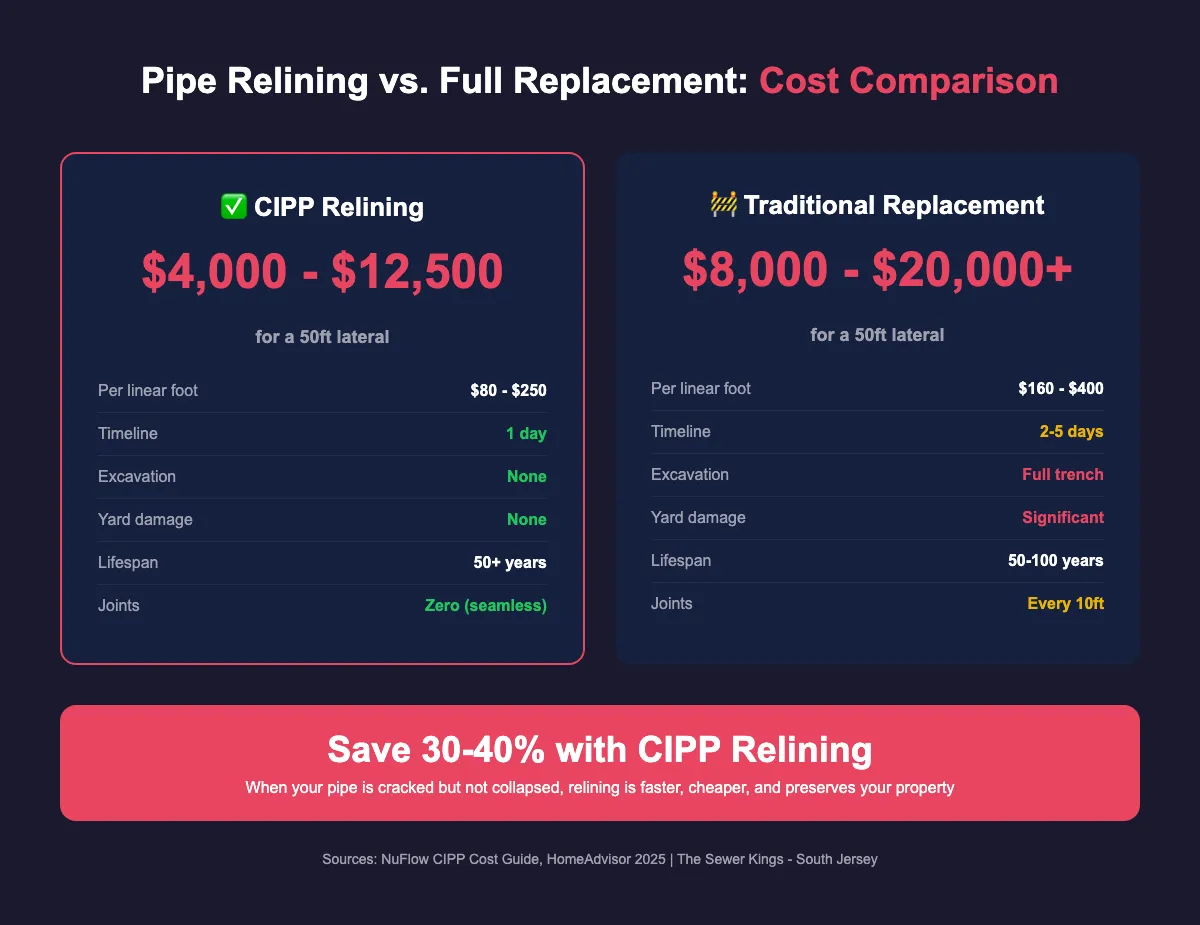
Residential pipe relining typically costs $80 to $250 per linear foot for standard 4-inch to 6-inch diameter pipes. According to NuFlow’s CIPP cost guide, CIPP lining saves about 30-40% compared to traditional dig-and-replace methods.
For a typical 50-foot residential lateral, that translates to $4,000 to $12,500 versus $8,000 to $20,000+ for full excavation and replacement. CIPP liners are engineered for longevity and typically exceed a 50-year lifespan. Many manufacturers offer 50-year warranties.
Why Is Pipe Relining a Good Fit for New Jersey Homes?
Many homes in South Jersey were built with clay or cast iron sewer pipes in the 1950s through 1970s. These materials degrade over time but are often still structurally intact enough for relining. Clay pipes develop cracks at the joints. Cast iron corrodes from the inside out. Both respond well to CIPP lining.
South Jersey properties in Evesham, Cherry Hill, Voorhees, and Haddonfield often have landscaped yards, mature trees, and paved driveways directly over the sewer lateral. Relining avoids all that disruption.
New Jersey’s freeze-thaw cycles put constant stress on underground pipes. A relined pipe has no joints. The continuous interior eliminates the weak points where most failures begin, making relining especially effective in the mid-Atlantic climate.
You can also read how lining compares to pipe bursting.
Is Pipe Relining Better Than Replacement and Is Your Pipe a Candidate?
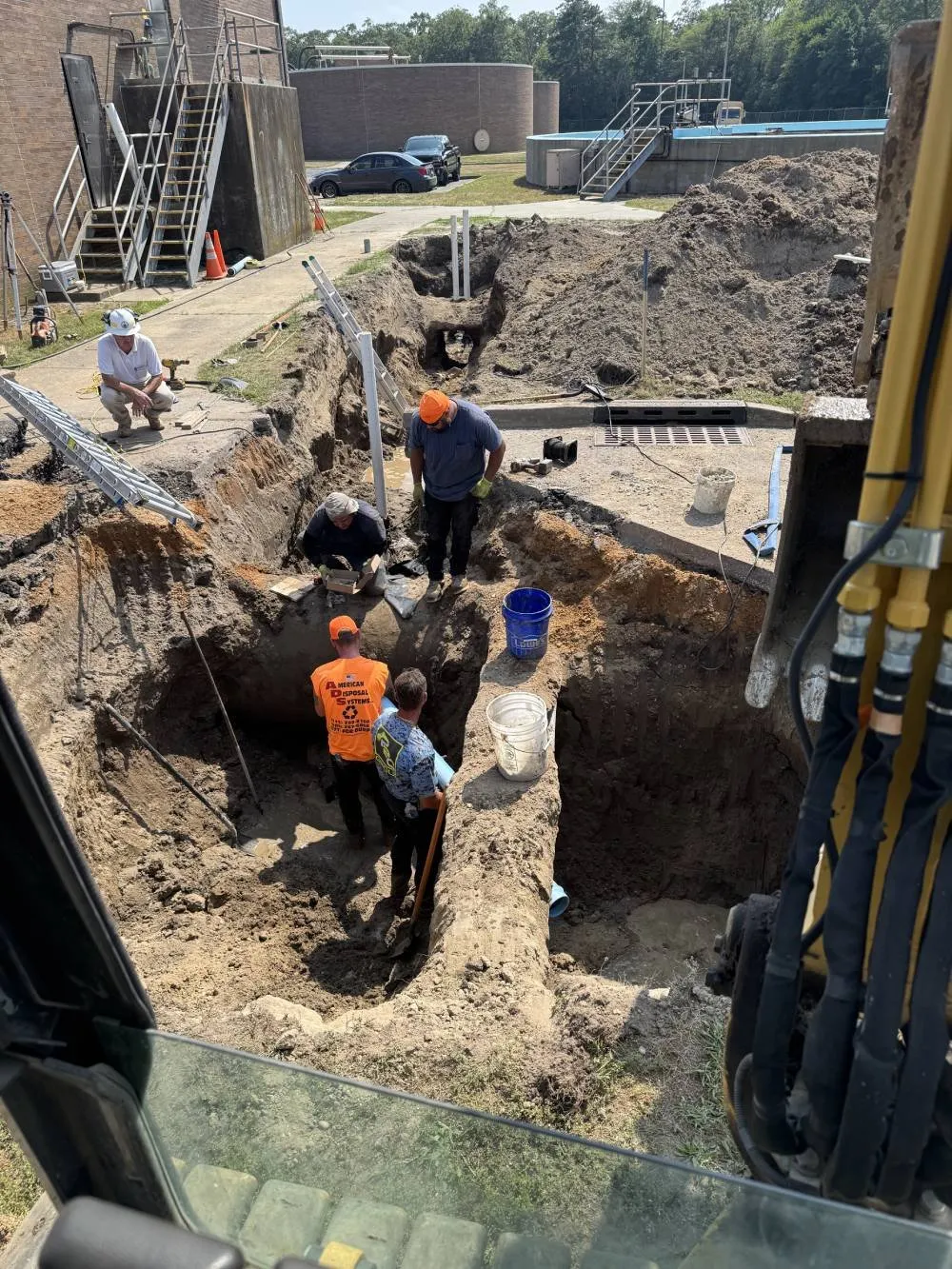
For pipes that are cracked but still structurally intact, relining is usually the better option. It costs less, takes one day instead of several, and avoids tearing up your property. The relined pipe has no joints, which eliminates the weak points where most failures and root intrusions begin.
Relining does not work for every situation. Pipes that are fully collapsed, severely misaligned, or have large sections missing need full replacement. Orangeburg pipes, common in South Jersey homes from the 1950s and 1960s, usually cannot be relined because they collapse under their own weight.
For more on costs, read our detailed breakdown of how much it costs to line a sewer pipe. For the national numbers, see what drain relining costs per foot. If you want to compare trenchless options, check can a sewer line be replaced without digging. And if you are unsure about coverage, read does insurance cover sewer line replacement.