

Can Trenchless Sewer Replacement Be Done in Winter?
A failed sewer line does not wait for spring. Here is how cold weather changes the job, and how much it does not.
Yes, Winter Work Is Possible
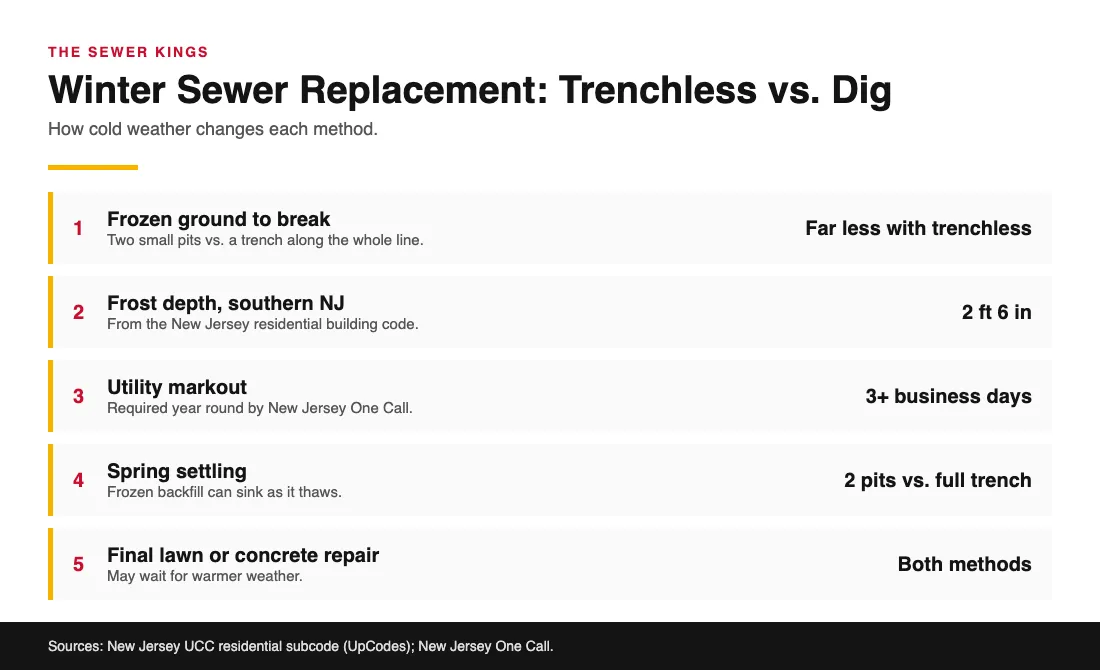
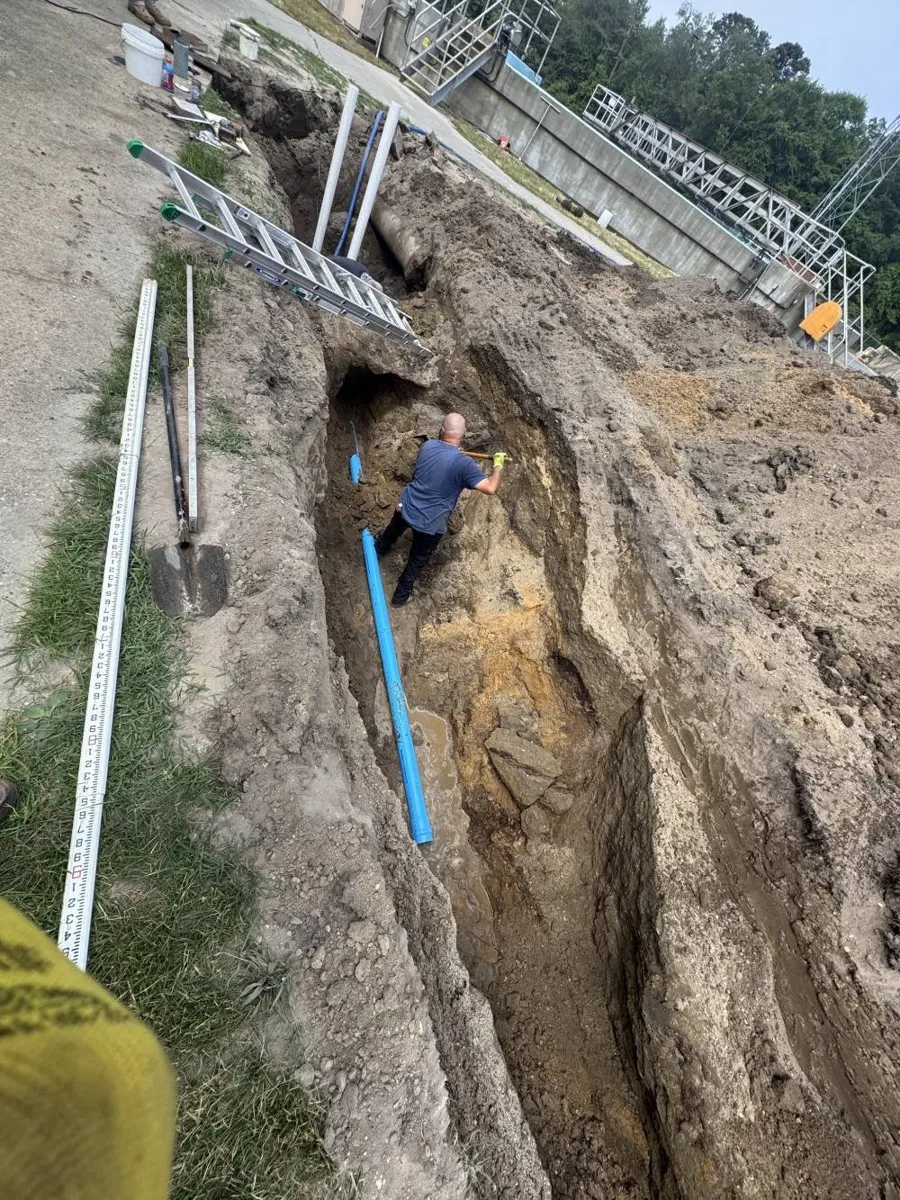
Trenchless sewer replacement can be done in winter, and it is often easier in the cold than a full dig. Pipe bursting only needs two small pits, so there is far less frozen ground to break through.
Cold weather still changes a few things. Frozen topsoil, short days and surface repairs that cannot be finished until spring all play a part.
This guide covers what changes and what to expect. For the service itself, see our trenchless sewer line replacement page.
How Cold Weather Affects a Sewer Job
Frozen ground is a shallow layer
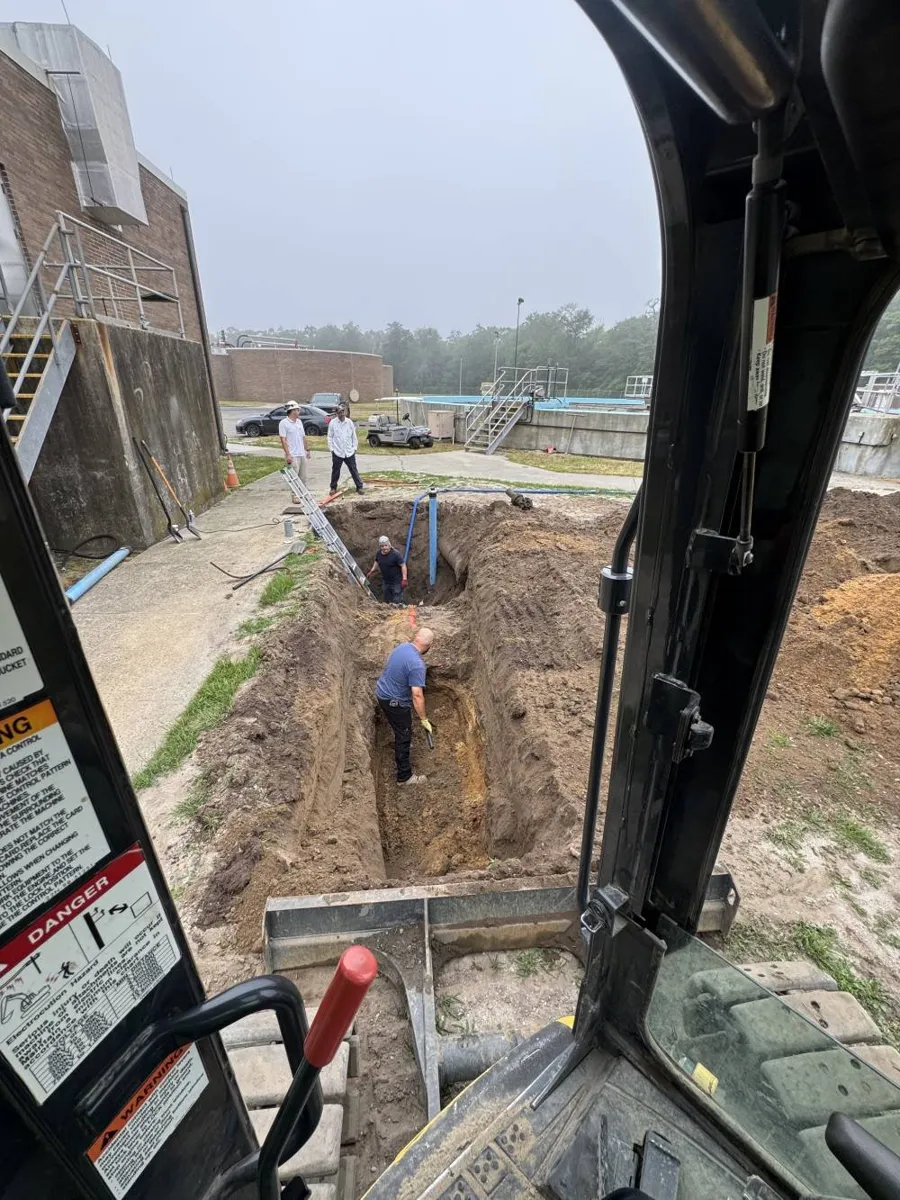
Frost reaches down from the surface, but not forever. New Jersey’s building code plans for frost reaching about 2 and a half feet down in the southern half of the state. Once the crew breaks through that top layer, the soil underneath digs like it does any other time of year.
Digging takes more effort
Breaking frozen soil is slower and harder on equipment. That is where trenchless has an edge. Two pits mean a small patch of frozen ground to open instead of a long trench.
Short days
Winter daylight is limited. Crews plan the longest steps, like the pull, for daylight and bring work lights for setup and cleanup.
Surface repairs may wait
Grass seed will not take in frozen soil, and some concrete work needs warmer temperatures. The pits can be backfilled and packed right away, with final lawn or concrete repair finished when the weather allows.
Safer pits in cold weather
Open pits are covered or fenced at the end of each day. Snow can hide an open hole, so marking and protecting the work area matters more in winter.
Ground thaw in spring
When frozen ground thaws, the soil can turn soft and muddy. Crews plan the pits and equipment paths so heavy machines do not sink or rut the yard.
Winter Trenchless vs. a Winter Dig
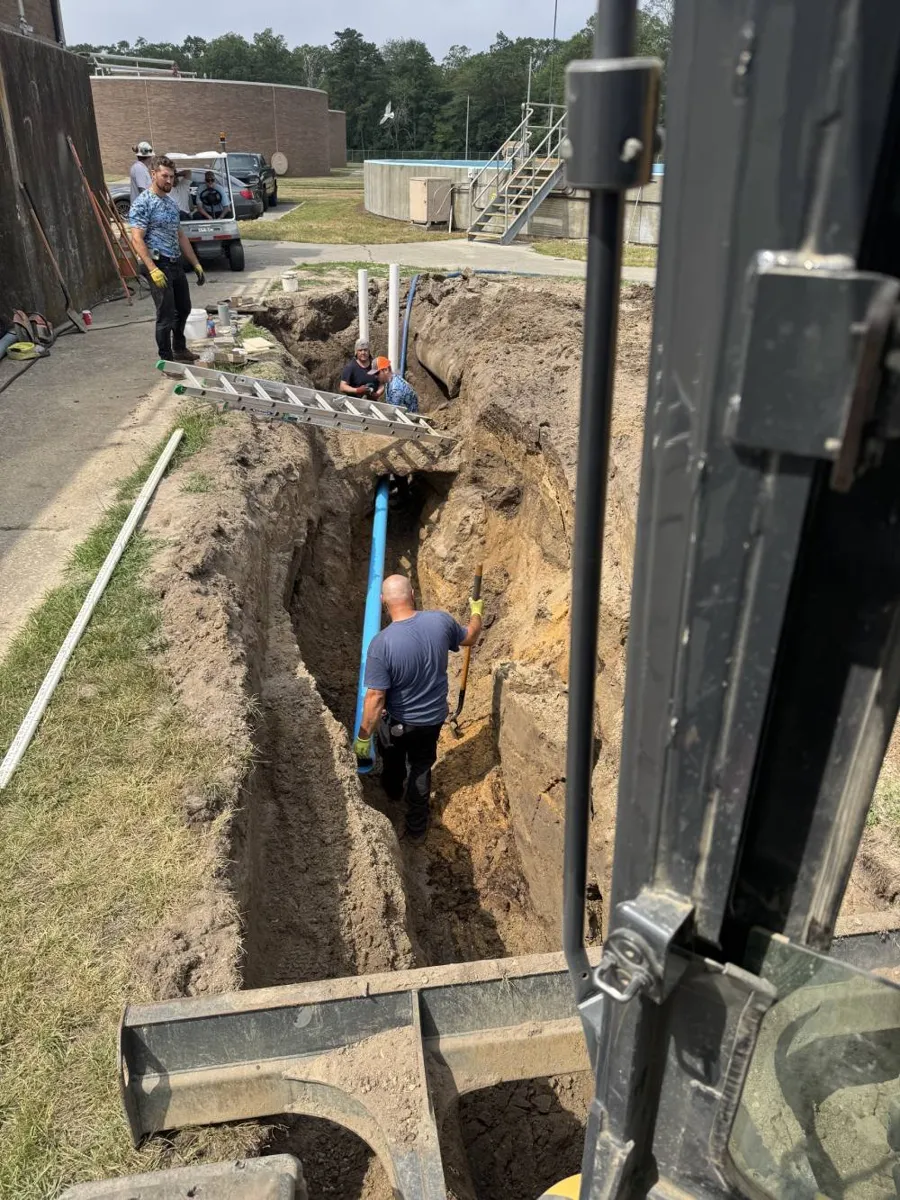
Cold weather hurts a traditional dig far more than a trenchless job. Every foot of trench has to go through the frozen layer, then get backfilled with cold soil that settles over the winter.
Frost depth in South Jersey
The New Jersey residential building code lists a frost line depth of 2 feet 6 inches for southern New Jersey, which covers Burlington County and every county south of it. Northern New Jersey is set at 3 feet.
Markout rules do not change
New Jersey One Call requires a call at least three full business days before any digging, in any season. Snow can make paint marks harder to see, so flags matter more in winter.
Less settling to fix
A long winter trench can sink as frozen backfill thaws. Two small pits leave far less ground to settle in the spring.
Water use during the job
Winter or summer, the house needs its sewer line back the same day the work is done. Plan on limiting water use while the old line is disconnected, and ask your crew when that window starts and ends.
How The Sewer Kings Handle Winter Jobs in South Jersey
Sewer lines fail in every season, and a backup in January is just as urgent as one in July. The Sewer Kings answer 24/7 across Burlington, Camden, Gloucester and Ocean counties, cold weather included.
Every winter job starts the same way as a summer one, with a camera inspection. The footage tells us if the line can be burst or needs open cut work, no matter the temperature.
Our pipe bursting rig handles lines from 2 to 6 inches wide, which covers most home laterals in the area. With only two pits to open, a winter bursting job keeps most of your yard frozen solid and untouched.
Anthony and Mark Papaneri grew up on their father’s water and sewer projects, which ran through every kind of weather. The crew still plans winter work around the ground, the daylight and the forecast. The International Pipe Bursting Association’s guideline also flags unstable soil as a reason to avoid bursting, so wet, thawing ground gets a close look before any pull.
We also plan around the ground itself. After a thaw, the soil can be soft and wet. After a hard freeze, it can take extra effort to open. Either way, the method and the schedule are set for the conditions that week.
Short days are part of the plan too. The crew sets up early, saves the pull for the best daylight, and uses work lights for cleanup so the pits are safe before dark.
Should You Wait for Spring?
If the line has failed, no. A broken sewer line can back up into the house or leak into the yard, and waiting can make the damage worse. Learn what happens if your sewer line breaks.
If the line is still working but the camera shows it is near the end, you have more room to choose. Winter bursting works fine, but some homeowners prefer to book for early spring so surface repair happens at the same time.
Watch for signs that the choice is being made for you, like slow drains all over the house or sewage smells in the yard. Here is how to tell if a sewer line has collapsed.
If you choose to wait, have the line checked first. A camera inspection now tells you how much time you likely have, so you are not guessing through the cold months.
Keep an eye on the drains while you wait. Slow drains, gurgling sounds or a wet spot over the line are signs the timeline just got shorter.
To plan either way, read how long pipe bursting takes and what trenchless sewer replacement costs.
Winter Sewer Replacement: Common Questions
Does winter sewer replacement cost more?
It can cost a little more when frozen ground adds digging time or surface repairs need a return visit. Trenchless work limits that extra cost because there are only two pits to open.
Can a sewer line freeze?
It can, but it is not common on a line buried at a normal depth. Shallow lines and lines with a sag that holds standing water are the ones most at risk in a hard cold snap. A camera inspection shows if your line has a sag.
Do The Sewer Kings replace sewer lines in winter in NJ?
Yes. The Sewer Kings replace sewer lines year round across South Jersey from our base in Evesham, NJ. We camera the line first and pick the method that fits the pipe and the weather.
Sewer Trouble This Winter?
The Sewer Kings camera the line and get a new one in the ground, cold weather or not. Family owned, licensed, bonded and insured, and on call 24/7 across Burlington, Camden, Gloucester and Ocean counties.
Call (609) 357-0547 today.