
How Old Clay and Cast Iron Sewer Lines Fail in Cherry Hill Homes

5.0
& Yelp Reviews


Book A Free Estimate
Submit your information below.

Our Reviews

Why South Jersey Trusts The Sewer Kings


Book A Free Estimate
Submit your information below.
Old Pipe Fails in Predictable Ways
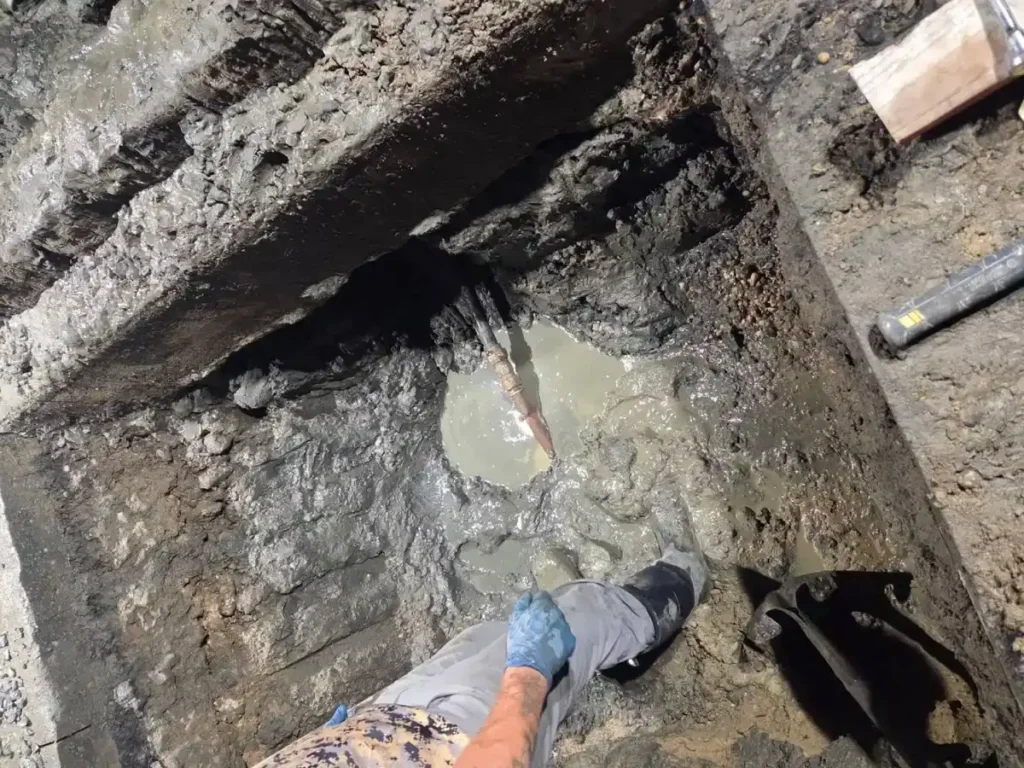
Many older homes in Cherry Hill Township still send their waste out through clay or cast iron sewer pipe. Those materials were common for decades and many of them still work.
Mature trees, older lots, and pipe that has sat in the ground a long time are a common mix across the township. Each of those raises the odds that a sewer line will need attention sooner or later.
Age catches up with every pipe, though. Clay and cast iron each break down in their own way, and knowing the pattern helps you spot trouble early. When the signs show up, sewer line repair in Cherry Hill Township can fix the damage before it turns into a flooded basement.
This guide from The Sewer Kings explains how each material fails and the signs to watch for. It also shows how a camera inspection tells you which fix makes sense. The goal is simple. Fix the pipe once instead of clearing the same clog every year.
If your home is older and you have never had the sewer line checked, this is worth a read even if nothing is wrong yet.
How Clay Sewer Pipe Breaks Down
Clay pipe itself holds up well against waste. The weak point is the joints. Clay lines were laid in short sections, and every joint is a spot where the seal can open over time.
Roots Through the Joints
Tree roots look for water. A tiny gap at a clay joint lets moisture out, and roots follow it inside. Once in, they grow into a mass that catches paper and grease.
Cracks From Ground Movement
Soil shifts with freezing, thawing, and heavy equipment on the surface. Clay is rigid, so it cracks instead of bending. Those cracks let in more roots and soil.
Offset Joints and Sags
When the ground under a section settles, one piece drops lower than the next. Waste then catches on the lip, and water pools in the low spot.
These problems often show up together. A root-filled joint lets soil wash out, the soil loss lets the pipe settle, and the settling opens the next joint. That chain is why a clay line that has one problem usually has more.
How Cast Iron Sewer Pipe Wears Out
Cast iron fails from the inside out. Over years, the pipe wall rusts and builds a rough crust called scale. That crust narrows the pipe and grabs anything passing through.
Scale is why an old cast iron line can clog again soon after a normal snaking. The cable punches a hole through the blockage, but the rough walls start catching debris right away.
Grease makes scale worse. Warm grease poured down a sink cools inside the pipe and sticks to the rough crust, which builds the narrowing faster. Over time the opening in the middle of the pipe can shrink to a fraction of its original size.
Deeper rust thins the pipe wall. Eventually a crack forms along the bottom of the pipe, where water sits the longest. At that point, waste can leak into the soil below the house.
Cast iron also breaks where it meets other materials. Joints and the spots where it meets newer pipe are common places for leaks and root entry.
Warning Signs Your Old Sewer Line Is Failing
Slow drains in the lowest part of the house are often the first sign. A basement floor drain or first floor toilet will usually back up before anything upstairs does.
Gurgling sounds, sewage smells in the yard, and patches of grass that stay greener than the rest can all point to a leak. So can soft or sunken spots along the path of the pipe.
Repeat clogs are the clearest message. The EPA lists blockages and line breaks among the causes of sewer overflows and backups into homes. A line that keeps blocking usually has a break, a sag, or roots that a simple clearing will not fix.
If you notice more than one of these signs, it is time for a camera inspection instead of another round of snaking.
Do not wait for a full backup. Sewage in a basement brings cleanup costs, damaged flooring, and health risks that go well beyond the price of the pipe repair. A camera look on a slow line is a small step that can prevent a much bigger bill.
Choosing the Right Fix for an Old Sewer Line
The Sewer Kings runs a camera through the line first. The video shows the material, the damage, and where it sits, so the repair matches the real problem.
You watch the video with us and get a flat rate before any work starts. That way you can compare the cost of a spot repair against a full replacement with the facts in front of you.
Cleaning and Descaling
When the pipe is sound but crusted or root-filled, cleaning and descaling can restore flow. This buys time on a line that still has good structure.
Spot Repair
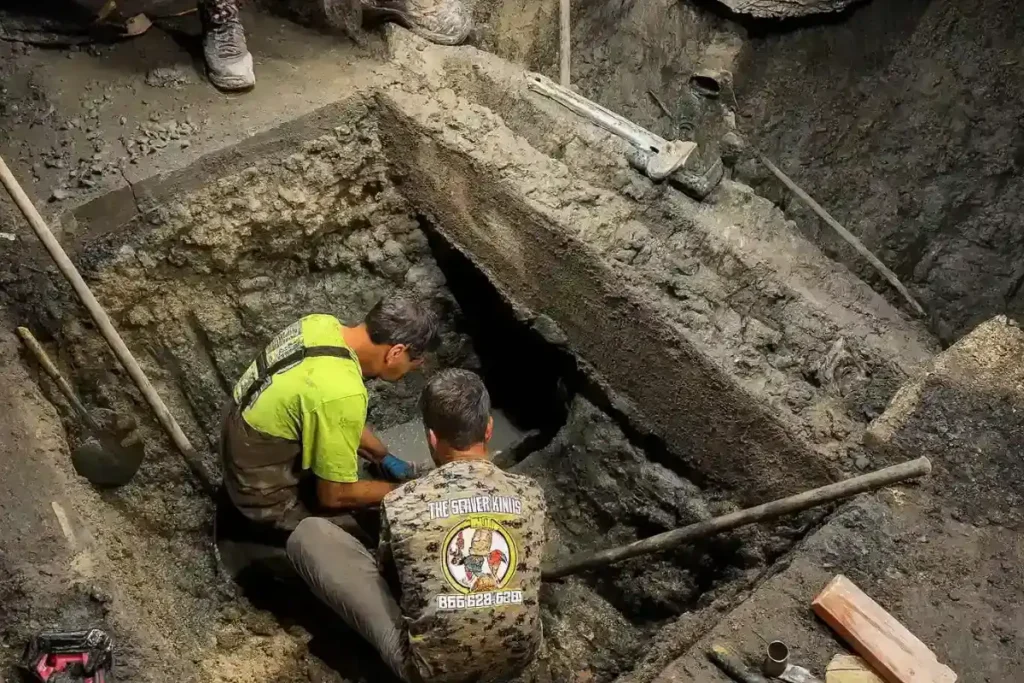
When damage is limited to one section, we dig a small pit at that spot and replace only the broken piece.
Full Replacement
When the line has failed along its length, replacement is the lasting answer. Pipe bursting can replace many 2 to 6 inch lines through two small pits instead of a long trench.
If you are buying an older home, a camera look before closing is smart. Our guide on what a sewer camera inspection shows before you buy a Cherry Hill home covers what to ask for.

FAQs
Frequently Asked Questions About Old Clay and Cast Iron Sewer Lines
A camera inspection shows the pipe material clearly. Clay has short sections with visible joints, while cast iron often shows rust and scale. You can sometimes see cast iron where the line leaves the basement wall.
Yes, when the damage is limited. A single cracked or root-filled joint can often be fixed with a spot repair. A line with damage along its whole length usually needs replacement.
Repeat clogs usually mean the pipe has a structural problem. Roots grow back through open joints, and scale in cast iron keeps catching debris. A camera inspection shows the real cause so it can be fixed once.
Worried About an Old Sewer Line in Cherry Hill Township?
The Sewer Kings will put a camera in the line and show you exactly what shape it is in. We are family-owned, licensed, bonded, and insured, and we answer 24 hours a day.
Call us for a free estimate before a slow drain turns into a backup.