
How Evesham's Sandy Pinelands Soil Affects Buried Sewer Lines

5.0
& Yelp Reviews


Book A Free Estimate
Submit your information below.


Our Reviews

Why South Jersey Trusts The Sewer Kings


Book A Free Estimate
Submit your information below.
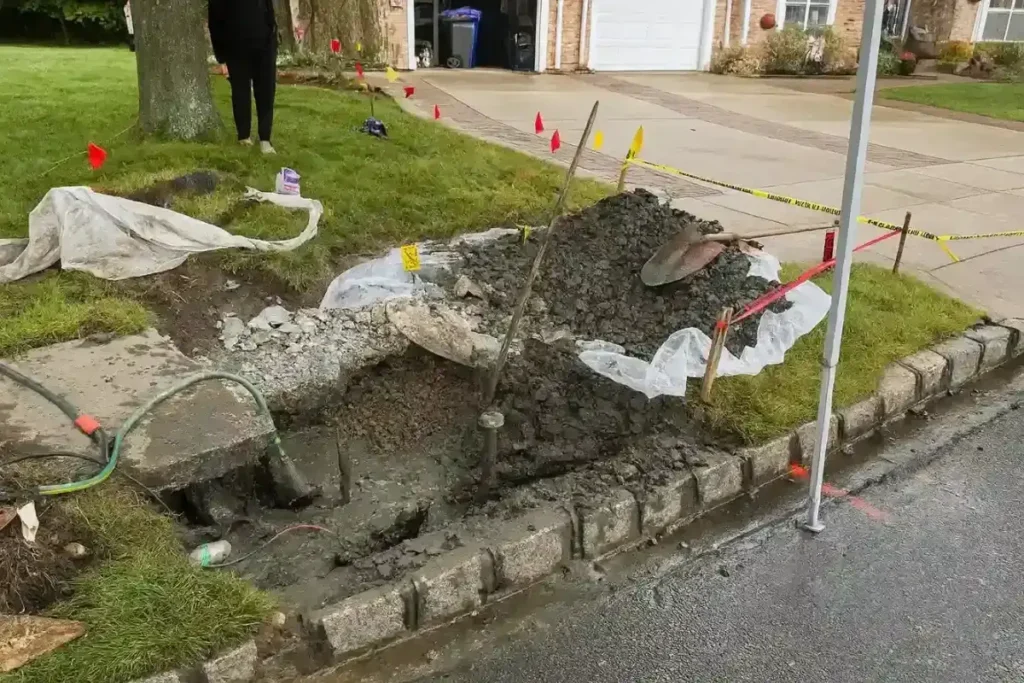
The Ground Here Is Sand, Not Clay
Dig a hole anywhere in Evesham and you find the same thing. Loose tan sand that runs off the shovel.
That sand is why your lawn drains an hour after a downpour. It is also why a slow leak at one pipe joint can sink a strip of your front yard.
Most of what goes wrong with a buried line here starts with the ground, not the pipe. Our sewer line repair crews dig the same soil across the township all year.
Here is what sits under your lawn and what it does to a sewer line. Then what The Sewer Kings has to get right for a repair to hold.
What Is Actually Under Your Evesham Lawn
Evesham sits on the Coastal Plain, so there is no rock under the yard. There is sand, and then more sand.
The Soil Here Has a Name
Much of the township is mapped as Downer loamy sand, New Jersey’s state soil. The federal soil description calls it well drained, with water moving through it at a moderate to moderately rapid rate.
Evesboro Sand Runs Looser Still
The lighter ground is Evesboro sand. The same federal description classes it as excessively drained, with rapid flow through the subsoil and faster flow below that. It stays sand past six feet down.
The South End Is Pinelands
The southern part of Evesham falls inside the state’s Pinelands Area, and Black Run Preserve sits in it. Pinelands ground is sand and gravel left by an ancient sea, which is why it drains the way it does.
The Sand Is Acidic
Both soil descriptions read extremely acid to strongly acid from the surface down. A measured Evesboro profile runs about pH 4.6 near the top and 5.2 below. Sour ground does old iron pipe no favors.
None of this is a defect. It is simply a different problem from the heavy clay that plumbers deal with further north.
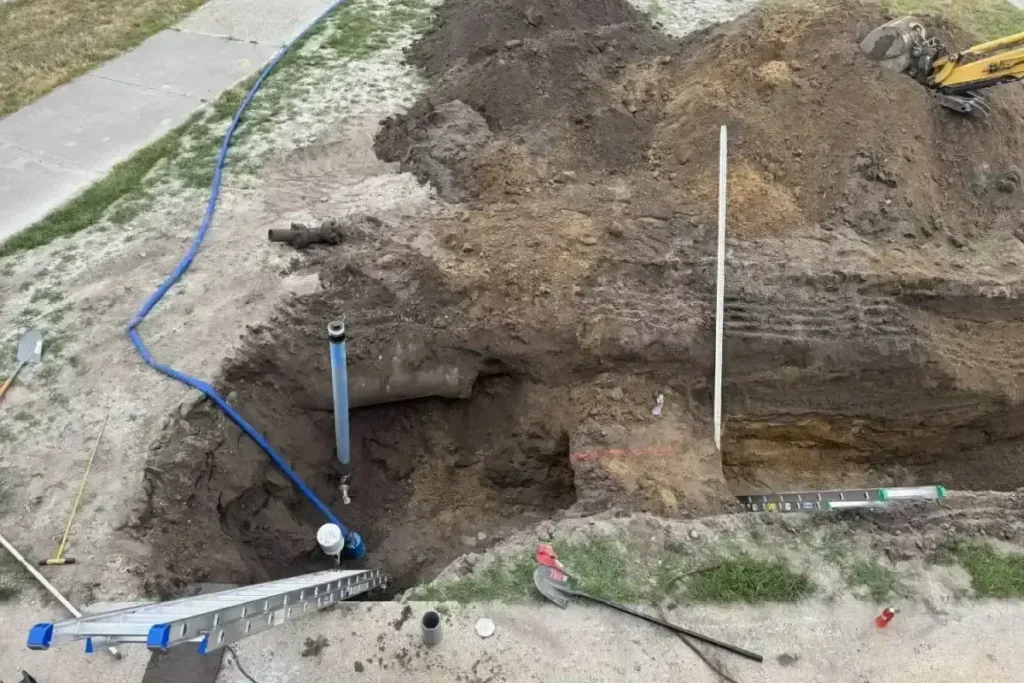
What Sandy Ground Does to a Buried Sewer Line
Clay holds together. Sand does not. Each grain sits loose against the next, so anything that moves water through it moves sand too.
A Weeping Joint Pulls the Ground In
Water leaving a cracked joint washes sand along with it. Water entering one carries sand into the pipe. Either way the ground beside the pipe goes somewhere else.
A Hollow Under the Pipe Becomes a Sag
Pipe is only as straight as whatever it rests on. Wash out the support under one length and that length drops. The low spot holds water and solids, and the blockages start right there.
The Hollow Works Its Way Up
Keep washing sand away and the empty space climbs toward the surface. That is the soft patch in the lawn, or the dip in the driveway that follows the line.
The Trench Walls Will Not Stand
Loose sand slumps when it dries out and slumps again when it gets soaked. Shoring a dig in Evesham is not a precaution, it is the only safe way to work.
There is one piece of good news in the soil report. Shrink-swell potential here is rated low, so the ground is not squeezing your pipe every season the way clay does.
Lines in this township fail from washout, root intrusion and age. They rarely fail from ground that heaves.
Groundwater and the Wetter Half of the Township
Sand drains fast, but it does not drain everywhere. Low ground in Evesham holds water close to the surface for months at a time.
Some Streets Sit Wetter Than Others
Woodstown soil carries a seasonal high water table 18 to 42 inches down from January through April. Klej sits 12 to 24 inches down. Atsion, in the lowest ground, sits 6 to 12 inches down all year.
A Cracked Line Below That Takes Water In
A pipe sitting under the water table does not only leak out, it leaks in. Clear water in the line and a pipe that runs full in a wet spring both point the same way.
A Wet Trench Changes the Dig
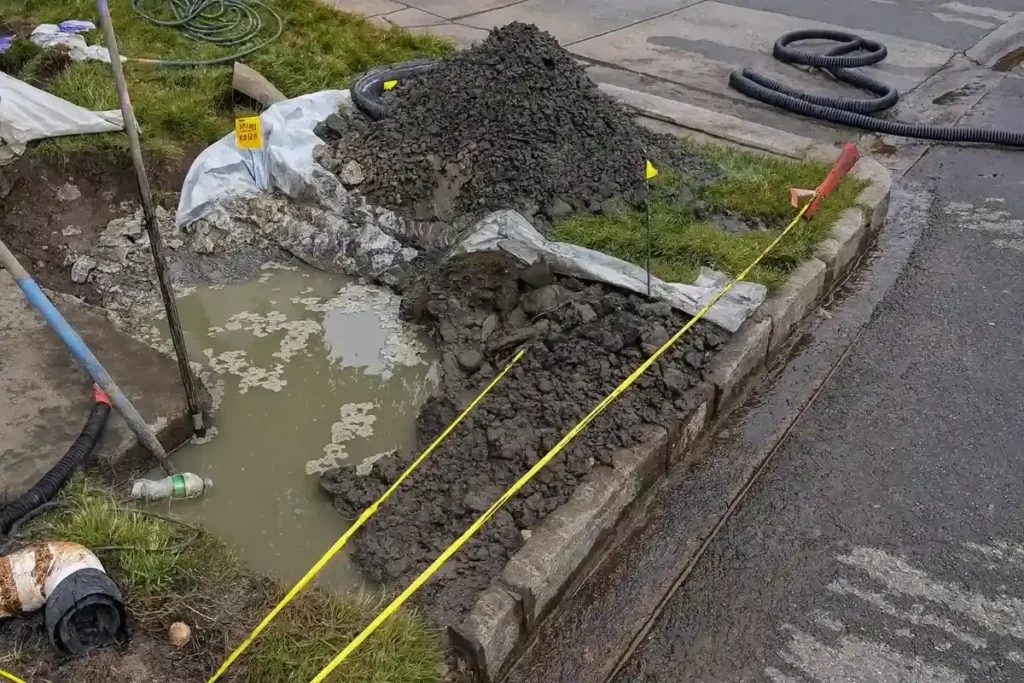
The Evesham Municipal Utilities Authority requires a dry trench while pipe is being laid. No water may run through an open joint. Pumps or well points go in when the trench will not stay dry.
This is why two repairs on the same street can run very differently. One crew hits damp sand, the next hits standing water at four feet.
Why Bedding and Backfill Decide How Long the Repair Lasts
In sandy ground the new pipe is rarely the weak part. What the pipe rests on, and what goes back on top of it, is what decides the next twenty years.
The Pipe Has to Sit on Something Stable
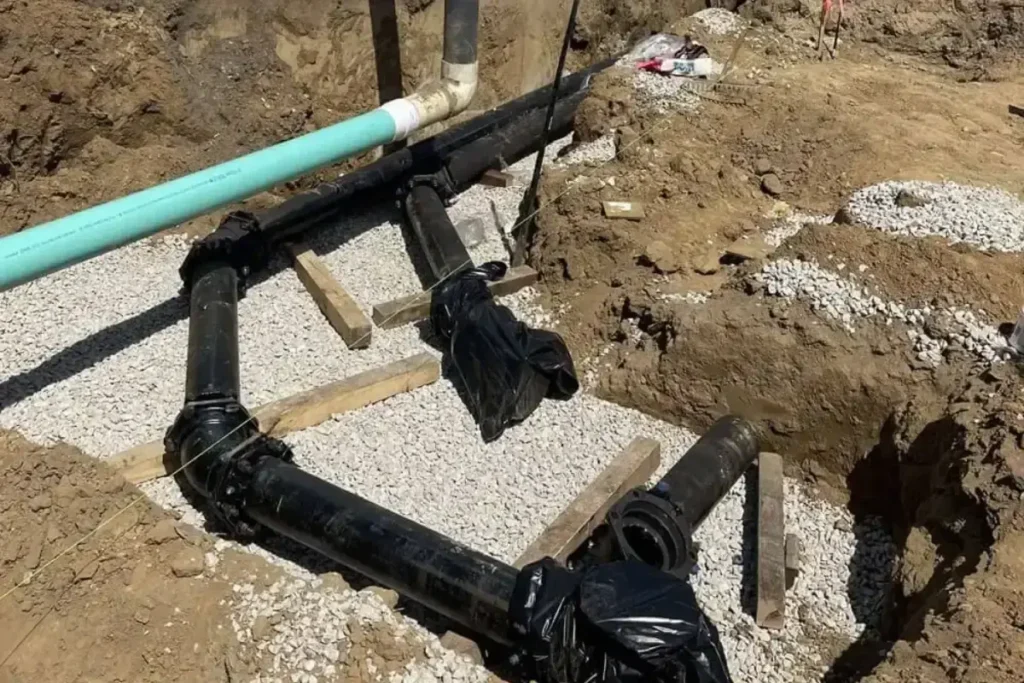
The Authority’s rules call for a trench bottom graded to stable material, either a stone bottom or virgin soil. The whole barrel of the pipe has to rest on it and load evenly. Where the native sand will not hold, stone or select fill goes in up to the springline.
Stone Is Laid, Never Scraped Together
The same rules forbid scraping stone up from the sides of the trench and piling it along the pipe. Pyramiding stone like that leaves the pipe bearing on high points, which is where the next sag starts.
Backfill Goes In Layers
Over the pipe, backfill goes in six inch layers of loose granular material, free of large stones. Each layer is tamped, up to twenty four inches above the top of the pipe. The rest of the trench goes back in twelve inch layers, each one tamped. Compaction follows the state highway specification.
Depth and fall are fixed too. The Authority calls for a six inch lateral at a quarter inch of fall per foot. Cover is at least 36 inches over PVC and 32 inches over ductile iron. What comes out of the ground depends on the age of the house. Our guide to the sewer pipe materials under older Marlton homes covers what we dig up around here.
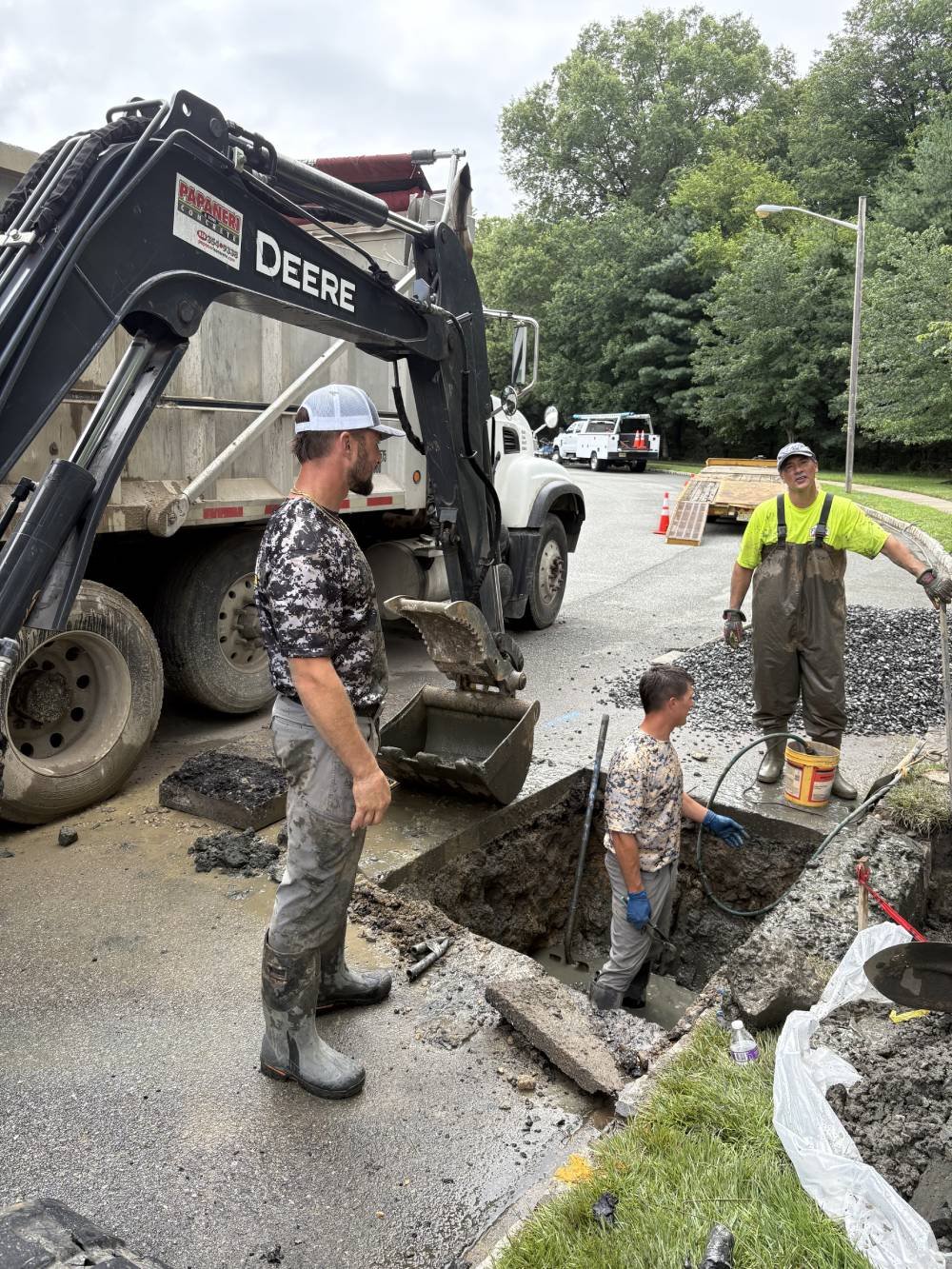
On an Evesham job The Sewer Kings cameras the line first. The hole stays no bigger than the repair needs. We dewater it if the sand is wet, bed the pipe on stone and lay it to grade. The trench stays open until the inspector has seen it. Our walk through of what happens on sewer line repair day covers the rest of the day hour by hour.
Then the trench goes back in lifts, compacted as it rises, and the surface is restored. A trench backfilled in one drop will settle into a trough by spring.

FAQs
Frequently Asked Questions About Sandy Soil and Sewer Lines in Evesham
It changes how a line fails rather than how fast. Sand does not swell and squeeze pipe the way clay does, so cracking from ground movement is rare here. What sand does is wash away from a leaking joint, leaving the pipe unsupported until it sags.
A soft or sunken strip along the line usually means ground is missing under it. Water escaping a bad joint has carried the sand away, and the hollow is working its way to the surface. A camera inspection shows whether the pipe below has already dropped.
Not on its own. The pipe needs a stable bed under it first, which usually means stone. The material over it goes back in layers and is compacted as it rises. Call The Sewer Kings at (856) 626-9366 and the bedding and backfill are done to spec with the repair.
Do not wait for a sewer emergency. Call The Sewer Kings at (856) 626-9366 for a free estimate, any hour.


Service Areas
Our Excavation Services Available Throughout South Jersey
Atlantic County
Burlington County
Camden County
Cape May County
Gloucester County

Sewer Line Trouble at Your Evesham Home?
The Sewer Kings is a family run crew, owned by brothers Mark and Anthony Papaneri. We are licensed, bonded and insured, and we answer the phone 24 hours a day.
Call for a free estimate. We will camera the line, find what the ground has done to it and give you one price