


What a Rotten Egg Smell Inside Your Home Is Telling You
Your house smells like sewer because gas from the drain system has found a way into the room instead of going out the roof vent. Most of the time the cause is small and cheap to fix, like a drain that has not been used in weeks.
Sometimes it is bigger: a crack in the buried line under the yard can push the same smell into a basement, and that needs sewer line repair, not a bottle of cleaner.
This guide covers the five likely sources, how to narrow it down room by room, and when it stops being a weekend job.
What Causes a Sewer Smell in a House?
Five problems cause almost every sewer smell in a home. Each one breaks the same barrier, which is the seal that keeps drain gas on the drain side of the pipe.
A Dry Drain Trap
Under every sink, tub and floor drain is a U-shaped bend that holds a little water. That water is the plug that blocks the gas. When a drain sits unused, the water evaporates and the plug is gone.
This is why the smell so often shows up in a guest bathroom, a basement floor drain or a laundry sink. Running the tap for two minutes refills the bend and the smell usually clears the same day.
A Failed Toilet Seal
A toilet sits on a wax ring that seals it to the floor pipe. If the ring flattens or the bolts work loose, gas escapes around the base. You will notice it most right after a flush.
A rocking toilet is the giveaway. Resetting the toilet on a fresh seal fixes it, and it is worth checking the floor underneath while it is up.
A Blocked or Cracked Vent Pipe
Every drain system has a vent that runs up through the roof, letting air in so water can flow and carrying gas out above the house. Leaves, nests and ice all plug vents.
A plugged vent sends gas back down into the rooms. It also sucks the water out of your drain traps, so you get two problems from one blockage.
A Cracked Drain Pipe
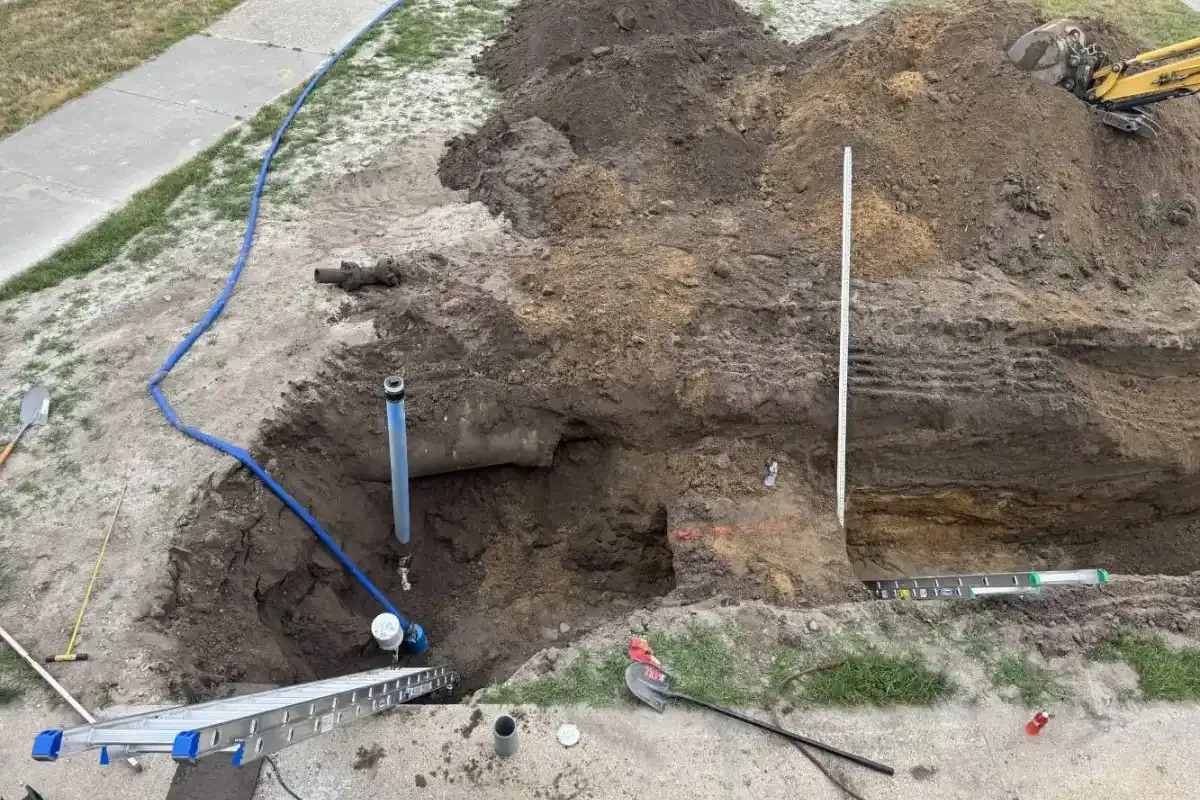
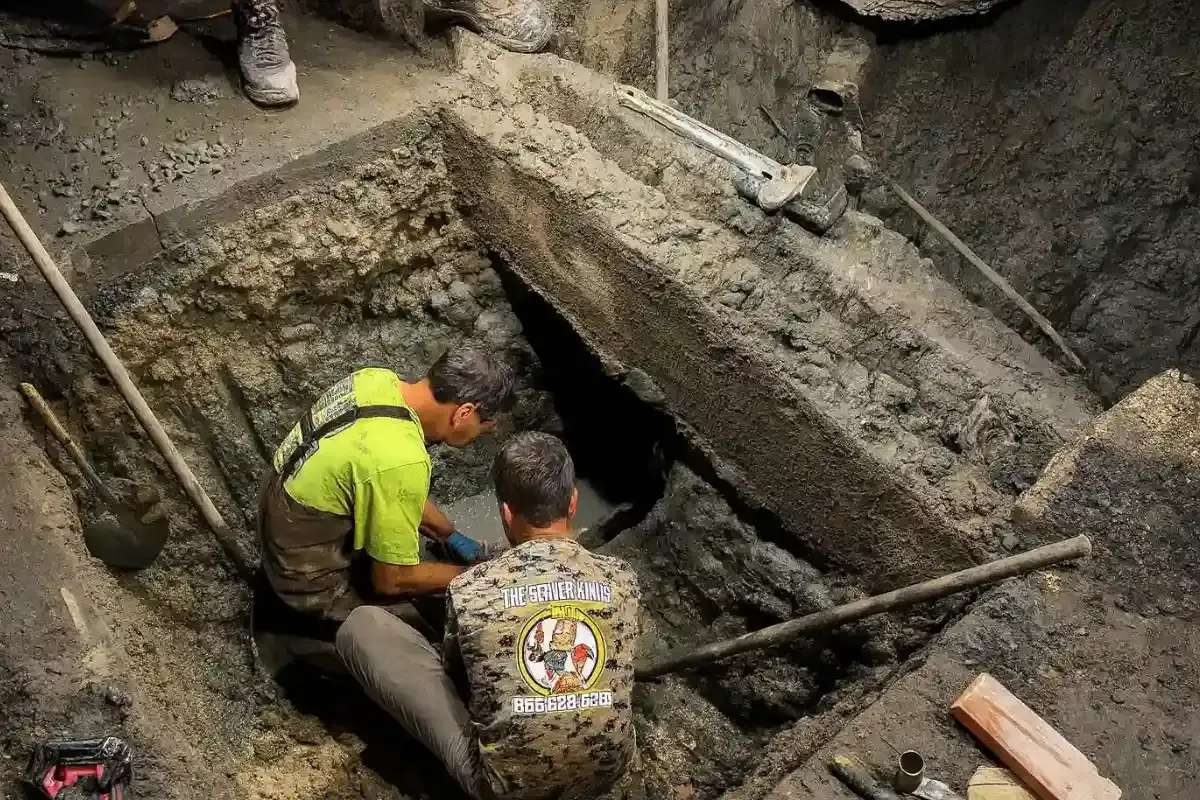
Drain pipes inside walls, under floors and in crawl spaces crack with age and settling. Wastewater seeps out slowly and the smell builds in the space around the break.
A Broken Main Sewer Line
The main line carries everything from the house to the street. Tree roots, sags and collapses all block it. When that happens the smell shows up in several rooms at once, usually with slow drains or a gurgle.
How Do You Find Where the Sewer Smell Is Coming From?
Start with where and when you smell it. The location of the odor points at the part of the system that failed, and that one clue saves a lot of guessing.
Walk the house and note every room where you catch it, and whether it is stronger in the morning, after a shower, or after a flush. A smell in one fixture is a fixture problem; a smell in three rooms is a line problem.
Then check the easy one first. Every fixture trap has to hold a water seal of at least 2 inches and no more than 4 inches deep, according to the International Code Council. A couple of inches of water is all that stands between you and the drain system, and it does not take long to evaporate.
Run every drain in the house for two minutes, including the ones you never touch. Flush every toilet. Wait a day. If the smell is gone, a dry trap was the whole story.
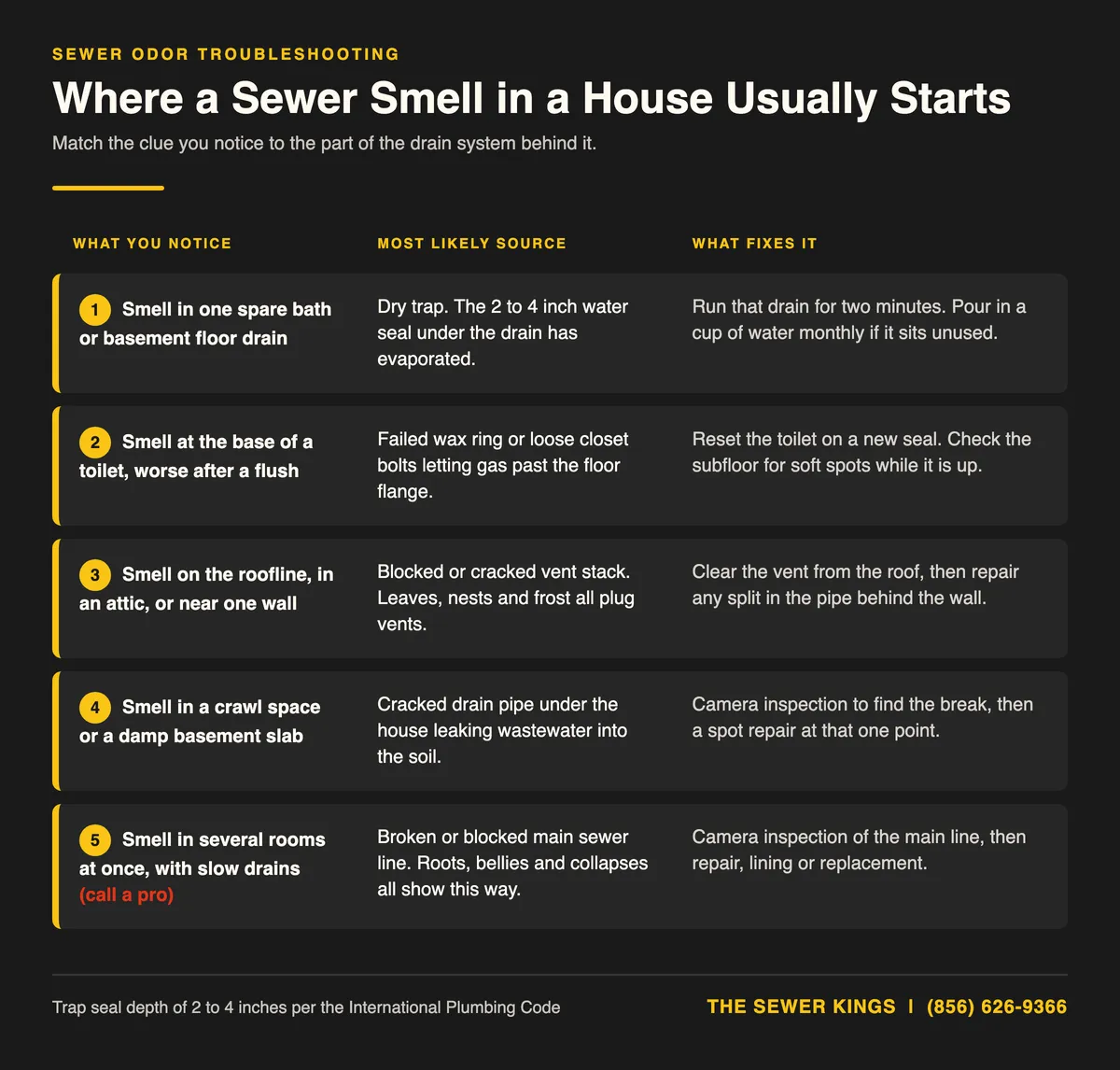
If it comes back, or if it never left, the table below matches what you are smelling to the most likely cause.
Is a Sewer Smell in the House Dangerous?
A faint smell from one dry drain is a nuisance. A smell that will not go away is worth treating seriously. Drain gas carries hydrogen sulfide, and OSHA reports that people start to notice the rotten egg odor between 0.01 and 1.5 parts per million, while longer exposure at 2 to 5 parts per million can bring on headaches, watering eyes and poor sleep.
At around 100 parts per million, the smell disappears because the gas deadens your sense of smell within minutes. A smell that suddenly vanishes is not good news. Open windows and get outside.
What We See on South Jersey Calls
The Sewer Kings is run by two brothers, Mark and Anthony Papaneri, who grew up building sewer plants alongside their dad in Evesham. They were running heavy machinery before most kids had a license, and odor calls are a weekly part of the work across Burlington, Camden and Gloucester counties.
The pattern we see most often in older South Jersey homes is a smell in the basement that gets stronger after someone showers upstairs. That timing almost always means wastewater is escaping from a cracked line, not from a dry trap.
On those calls our crews run a camera through the cleanout, and the cable measures the distance to the fault so we only dig where the break is. When the camera is not conclusive, we cap both ends of the line and hold 5 PSI of air on it for 15 minutes. A line that holds is sound. A line that drops has a leak.
Any repair that follows has to meet the state plumbing subcode, which in New Jersey is the 2021 National Standard Plumbing Code under N.J.A.C. 5:23-3.15. That is one reason an odor fix is worth doing on paper rather than patching it yourself.
When Should You Stop Troubleshooting and Call a Plumber?
Start with the free checks: run the unused drains, flush every toilet, push on the base of each toilet to see if it rocks, and look at the roof vent from the ground for anything sitting on it.
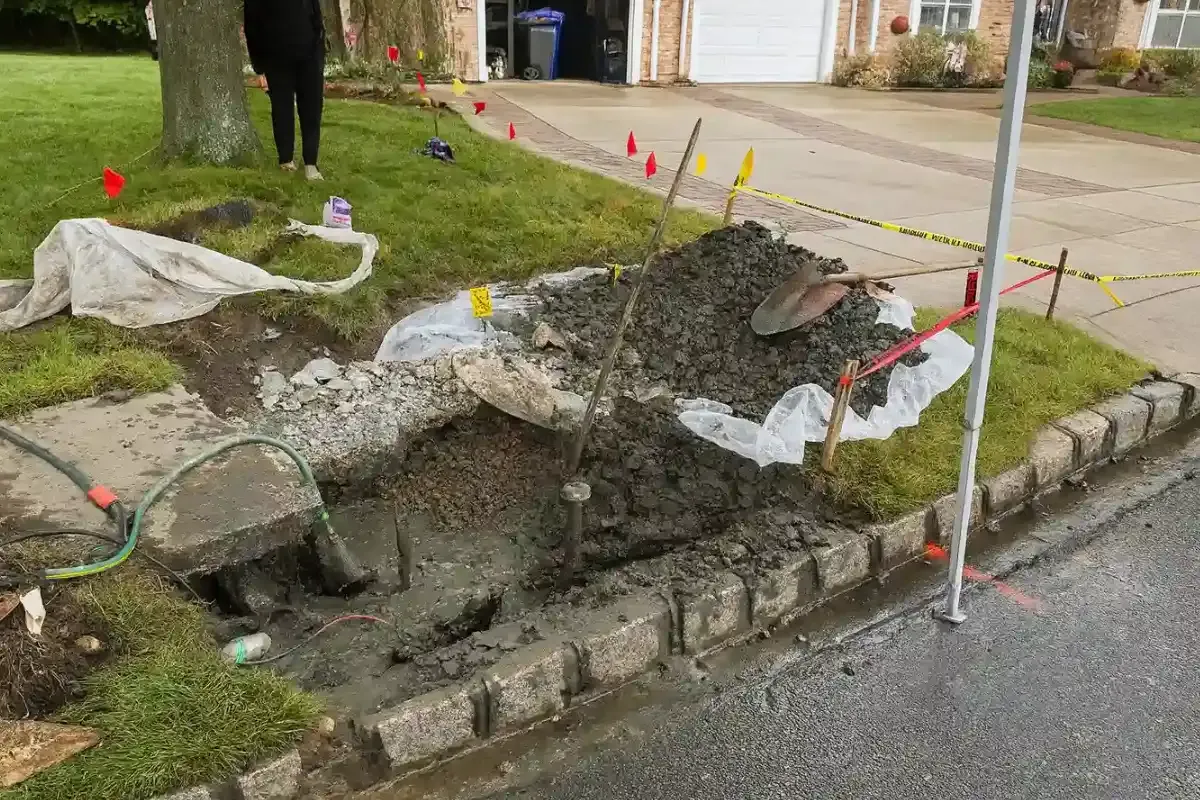
Call someone once any of these are true. The smell is in more than one room. It returns within a week of refilling the traps. A drain is slow or gurgling at the same time. Or the smell is coming from a crawl space or a damp patch of yard.
Those signs point past the fixtures and into the buried line, the same signs you need sewer line repair, and the sooner a camera goes in, the smaller the dig usually is.
It also helps to know what you are looking at. A smell with water backing up is a different problem from a smell with clear drains, and this breakdown of a sewer backup versus a clogged drain explains which one you have. If the whole house drains slowly, read up on what causes a main sewer line backup before you call. A smell with small flies around the drain is a different fix again, covered in clearing drain flies out of a sink, and a smell that arrives with a noise is explained in why a toilet gurgles after a flush.
A camera inspection with a pressure test finds the fault without guesswork, and thermal imaging helps when the leak is hidden behind a wall. Most residential sewer repairs are finished in one to two days once the fault is located.
Sewer Smell Questions Homeowners Ask
How do I get rid of a sewer smell in my house fast?
Run water down every drain in the house for two minutes and flush every toilet. That refills the water seals that block drain gas and clears most odors within a day. If the smell is back inside a week, the problem is not evaporation and needs a plumber.
Why does my house smell like sewer only when it rains?
Rain raises groundwater and pushes air out of a cracked buried pipe, so a break that normally leaks quietly starts venting into the house. It can also mean the roof vent is blocked and wet weather is making it worse. In Evesham and the rest of South Jersey, a camera inspection usually finds the fault in under an hour.
Can a sewer smell in the house make you sick?
At the low levels found in most homes it causes headaches, nausea, sore eyes and broken sleep rather than lasting harm. Strong, constant exposure is a real health risk and should not be lived with. Treat a smell that keeps coming back as a repair job, not an air freshener job.
Track Down the Smell Before It Becomes a Dig
The Sewer Kings run camera inspections and odor tracing across Evesham, Cherry Hill, Medford, Voorhees and the rest of South Jersey, 24 hours a day. Family owned, licensed, bonded and insured.
Call (856) 626-9366 today.