


What Makes a Bathroom Sink Drain Slow
Your bathroom sink drains slowly because something is narrowing the pipe. Most often it is hair, soap scum, and toothpaste stuck in the stopper or the curved pipe below it. A slow sink is the first sign of a drain that needs cleaning.
This guide shows the common causes, how to check each one, and the point where a quick fix stops working. You can handle the first three steps yourself with a bucket and a few minutes.
What Usually Causes a Slow Bathroom Sink?
Hair and soap are the top two causes. They work together. Hair catches on the stopper and on the pipe wall. Soap and toothpaste then stick to the hair and build a thick, sticky plug.
Hair on the stopper
The pop-up stopper has a small rod and a crossbar under the sink basin. Hair wraps around that bar. Water has to squeeze around the clump, so the sink drains slowly even though the pipe is open.
Soap scum and toothpaste
Bar soap, face wash, shaving cream, and toothpaste all leave a film inside the pipe. The film sticks to the pipe wall and gets thicker each week. Over months, the opening can shrink to half its size.
Hard water scale
Minerals in hard water leave a rough crust inside pipes. That crust grabs hair and soap faster than a smooth pipe would. This is why some homes see slow sinks again and again after a cleaning.
A clog farther down
Sometimes the stopper and trap are clean and the sink is still slow. Then the clog sits deeper in the branch line or the main drain. The last section covers that case.
How Do You Find Where the Clog Is?
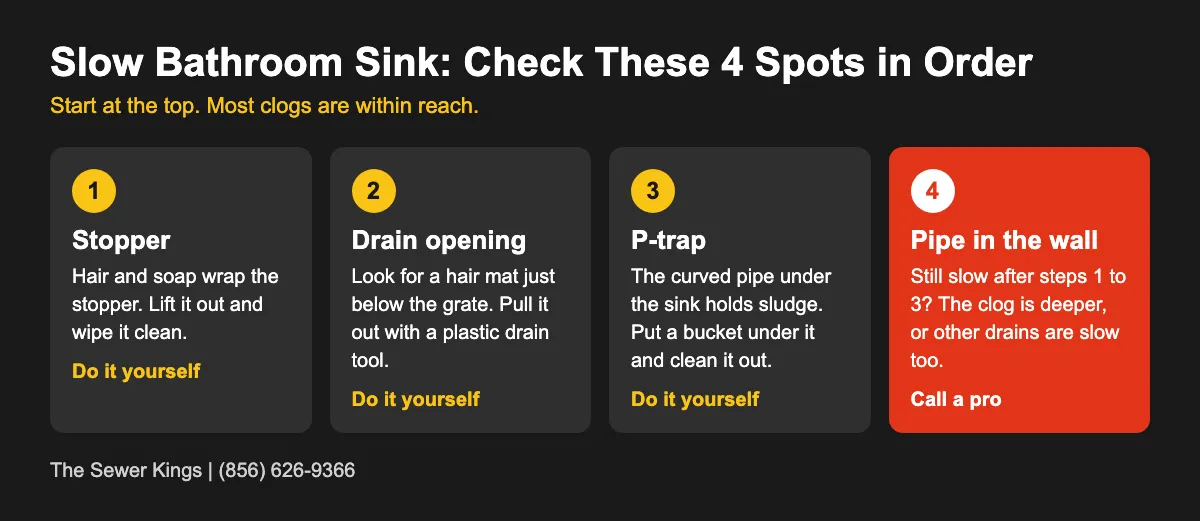
Work from the top down. Each spot is easier to reach than the next one, so you stop as soon as the water runs fast again.
Step 1: Clean the stopper
Most bathroom sinks let you lift the stopper straight out or unscrew a nut behind the drain pipe. Pull it out, wipe off the hair and slime, and rinse it. Put it back and run hot water for a minute.
Step 2: Pull out the hair mat
Shine a light into the drain opening. A plastic drain tool with small barbs pulls out hair in seconds. Do not push the hair deeper with a wire hanger. A hanger can scratch the pipe and pack the clog tighter.
Step 3: Clean the P-trap
The P-trap is the U-shaped pipe under the sink. It holds a little water to block sewer gas, and it also collects sludge. Set a bucket under it, loosen the two slip nuts by hand, and empty the trap. Rinse it, reconnect it, and check for leaks.
Step 4: Test other drains
Run the tub and the toilet. If only this sink is slow, the clog is in its own branch. If two or more drains are slow, the problem is in a shared line and a stopper cleaning will not fix it.
The infographic below puts the order on one card. Share it with anyone in your house who loves to say “just pour something down it.”
What Do South Jersey Plumbers See Behind a Slow Sink?
Mark and Anthony Papaneri grew up on job sites, learning water and sewer work from their father before they ever ran a crew of their own. Now they own The Sewer Kings, and that hands-on start is why their team looks past a slow sink to find where the water actually backs up.
A slow sink is often the quiet start of a bigger drain problem. When a bathroom sink and a tub both run slow, the buildup is usually in the shared branch line. A home that has an older drain line can also have roots or scale that a trap cleaning will never reach.
A pro can clear this kind of clog with a high-pressure water tool. You can read how that works in our hydro jetting service guide. It clears the full width of the pipe instead of poking a hole through the middle.
Bathroom sinks also use less water than they used to. The EPA says WaterSense faucets use no more than 1.5 gallons per minute, about 30 percent less than older 2.2 gallon models. A lower flow carries less debris away, so a thin film of soap can build up faster than it did years ago.
When Should You Stop and Call a Plumber?
Call a pro when the easy steps fail or when the signs point to a deeper line. Waiting can turn a slow sink into a full backup.
Call if more than one drain is slow
Slow drains in several rooms mean the shared line is narrowing. A bucket and a drain tool will not reach it.
Call if you hear gurgling or smell sewage
Gurgling means air is fighting past a blockage. A sewage smell can mean the clog is getting worse. Stop using the sink and call us.
Our guide on sewer backups versus a simple clog explains how to tell the two apart. If you want to know what else is clogging pipes, read what not to put down your drain.
Think twice before you reach for a bottle of drain opener. Many contain lye or strong acids, and MedlinePlus warns that swallowing them can cause serious burns and permanent tissue damage. The American Association of Poison Control Centers explains what is inside these products and why you should never mix them with bleach.
If you are still unsure, read when you need a plumber to unclog a drain and how often you should schedule a professional drain cleaning. Before you reach for a bottle, read what chemical drain cleaners do to pipes. If small flies are sitting around the overflow, clearing drain flies out of a sink covers that.
Frequently Asked Questions
Can I fix a slow bathroom sink drain myself?
Yes, in most cases. Clean the stopper, pull out the hair mat, and empty the P-trap. These three steps fix most slow sinks in under 30 minutes. If the water is still slow, the clog is farther down.
Does baking soda and vinegar clear a slow drain?
It can loosen a light film of soap, and it is safe for pipes. It will not break up a hair clog. Use it as monthly upkeep and flush with hot water, not as a fix for a real clog.
How much does it cost to fix a slow sink drain in South Jersey?
A simple stopper or trap cleaning costs nothing if you do it yourself. If a clog sits in the branch line, a pro visit is needed and the price depends on how deep it is. The Sewer Kings serves homes across Burlington, Camden, and Gloucester counties and can look at your line.
Still Seeing a Slow Drain in South Jersey?
The Sewer Kings clears slow drains and clogged lines for homeowners across South Jersey. Call us before a slow sink turns into a backup.
Call (856) 626-9366 today.