


The Curved Pipe That Keeps Sewer Gas Out
A P-trap is the U-shaped bend of pipe under a sink, tub or shower that holds a small plug of water. That water blocks sewer gas from rising into your home, and it dries out when the drain goes unused, leaks, or loses its vent. This post explains how a trap works, why the water disappears, and how to fix it. If a smell keeps coming back after you refill it, a professional drain cleaning visit can check the line behind it.
What Does a P-Trap Do?
A P-trap holds water in a curve so air from the sewer cannot pass through. Every sink, tub, shower and floor drain in your house needs one. Without it, the gas in your drain lines would flow straight into the room.
The shape is simple. Wastewater runs down from the drain, dips into the low part of the bend, and climbs up and out to the wall pipe. Some water always stays behind in the bend. That leftover water is called the trap seal.
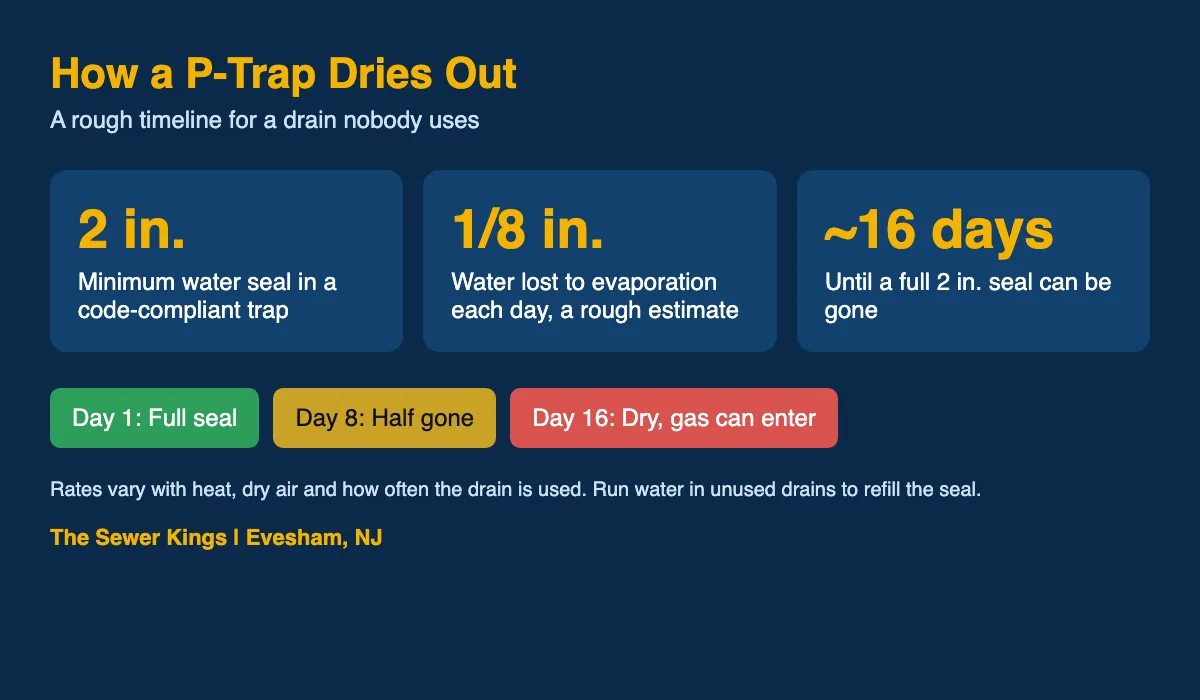
The plumbing code sets the depth. One overview from the International Code Council says each trap needs a seal of at least 2 inches. A deeper seal gives you more time before it disappears.
Why the shape is a P
From the side, the pipe looks like the letter P lying on its back. The curve is the trap, and the line going into the wall is the top of the P. Older homes sometimes have S-traps, which are no longer allowed in new work because they can siphon the water out.
The trap also catches things. A wedding ring or a clump of hair often stops in the bend, which is why the pipe under a sink is a common spot to look first when a drain slows down.
Why Does a P-Trap Dry Out?
A P-trap dries out when the water in the bend leaves faster than new water comes in. There are four common reasons, and the first one causes most of the calls we hear about.
Evaporation from a drain nobody uses
Water slowly evaporates from the trap. Think of a guest bathroom, a basement floor drain, or a utility sink that sits unused for weeks.
One plumbing study guide estimates evaporation at about 1/8 inch per day. At that rate, a 2-inch seal could be gone in about 16 days. Heat, dry winter air and a furnace running nearby make it faster.
A leak at the trap
A loose slip nut or a cracked trap lets the water drip out. You may see a damp cabinet floor or a stain. The trap looks full one week and empty the next.
Siphoning
When a vent is blocked, a big flush or a draining tub can pull the water out of a nearby trap. You will often hear gurgling first. A clogged vent pipe on the roof is a common cause.
Poor design
A trap set too far from its vent, or a trap installed at the wrong slope, can lose its seal every time the fixture drains. This is a problem with how the pipe was built, and refilling it will not hold.
What Happens When a P-Trap Is Dry?
A dry trap lets sewer gas rise through the drain and into your home. The first sign is usually a rotten egg or sewage smell near one sink or floor drain. The smell can come and go.
The gas is mostly methane and hydrogen sulfide. In small amounts it is a nuisance. In a closed room it is not something you want to breathe all day. Building codes treat the water seal as a safety item, and the International Plumbing Code requires trap seal protection for floor drains that are prone to evaporation, such as a trap primer that tops up the water by itself.
Here in South Jersey we see this most in two places. One is the basement floor drain in a home with a furnace, where the air is warm and the drain rarely sees water. The other is a guest bath in a house that sits empty for the winter.
Our crew's rule of thumb is simple. If the smell is at one drain, start with that trap. If the smell is in several rooms, or you also hear gurgling and see slow drains, the problem is probably deeper in the main line.
Our guide on why your house smells like sewer walks through the other sources, like a bad toilet seal or a cracked buried pipe.
How Do You Fix a Dry P-Trap?
Run water down the drain for 20 to 30 seconds. That refills the trap and blocks the gas right away. For a floor drain, pour in a quart or two of water and let it settle.
If the drain is rarely used, pour in a tablespoon of cooking oil or mineral oil after the water. A thin film on top slows evaporation. Do this only for a drain that is not used daily, and run water again before you use the fixture.
Next, set a reminder to run every unused drain once a month. A guest bath and the basement floor drain are the two to remember. Before a long trip or after a vacation, run each one for a minute.
If the trap refills and the smell is gone, you are done. If the water vanishes again within a few days, something else is wrong. Look for a leak under the sink, then think about a blocked vent. A gurgling toilet is a common clue, and our post on why a toilet gurgles explains what the sound means.
Slow drains can point the same direction. If the sink drains slowly and the smell returns, read why a bathroom sink drains slowly. Small flies hovering over a drain are another sign of buildup, covered in how to get rid of drain flies.
When to call a pro
Call a plumber if the trap keeps drying out, if you smell gas in more than one room, or if several drains are slow at once. Those signs often point to the main line, and a camera inspection can show what is blocking it.
P-Trap Questions
How long does it take a P-trap to dry out?
A trap in a drain that is never used can lose its water in a couple of weeks. One study guide puts the loss at about 1/8 inch a day, so a 2-inch seal lasts roughly 16 days. Warm, dry air in a heated basement speeds it up.
Can a dry P-trap make you sick?
A dry trap lets sewer gas into the room. A short exposure usually causes only a bad smell, but the gas contains hydrogen sulfide and methane. Refill the trap and air out the room. If the smell stays or you feel dizzy, leave and call a plumber.
How often should I run water in unused drains?
Run each unused drain for about 30 seconds once a month. Homes in Evesham, NJ with a heated basement should check the floor drain more often in winter, when the furnace dries out the air.
Smell Coming Back? Call The Sewer Kings
If refilling the trap does not stop the smell, the problem may be in your drain line. The Sewer Kings serves homeowners in Evesham and across South Jersey.
Call (856) 626-9366 today.