

Finding out where your sewer line runs can feel like detective work, especially if you’ve never dealt with plumbing issues before. Yet, this knowledge is vital if you need repairs, plan outdoor projects, or want to avoid costly surprises later. Understanding your sewer line’s location is also an important part of sewer line maintenance, helping you protect your system over time. So, how can you find out where your sewer line runs without guesswork? Below are practical steps you can take, from quick visual checks to more advanced techniques that help you pinpoint the path of your underground wastewater system.
Look for visual clues first
Your first clues often come from what you see around your property. Sewer lines typically run from the house foundation through your yard toward the street or septic tank, often at a slight downward angle. In many homes, they are buried 4 to 6 feet deep, though the depth can vary depending on local conditions (John’s Sewer & Drain Cleaning).
You might notice: • A capped sewer cleanout pipe visible just above ground.\ • A slight depression or low spot in the lawn that traces a line away from your home.\ • Alignment with main plumbing fixtures, such as the path directly beneath a bathroom or laundry area.
These clues help you approximate the route. If you also wonder whether every house has a dedicated pipe, see does every home have a sewer line?. Many homes do, but older buildings in some regions might share a line, so it’s worth confirming before any digging.
Try simple checks indoors
Inside your home, follow the main plumbing stack (the largest vertical drain pipe) in the basement or utility room. Often, that stack leads to your sewer line’s exit point. Then, track where that exit likely connects to the outside system. You can confirm your hunch by reviewing municipal sewer maps, which your local building department may have on file. Some cities keep records indicating approximate sewer line widths and depths.
If you suspect you may be sharing a drain with a neighbor, particularly in older neighborhoods, have a look at how do i find out if my drain is shared?. Understanding who else might use the line can prevent confusion later if more extensive repairs become necessary.
Use specialized locator tools
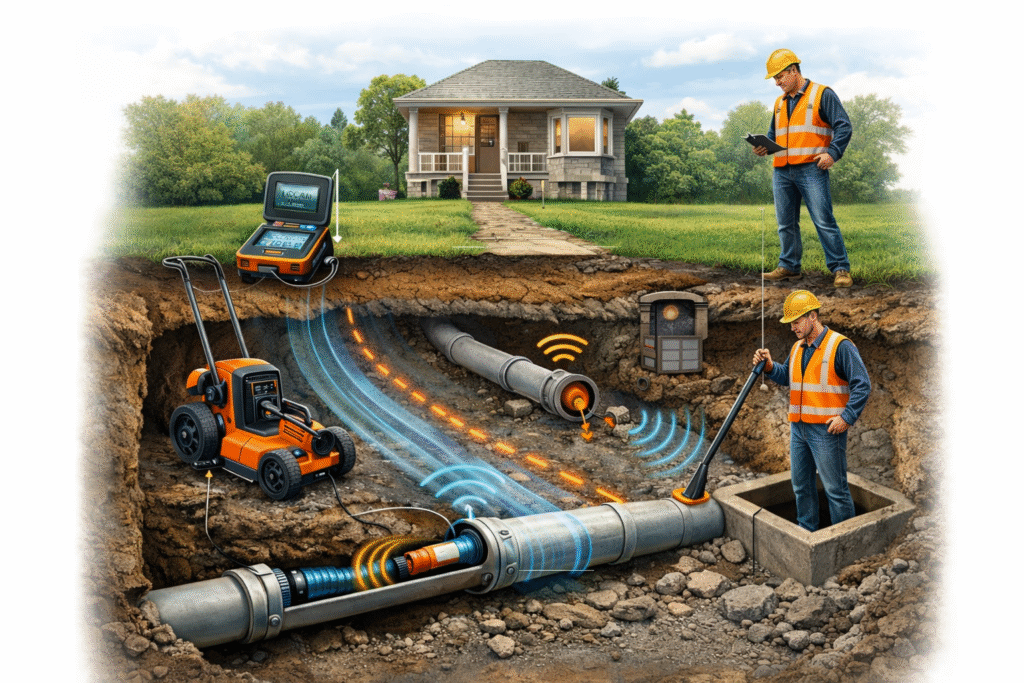
When standard visual checks aren’t enough, specialized locators step in. Basic pipe locators use electronic signals or transmitters and receivers to identify PVC, metal, or plastic pipes underground, even if they’re several feet below the surface. Often, pros use a 512Hz transmitter and receiver system to trace the route accurately and measure its depth (Amazon).
Below is a brief overview of popular methods:
| Method | What it entails | When to use |
|---|---|---|
| Visual clues & cleanouts | Look for cleanout caps or yard depressions | Quick first step |
| Municipal maps & building records | Check blueprints or city planning docs | Good for older neighborhoods |
| Electronic pipe locator (512Hz) | Attach a sonde transmitter to the line, pick up signal with a wand | Ideal for precise depth and direction tracking |
| Professional video camera | Insert a high-resolution camera with a built-in transmitter | Comprehensive look at pipe condition and exact routing |
If you’re curious whether a public service will do this for you, find out does 811 locate sewer lines?. In many areas, 811 marks public utilities, but sewer lines on private property may or may not be part of their scope.
Consider a video camera inspection
Sometimes a direct look inside is the most foolproof method, especially if you suspect leaks or tree-root intrusion. A professional will thread a waterproof camera through your drain, letting you watch a real-time feed of the pipe’s interior (F.H. Furr Plumbing). This approach also pinpoints exactly where the camera head is underground, because most setups include a built-in transmitter. By scanning from inside, you’ll not only confirm the line’s path but also detect any cracks or blockages along the way.
Camera inspections are especially valuable if: • You’re buying a home and want assurance the sewer line is in good shape.\ • You hear gurgling, smell sewage, or experience repeated clogs.\ • You plan major landscaping or excavation projects, such as adding a patio or planting large trees.
Recognize when to call the experts
Typically, small investigations can be done on your own. But if persistent blockages, foul odors, or unexplained wet spots in your yard keep appearing, it’s time to enlist professional help. Specialized sewer line locator equipment, like the ones from Spartan Tool, reliably confirms pipe location, depth, and condition. Such technology also reveals whether your line has collapsed or been compromised by roots (Spartan Tool).
If you’re not sure whether your primary concern is the sewer line’s route or its structural health, consult a plumbing or drain service that uses advanced locating and inspection tools. Correctly mapping your system ensures any repair, especially trenchless options like cured-in-place pipe or pipe bursting, goes smoothly.
Final thoughts
Finding out where your sewer line runs doesn’t have to be guesswork. Begin by examining visible indicators around your home, then complement those observations with a quick indoor inspection of your plumbing stack. If your line remains elusive, explore electronic locator tools or schedule a camera inspection for a definitive look at what’s happening underground. And if issues persist, professional sewer line specialists can pinpoint the path accurately and advise on the best repair or replacement strategy.
It’s also useful to know local guidelines, since many municipalities have strict rules on digging and sewer line work. For more details on typical line placement, check out where is the main sewer line typically located?. With a clearer understanding of your sewer line’s route, you’ll be well prepared for home improvements, landscaping projects, and any unexpected plumbing issues.