


How Long Does Sewer Line Replacement Take?
The Short Answer on Replacement Time
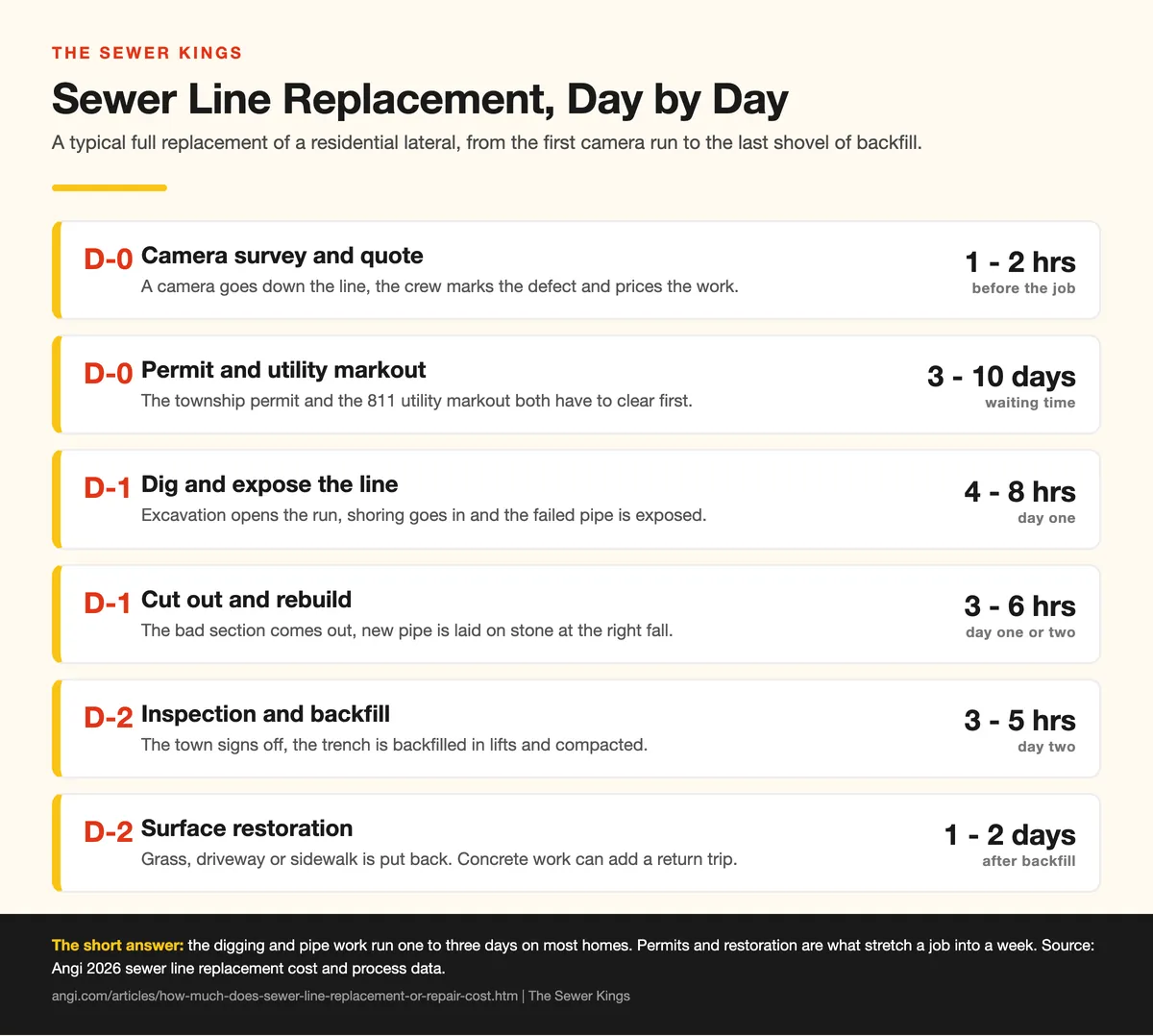
The digging and pipe work on a typical residential sewer line replacement take one to three days. National contractor data collected by Angi puts most full replacements in that window, with longer runs and hard access pushing past it.
The part homeowners do not plan for is everything around the digging. Permits, utility markouts and surface restoration are what turn a two-day job into a two-week calendar.
The Sewer Kings replace laterals across South Jersey year round, and the honest answer is that the crew controls the excavation and almost nothing else. The township controls the permit. The utility companies control the markout.
Below is the real sequence, stage by stage, with the time each one takes. If you have not confirmed the line is beyond repair yet, start with a sewer line inspection so you are not paying for construction you may not need.
What Happens Before Anyone Digs
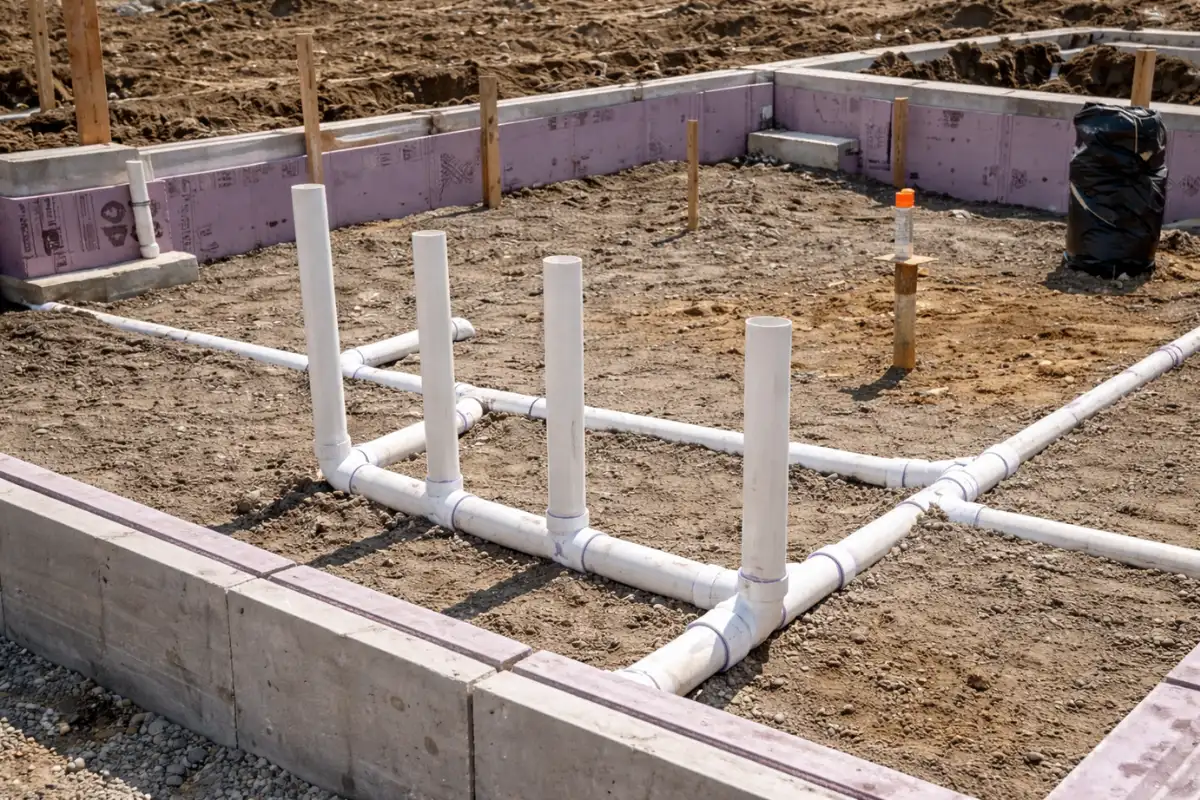
Nothing on this job starts with a shovel. Two steps come first, and one of them is the single biggest variable in the whole schedule.
The camera survey
A camera goes down the line and shows the crew exactly where the pipe failed and how far the damage runs. This takes an hour or two and it decides everything else, including whether you need a full replacement or a spot repair.
Permits and utility markout
Your township wants a permit for the work and often for the road opening. The 811 markout has to clear so nobody cuts a gas or electric line. Together these usually run about three to ten days, and neither one moves faster because you ask. Our guide to repair versus replacement cost covers what these approvals add to the bill.
Scheduling around access
The crew needs room for an excavator, a spoil pile and a truck. Tight side yards, mature trees and a driveway that has to stay usable all shape the plan before day one, and sometimes push the start date.
A Day by Day Look at the Work Itself
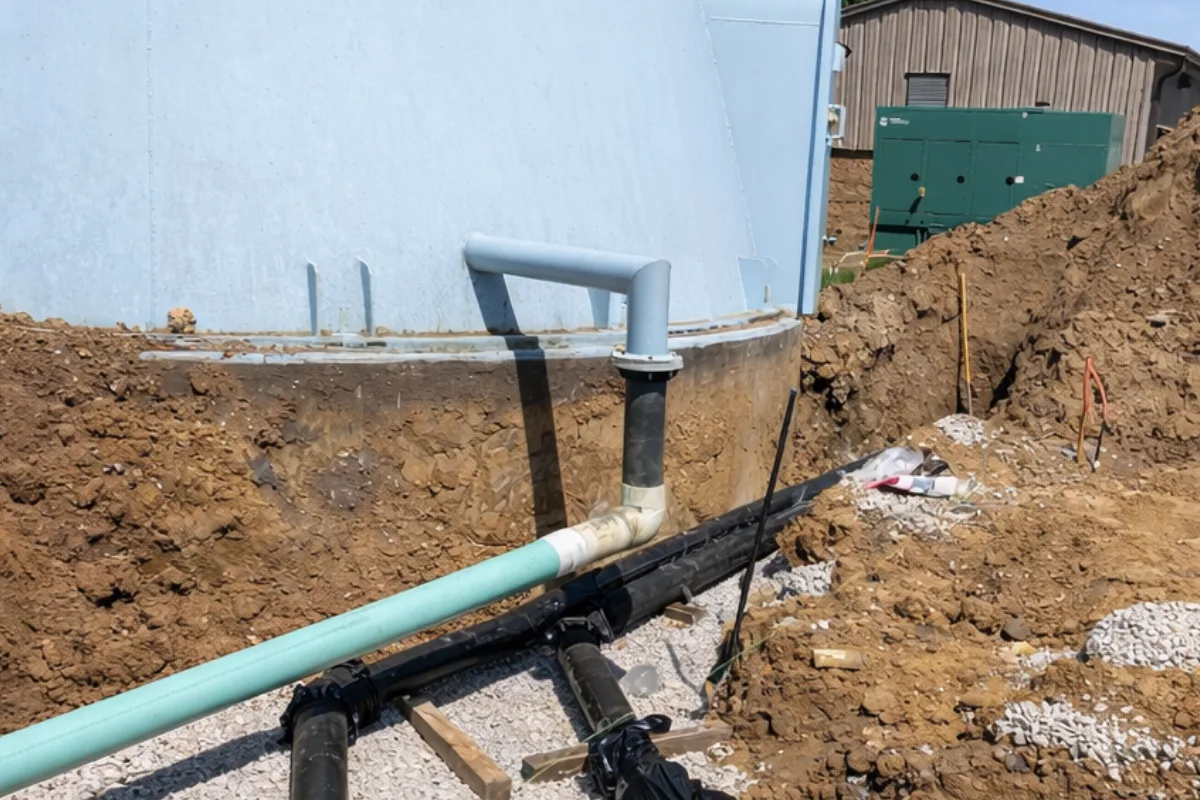
Once the paperwork clears, the physical work follows a set order. The Sewer Kings run that sequence the same way on nearly every residential lateral, and here is what each stage costs you in time.
Day one: open the ground
The crew cuts the trench along the marked path, sets shoring so the walls stay put, and exposes the failed pipe. On a normal residential lateral this fills most of the first working day.
Day one or two: cut out and rebuild
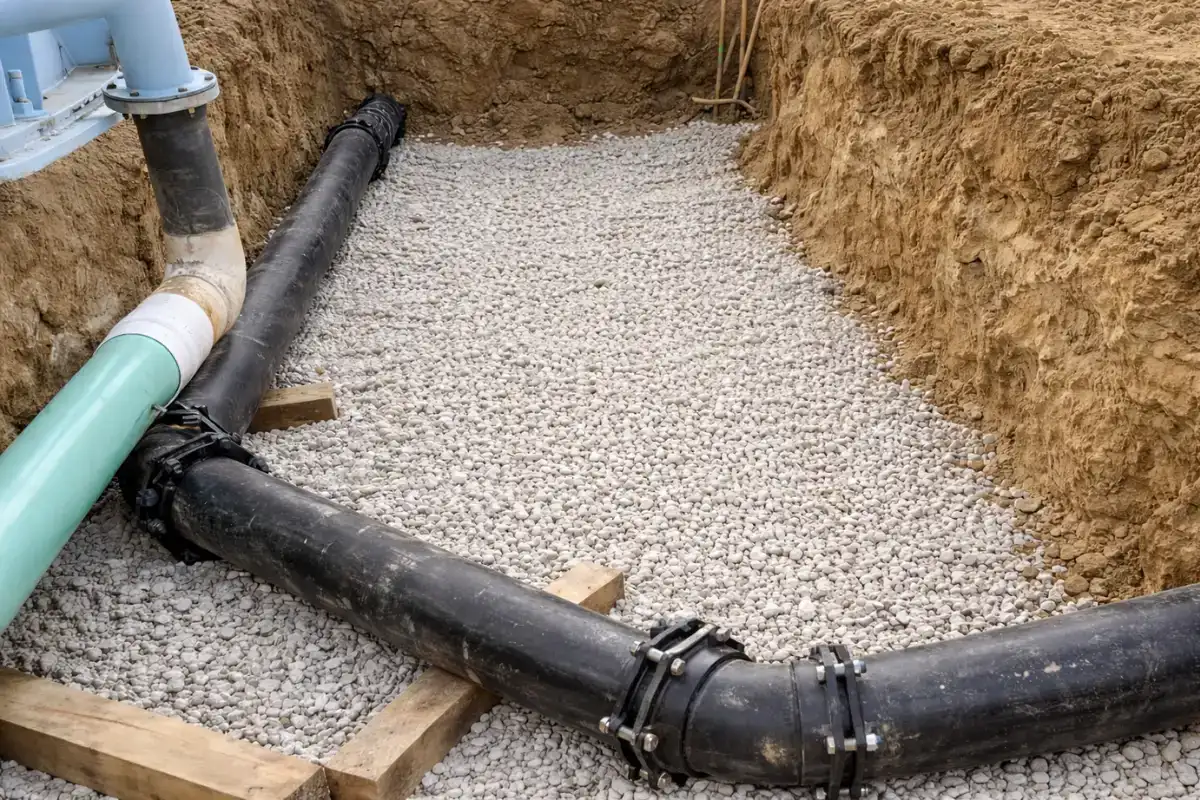
The bad section comes out, new pipe goes in on a bed of clean stone, and the crew sets the fall so waste keeps moving on its own. Getting the slope right is slower than it looks and it is the part that decides whether the line lasts.
Day two: inspection and backfill
The township inspector signs off on the open trench before it can be closed. Then the trench is backfilled in layers and compacted, so the ground does not sink over the next two winters.
After: surface restoration
Grass, driveway or sidewalk goes back. Soil and seed happen the same week. Concrete and asphalt often need a separate return trip once the ground has settled.
What Makes a Replacement Take Longer
Five things stretch the schedule, and four of them can be spotted before the crew ever shows up.
Depth is the first. A lateral three feet down is a different job from one nine feet down. Deeper trenches need more shoring, more spoil handling and more careful backfill.
Distance is the second. A run to the street connection can be short or it can cross the whole property. Every extra foot is more digging, more pipe and more restoration.
Hard surfaces are the third. Cutting a driveway, a sidewalk or a road adds saw work at the start and concrete work at the end, and the concrete usually means a return visit.
Other utilities are the fourth. Gas, water and electric crossing the path all have to be exposed by hand instead of by machine. The nation’s collection systems are old and crowded, and the American Society of Civil Engineers now counts 1.87 million miles of wastewater pipe sharing the ground with everything else.
Weather is the fifth and the only one nobody controls. An open trench in heavy rain is a safety problem, so crews close up and come back.
There is one more delay worth knowing about. If the connection at the street turns out to be broken as well, the job needs a road opening, and that is a separate permit with its own queue. A good camera survey usually spots this before the trench is ever cut.
How to Plan Your Week Around the Work
You can usually stay in the house. Water gets shut off to the line only while the old pipe is cut out and the new one is tied in, which is a matter of hours rather than days.
Ask the crew each morning what the water window looks like, then run laundry and dishes outside it. Plan for one afternoon with no toilet use at all.
Move cars off the driveway the night before. An excavator and a spoil pile need more room than most people expect, and shuffling vehicles mid-morning costs the crew working time.
Keep pets inside while the trench is open. Shoring, spoil piles and open pipe are not safe for a curious dog, and a fenced yard with a trench through it is no longer a fenced yard.
Tell your neighbours the day before, especially the ones who share a driveway or park on the street. A truck, an excavator and a spoil pile take up more curb than people expect, and a two-minute heads up prevents most of the friction.
If waste is already backing up while you wait on a permit, that is a different call. The Sewer Kings run emergency sewer line repair around the clock to keep a house usable until the full replacement can be scheduled, and our guide to after-hours repair costs explains what that premium looks like.
When the ground is finally closed, ask for final camera footage of the new line. The Sewer Kings hand that over as a matter of course on every sewer line replacement, because it is the only proof the job was built right.
Sewer Line Replacement Timing: Common Questions
Can I use the toilet during a sewer line replacement?
For most of the job, yes. The line only goes out of service while the old pipe is cut out and the new section is connected, which is usually a few hours on one day. Your crew should tell you that window each morning so you can plan showers and laundry around it.
Do I have to be home while the work happens?
Not for the whole job, but plan to be there at the start and at the end. The crew needs access, a decision or two about restoration, and a walkthrough when the trench is closed. Everything in between is excavation.
Will my lawn or driveway look the same afterward?
The trench line stays visible for a season. Soil settles, so most yards need a top-up of soil and seed a few months later. Driveways and sidewalks get cut and repoured, and fresh concrete never quite matches the old slab beside it.
For a closer look, see our guide on how long pipe bursting takes.
Find Out What Your Line Actually Needs
The Sewer Kings camera the line before quoting any excavation, so nobody buys a replacement when a repair would hold. Family owned, fully licensed, bonded and insured, and available 24/7 across Burlington, Camden, Gloucester and Atlantic counties.
Call (856) 626-9366 and we will walk you through the schedule for your property before a shovel touches the ground.