

Signs Your Water Line Needs to Be Replaced
The main water line hides underground, so it warns you in other ways. Here is what to watch for.
When the Main Line Starts to Fail
A water line usually needs replacing when you see low pressure, wet spots in the yard, discolored water, or a water bill that climbs for no reason. One sign alone can be a small fix. Several at once often point to the line itself.
The main water line runs underground from the street to your house. You cannot see it, so these clues are how it tells you something is wrong.
Below are the signs, what each one means, and a simple test you can run today. If you already suspect a problem, see our water line replacement service.
Six Warning Signs of a Failing Water Line
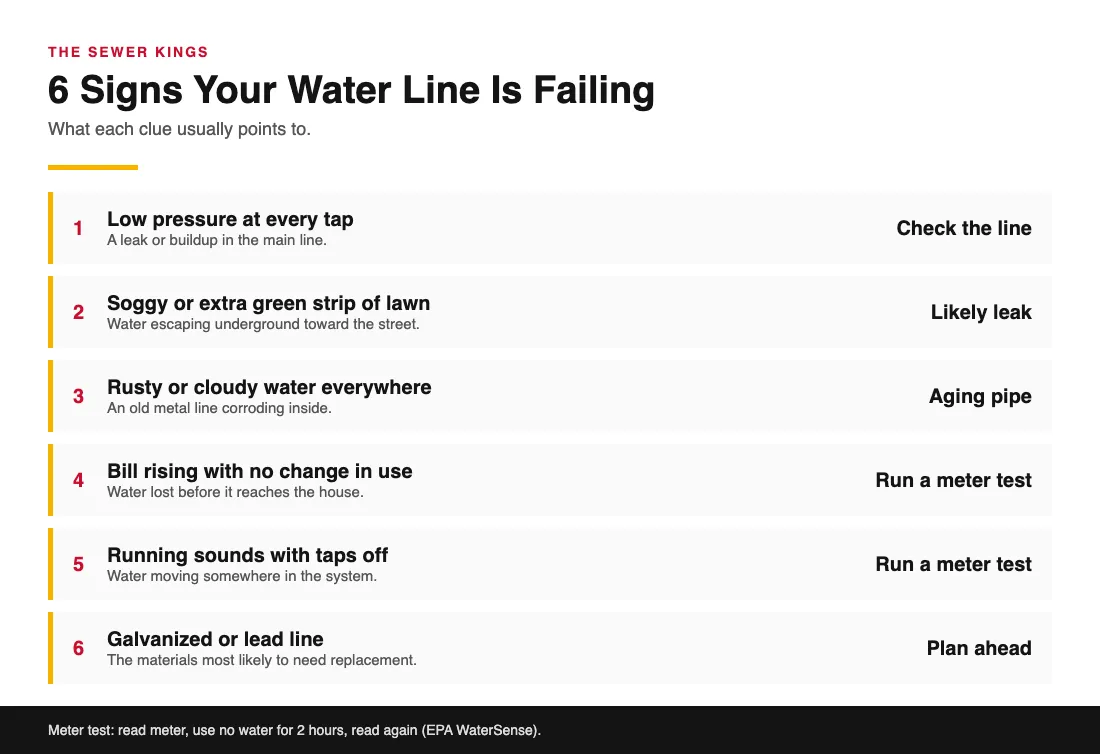
Water pressure keeps dropping
If every faucet in the house loses pressure, not just one, the problem is often upstream of your fixtures. A leak or heavy buildup in the main line can starve the whole house.
Wet or extra green patches in the yard
A leak underground feeds the grass above it. A strip of lawn that stays soggy or grows greener than the rest, often in a line toward the street, is a classic sign.
Rusty or cloudy water
Brown or yellow water can mean an old metal line is corroding from the inside. If it shows up at every tap, the main line is a likely source.
A water bill that climbs
A higher bill with no change in how you use water often means water is escaping before it reaches your fixtures.
Sounds of running water
Hissing or running sounds when every tap is off can point to a leak somewhere in the system.
An old pipe material
Many older homes still have galvanized steel or lead service lines. Age alone does not mean failure, but these materials are the ones most likely to need replacement.
Sinking soil or a new hole
Water running underground can wash soil away. A small sinkhole or a dip along the path of the line is a sign to call someone soon.
Repeated leaks inside the house
When one repair is followed by another somewhere else, the whole system may be wearing out rather than one bad spot.
How to Test for a Hidden Leak
You can check for a leak with nothing but your water meter. The EPA’s WaterSense program suggests reading the meter, using no water for two hours, then reading it again. If the number moved, you likely have a leak.
Leaks add up fast. The EPA reports that the average household’s leaks can waste more than 9,300 gallons a year, and nine percent of homes have leaks that waste 50 gallons or more per day.
Narrow it down
If the meter moves, shut the main valve inside the house and test again. If the meter still moves with the house valve closed, the leak is likely between the meter and the house, which is the main line.
Check the curb
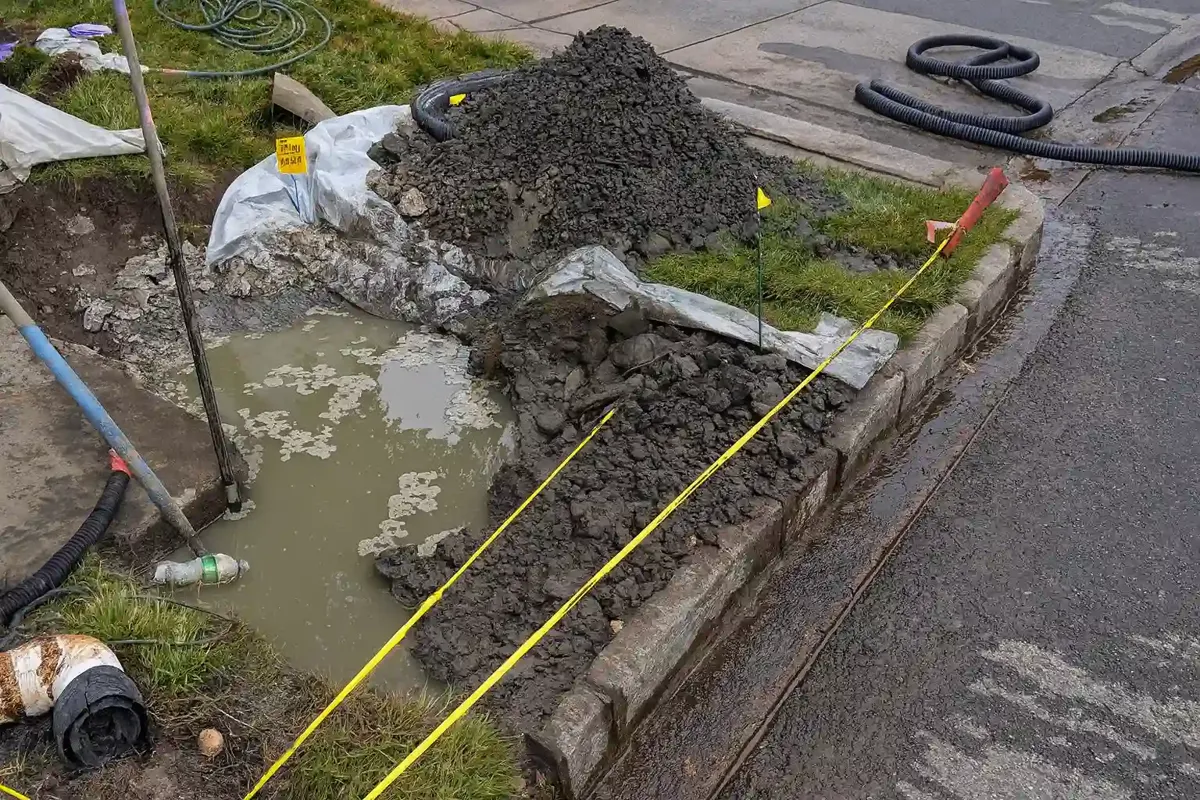
Walk the path from the street to your foundation. Look for sinking soil, wet spots or a patch of grass that looks different from the rest.
Write down your readings
Take a photo of the meter at the start and end of the test. If you call a contractor, those two photos help them understand the problem faster.
Run the test at a quiet time, like early morning or when everyone is out. Make sure no one runs a dishwasher, washing machine or ice maker during the two hours.
What We Find on South Jersey Water Lines
The Sewer Kings replace water lines across Burlington, Camden, Gloucester and Ocean counties. Older homes here often still have aging galvanized or copper lines, while newer homes can see pressure problems from a damaged line.
Lead is a special case in New Jersey. A state law signed in 2021 requires water systems to find and replace all lead service lines, and the New Jersey DEP’s replacement plan guidance covers how systems inventory and replace them. If your line is lead, ask your water company what the program covers on your side of the property line.
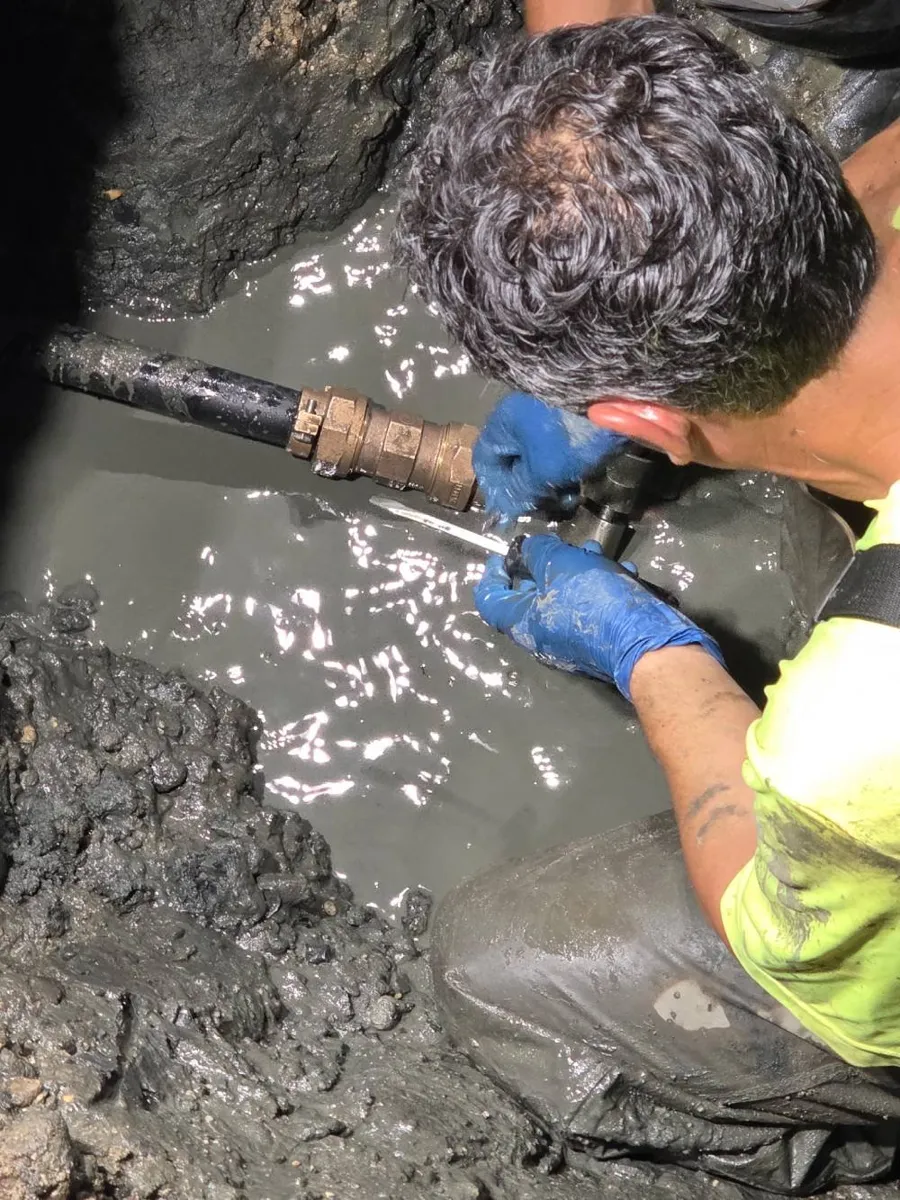
When we replace a line, we use corrosion resistant pipe such as HDPE. Our crews start with diagnostics to find the leak or damage before any digging, and we work to keep lawns, concrete and landscaping as intact as the job allows.
Anthony and Mark Papaneri learned this trade on their father’s water and sewer projects. A burst line does not wait for business hours, so our team answers 24/7.
Before we dig, we mark the path of the line and call in the required utility markout. That keeps the job safe and tells us where gas, electric and cable lines sit near the water service.
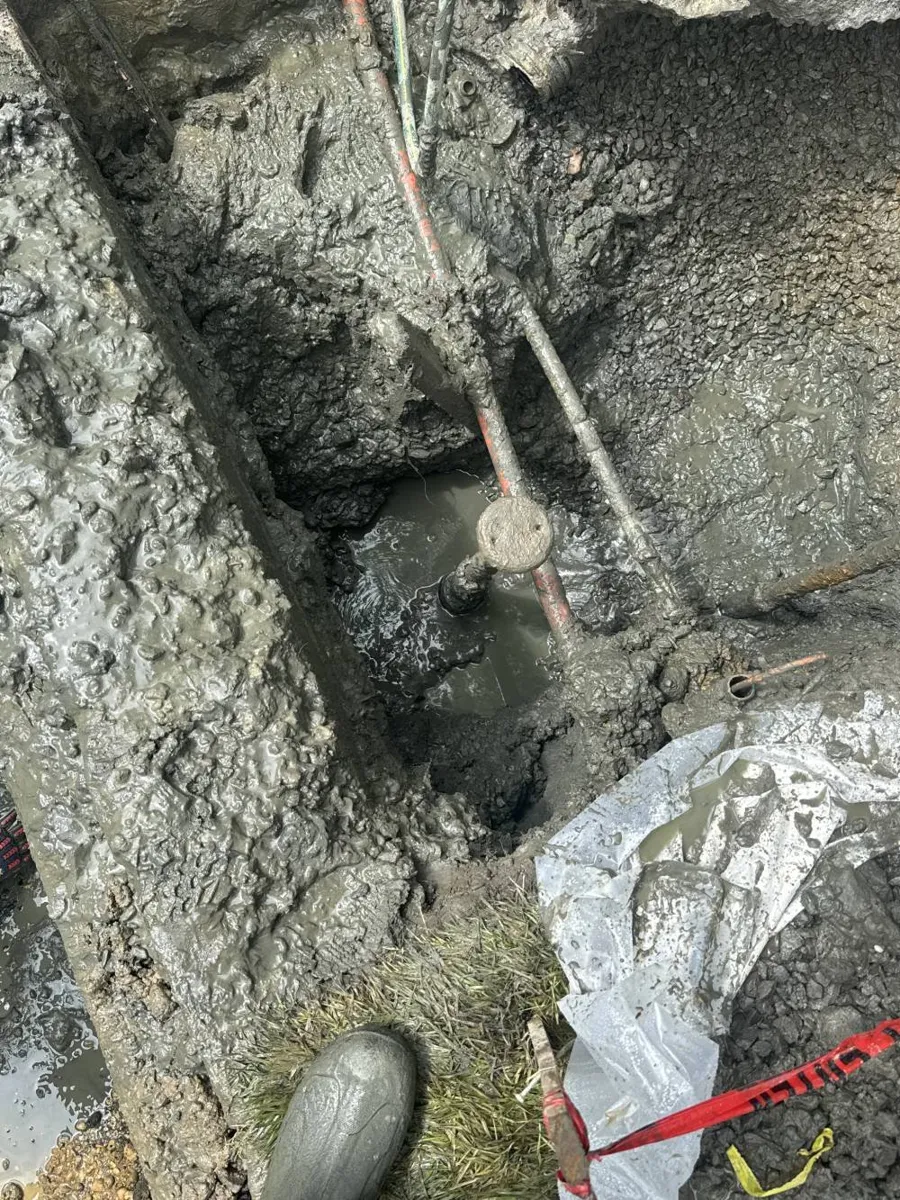
Repair or Replace: What to Do Next
A single leak on a newer line can often be repaired. If the line is old, has leaked more than once, or is made of galvanized steel or lead, replacement is usually the better spend.
Start with the meter test. If it points to the main line, call a water line contractor for an inspection before the leak damages your yard or foundation.
Ask about cost up front. HomeGuide’s 2026 water line cost guide puts main water line replacement at $2,000 to $5,000 on average, with trenchless work at $70 to $250 per foot.
Do not wait on a leak that is getting worse. Water under a slab or near a foundation can cause damage that costs far more than the line itself.
Keep records of any leak repairs you have had. A pattern of repairs over a few years helps a contractor judge whether the line is near the end.
For local numbers, read water line replacement cost in New Jersey, and check whether homeowners insurance covers broken water pipes before you file anything.
Water Line Warning Signs: Common Questions
How long does a main water line last?
It depends on the material and the soil around it. Older galvanized steel lines tend to wear out first, while newer plastic lines can last much longer. If your home is decades old and still has its first line, it is worth an inspection.
Who is responsible for the water line to my house?
In most towns the utility owns the line up to the curb or meter, and the homeowner owns the rest to the house. Your water company can tell you exactly where that split is on your street.
Can a leaking water line be replaced without digging up my yard in NJ?
Often, yes. In South Jersey, The Sewer Kings use methods that limit digging and protect lawns, driveways and landscaping. An inspection shows which approach fits your line.
Think Your Water Line Is Failing?
The Sewer Kings find the problem first, then fix it with as little digging as the job allows. Family owned, licensed, bonded and insured, and available 24/7 across Burlington, Camden, Gloucester and Ocean counties.
Call (856) 626-9366 today.