


A Sewer Cleanout Is Your Sewer Line’s Access Door
A sewer cleanout is a pipe with a removable cap that connects to your main sewer line. It lets a plumber reach the line without digging or pulling a toilet.
Most homes have at least one, and many owners have never seen it. Knowing where it is saves time on the day a drain backs up, and it makes sewer line cleaning faster and cheaper.
This guide covers what a cleanout looks like, the four places it usually hides, and what to do when you cannot find it.
What a Sewer Cleanout Looks Like
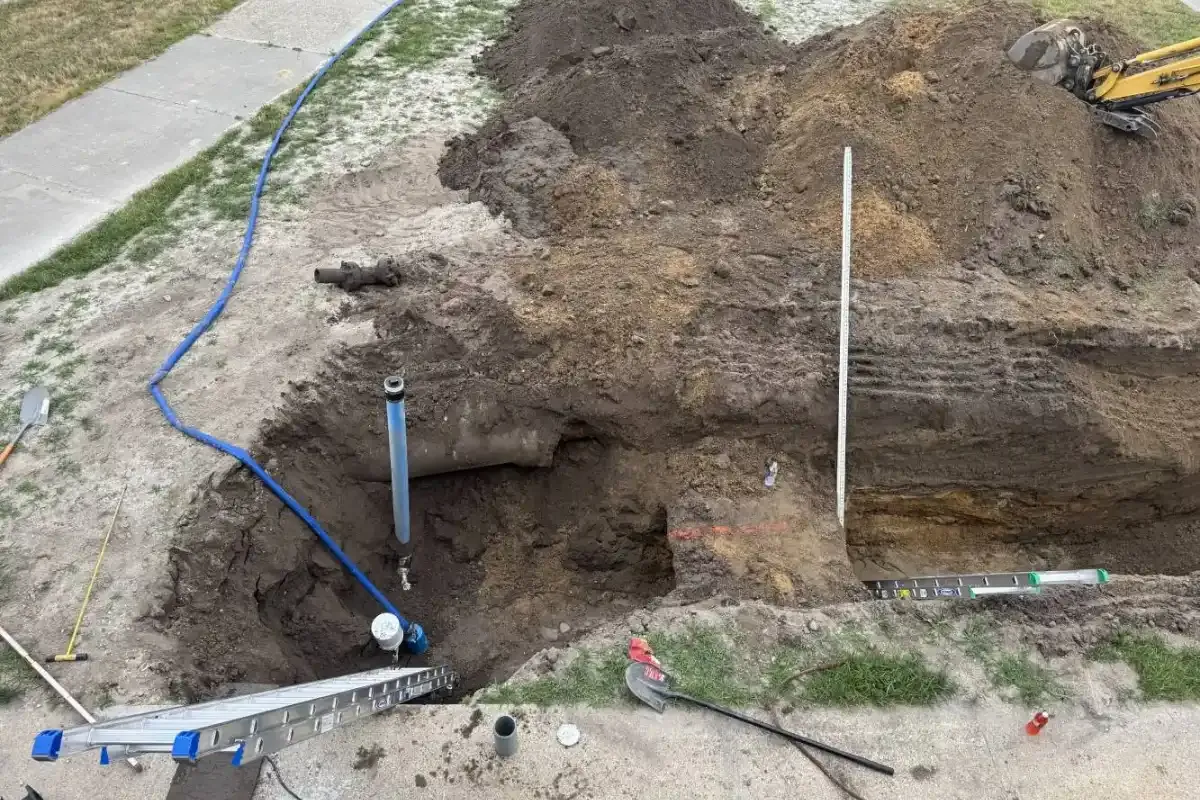
A cleanout is a short pipe, usually 3 to 4 inches wide, that sits on top of your sewer line. One county sewer district describes it as a point of access where the sewer lateral can be serviced.
The top is closed with a threaded plug. The plug often has a square nut so a wrench can turn it.
Common Materials
Newer homes use white PVC or black ABS plastic. Older homes may have brass or cast iron. The cap color and pipe type tell you roughly when the line was installed.
Inside and Outside Versions
Inside, the pipe stands up or leans at a slight angle near the floor. Outside, it may rise a few inches above the ground or sit flush under a round lid.
The cleanout points down the line in the direction of flow. That lets a crew feed a cable, a jetting hose or a camera straight into the pipe.
It does not look like a drain, so it is easy to miss. Look for a capped pipe with nothing else attached.
Some homes have two cleanouts: a main one near the house and a second at the property line. Both do the same job, but they open the line at different points.
That matters when a clog sits far from the house. A crew can pick the cleanout closest to the blockage and clear it with less work.
Where Is the Sewer Cleanout on Your Property?
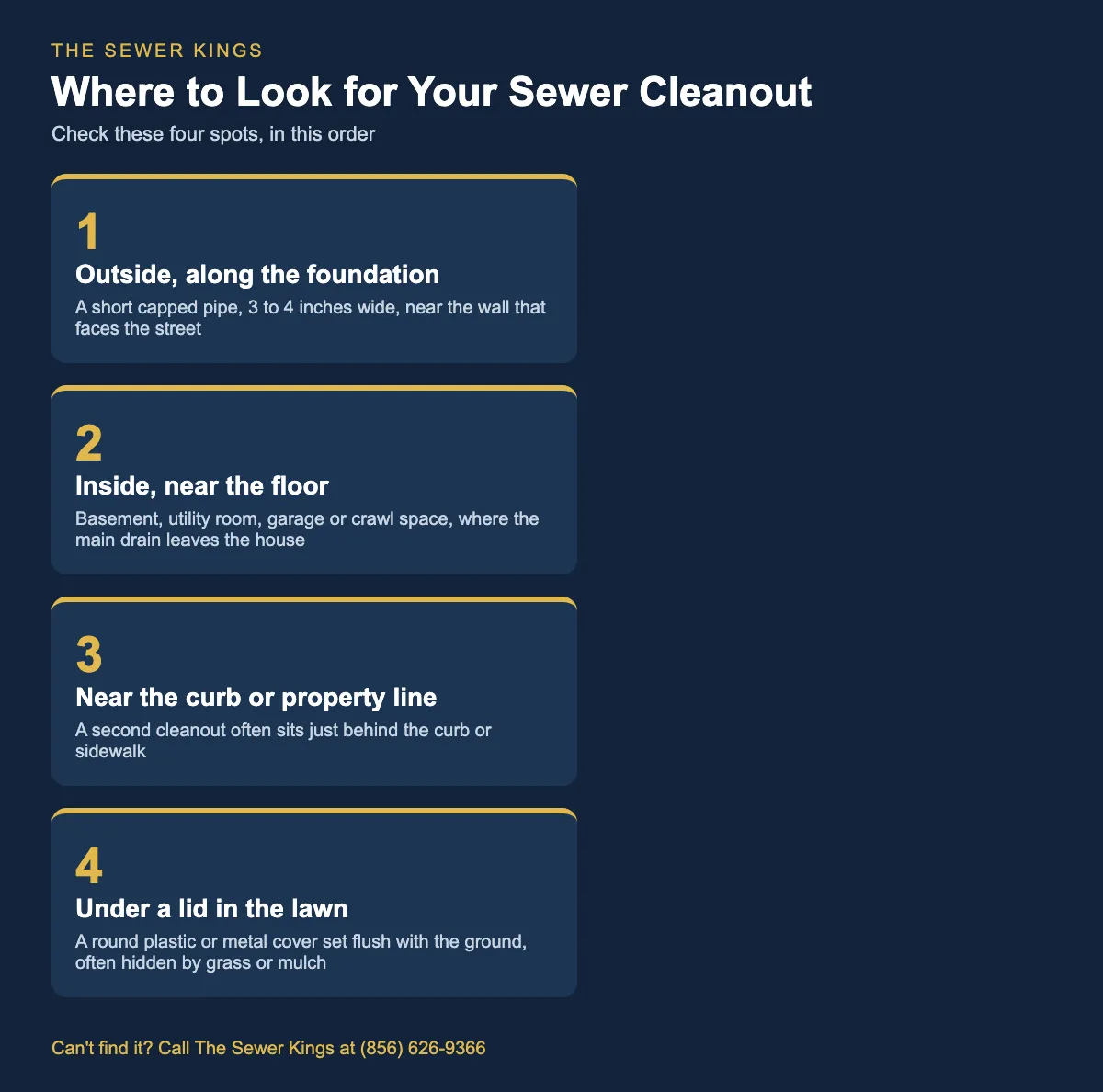
Most homes have a cleanout in one of four spots. Check them in this order.
Along the Outside Foundation
Walk the wall that faces the street. Look for a capped pipe within a few feet of the house. Some sit in a small box with a metal cover.
Inside Near the Floor
In colder climates like New Jersey, the main cleanout is often inside. Check the basement, utility room, garage and crawl space, close to where the main drain leaves the house.
Near the Curb or Property Line
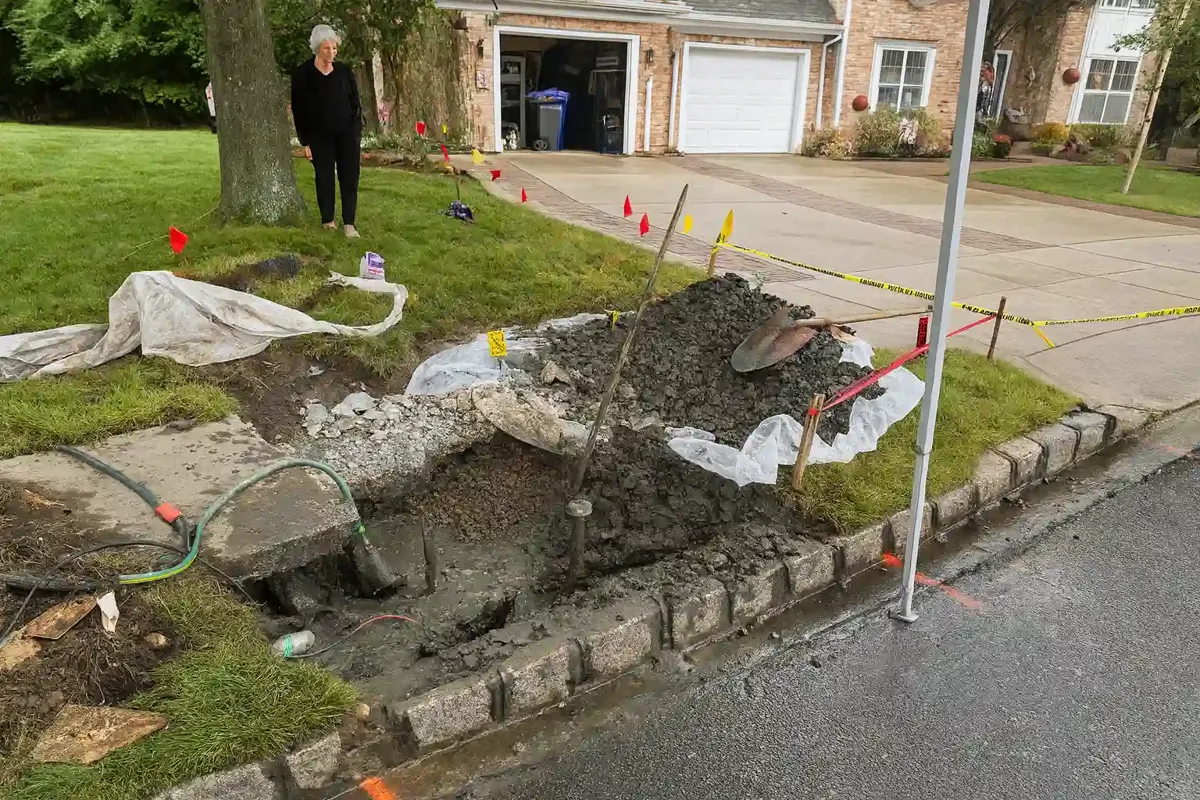
Many towns want a second cleanout near the property line. The same Lake County page says two are typically installed at each building: one just outside the home and one at the property line.
Under a Lid in the Lawn
A round plastic or metal cover set flush with the ground may hide the cap. Mulch and grass grow over these fast, so probe the soil gently with a screwdriver.
If nothing turns up, trace the line backward from the street. The main runs from your house toward the sewer main under the road.
How Often a Cleanout Is Needed, and What We See in South Jersey
The model plumbing code sets a spacing rule. The International Plumbing Code requires cleanouts on horizontal drains no more than 100 feet apart. It also calls for one at the point where the building drain becomes the building sewer.
Your local code may differ, so a township can ask for more. That is why older houses often have just one, while newer ones have two.
The Sewer Kings is a family run crew owned by brothers Mark and Anthony Papaneri. On many calls in Evesham and across South Jersey, the first hour goes to finding a buried cap.
A good cleanout changes the job. We can run a camera through it and see the pipe before anyone picks up a shovel.
Without one, the camera has to go in through a toilet or a roof vent. That takes longer, and it can miss the real problem.
Roots are the most common reason we are called. They slip into joints in older clay and cast iron pipe, and a cleanout lets us cut them out and then check the pipe with a camera.
When a line has no cleanout at all, we can add one while the pipe is open for a repair. It is a small cost compared with digging up the yard a second time.
What to Do Once You Find Your Cleanout
Do not open it during a backup. Sewage can rush out under pressure, and a cap that has not been moved in years can crack.
Instead, mark the spot. Clear the mulch, take a photo, and keep the area free of heavy items. Write the location on the inside of a cabinet door so anyone in the house can find it.
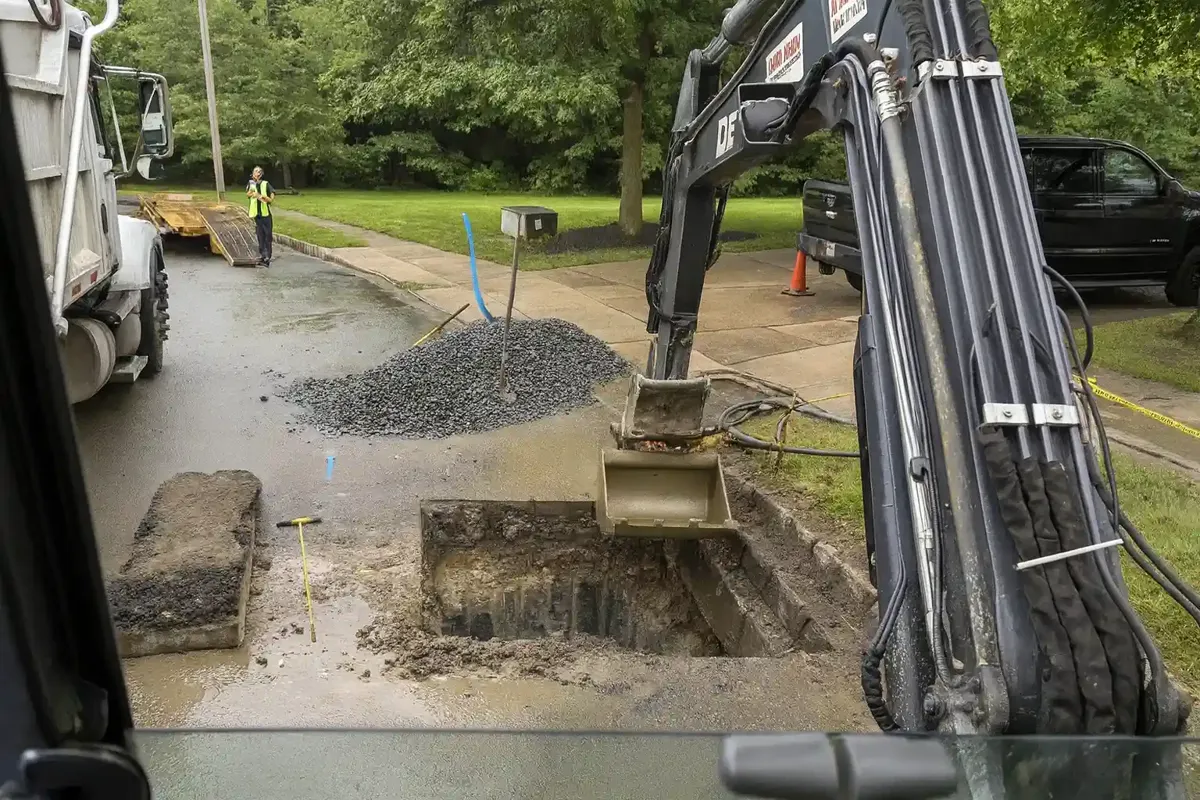
If the cap is buried, a plumber can uncover it and set a riser to bring it up to grade. If it is broken, replace it so dirt and roots stay out.
If a drain keeps backing up, read about what causes a main sewer line backup and how to tell if your sewer line needs repair. A camera visit costs less than most people expect, and our guide to how much a sewer camera inspection costs breaks it down. It also helps to know how deep the line under your yard sits, and if waste keeps collecting in one spot, what a belly in a sewer line is explains why.
Before any digging near your cleanout or line, see whether 811 locates sewer lines. Often it does not, so a private locate may be needed.
Frequently Asked Questions About Sewer Cleanouts
What does a sewer cleanout do?
It gives a plumber direct access to the main sewer line. Crews use it to run a cable, a jetting hose or a camera. It avoids pulling a toilet or digging a hole just to reach the pipe.
Do all houses have a sewer cleanout?
No. Many older homes in towns like Evesham and Marlton have none, or have one buried under the lawn. Newer homes usually have at least one. If yours has none, a plumber can add one during a repair.
Can I open my sewer cleanout myself?
It is possible, but not during a backup. Pressure can push sewage out the moment the cap turns. Call a pro first, and wear gloves and eye protection if you must check it.
Cannot Find Your Sewer Cleanout in South Jersey?
The Sewer Kings will find it, uncover it, or add one at your Evesham home. We are licensed, bonded and insured, and we answer the phone 24 hours a day.
Call (856) 626-9366 today.