


Sewer Line Easements: Who Can Dig on Your Property?
A sewer line easement is a recorded legal right that lets a utility or neighbor enter part of your land to work on a sewer pipe. It affects repairs because it decides who can dig, where, and who pays. Our sewer line repair crews run into easements often, so here is how they work in plain terms.
You still own the land under an easement. You just share the use of one strip of it. Knowing where that strip is can save you from a blocked repair, a fine, or a fight with a neighbor.
What Does a Sewer Easement Let Someone Do?
An easement gives the holder the right to use a strip of your property for a set purpose. For a sewer, that purpose is to reach the pipe. According to the San Francisco Public Utilities Commission the utility can enter to do routine maintenance, build improvement projects, and make emergency repairs.
Easements are recorded. That means they stay with the land, even when the house sells. The next owner is bound by the same terms you are.
Where you usually find them
Most sewer easements run along a side or back property line. Some cross a front yard to reach the street. If a main sewer line serves several homes, it may cross a few lots.
What the holder can and cannot do
The holder can get in to inspect, clean, repair or replace the pipe. They usually must give notice first, except in an emergency. They are not allowed to take your land or use the strip for something unrelated to the sewer.
What you can and cannot do
You can mow it, plant grass and use it as yard space. You generally cannot build on it or block access. Many utilities will not pay to replace a shed, deck, fence or patio that was in the way.
How Does an Easement Change a Sewer Repair?
An easement changes three things on a repair: who gets access, who pays, and what you may build near the pipe.
Access
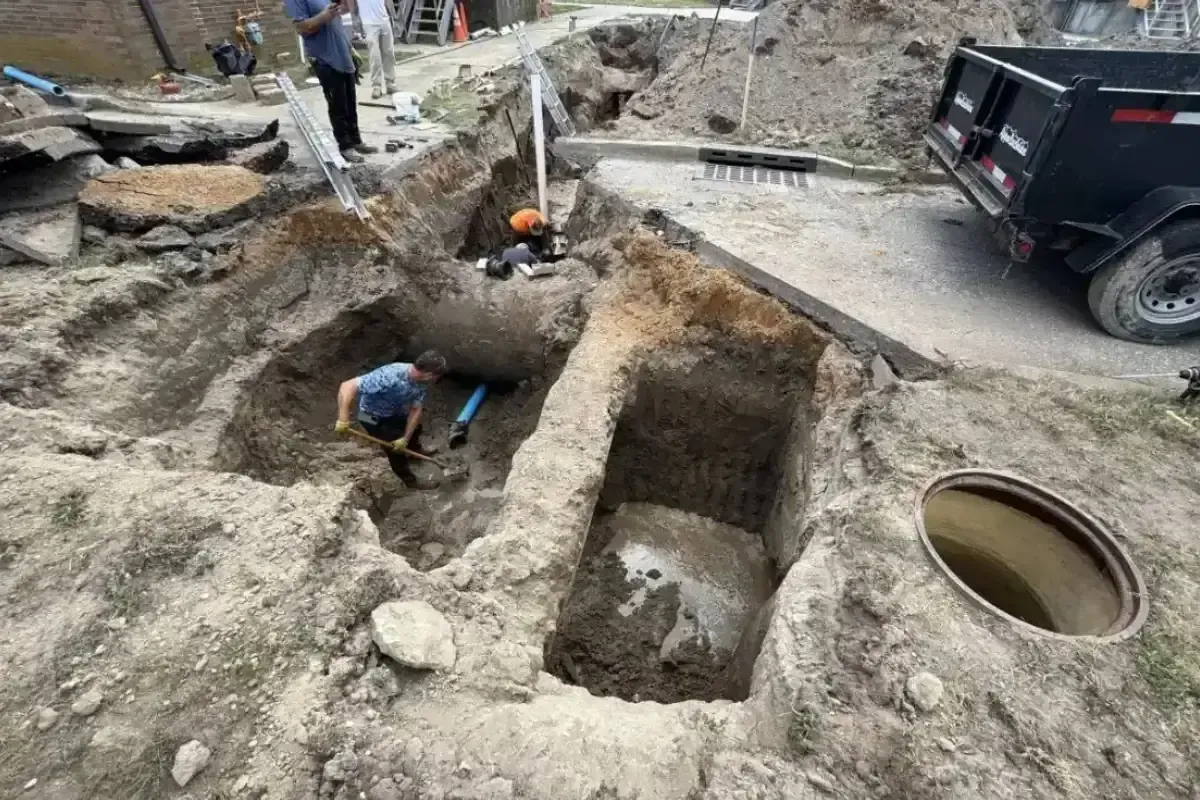
If the pipe is on your lot but the easement is for a neighbor or the town, they can reach it. If the pipe serving your house crosses a neighbor’s lot, an easement is what gives your plumber the right to dig there. Without one, you need the neighbor’s written permission.
Who pays depends on who owns the pipe, not on who owns the land. The easement only controls access.
The lateral is the pipe that runs from your house to the main. Utilities often make the homeowner responsible for it, even inside an easement. The SFPUC states that repair and replacement of a lateral in an easement area is the property owner’s job. Local rules differ, so check yours.
What you can build
Anything permanent on top of the easement can be removed if the pipe needs work. That includes sheds, decks, pools, fences and large trees. Roots from trees near the line can also damage the pipe, which brings the repair on sooner.
Digging rules: any dig on an easement needs an 811 call first. Under New Jersey’s rule for excavators, notice goes in at least three business days before digging and no more than ten, according to N.J.A.C. 14:2-3.1 on the Cornell Legal Information Institute site.
What Do Easements Look Like on a Real Dig in Evesham?
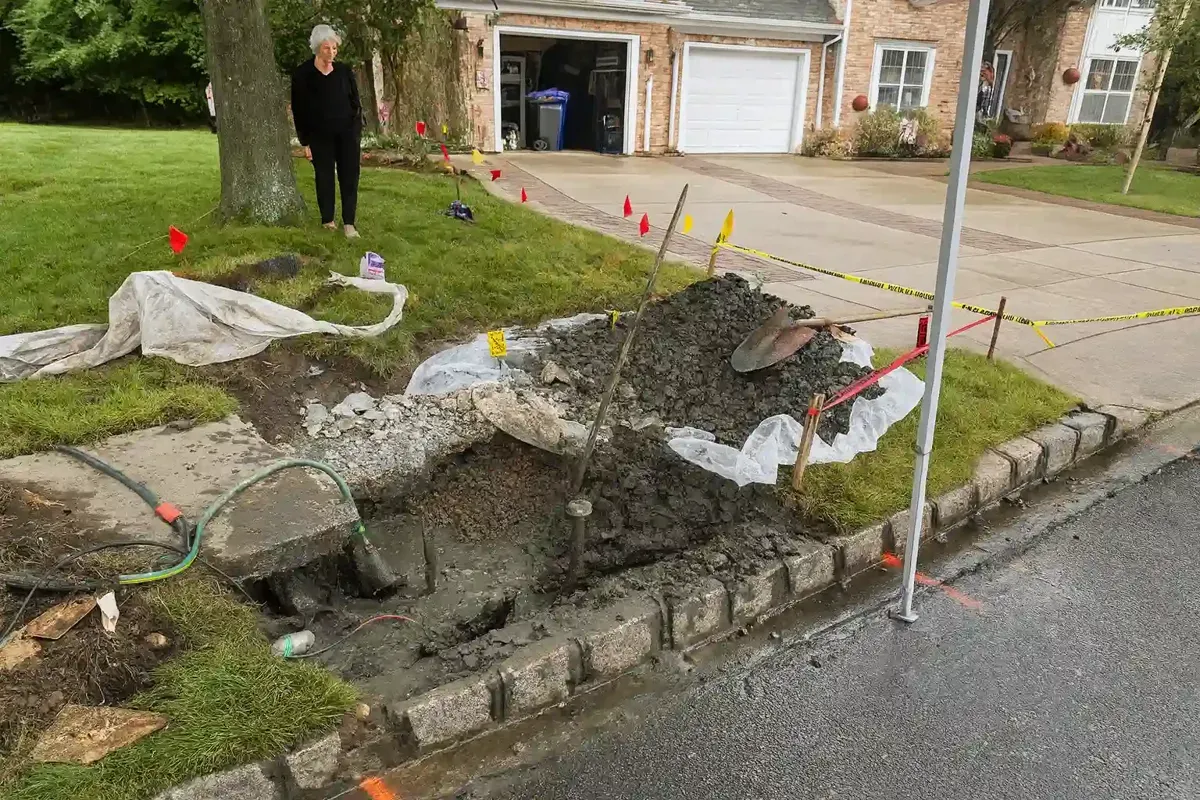
On the curbside dig pictured at the top of this post, the lawn was covered in marker flags and paint before we opened the ground. Each color stands for a different buried line. That is the 811 markout at work.
In South Jersey, a sewer line often runs through the same narrow strip as gas, water and electric. When we dig a sewer repair, we read those marks first and hand dig near any flag. That keeps the repair safe and keeps the homeowner out of trouble.
Homeowners often tell us they did not know a sewer pipe crossed their yard at all. A quick look at the closing papers, the survey or the plat map usually answers it. If those do not, the local sewer authority can tell you.
Sewer work in New Jersey also depends on pipe age. Many older homes still have clay or other aging pipe, and an easement can mean a long run to dig. That is one reason we offer trenchless sewer line replacement when the site allows it, so less of the strip gets torn up.
How Do You Check for an Easement Before a Repair?
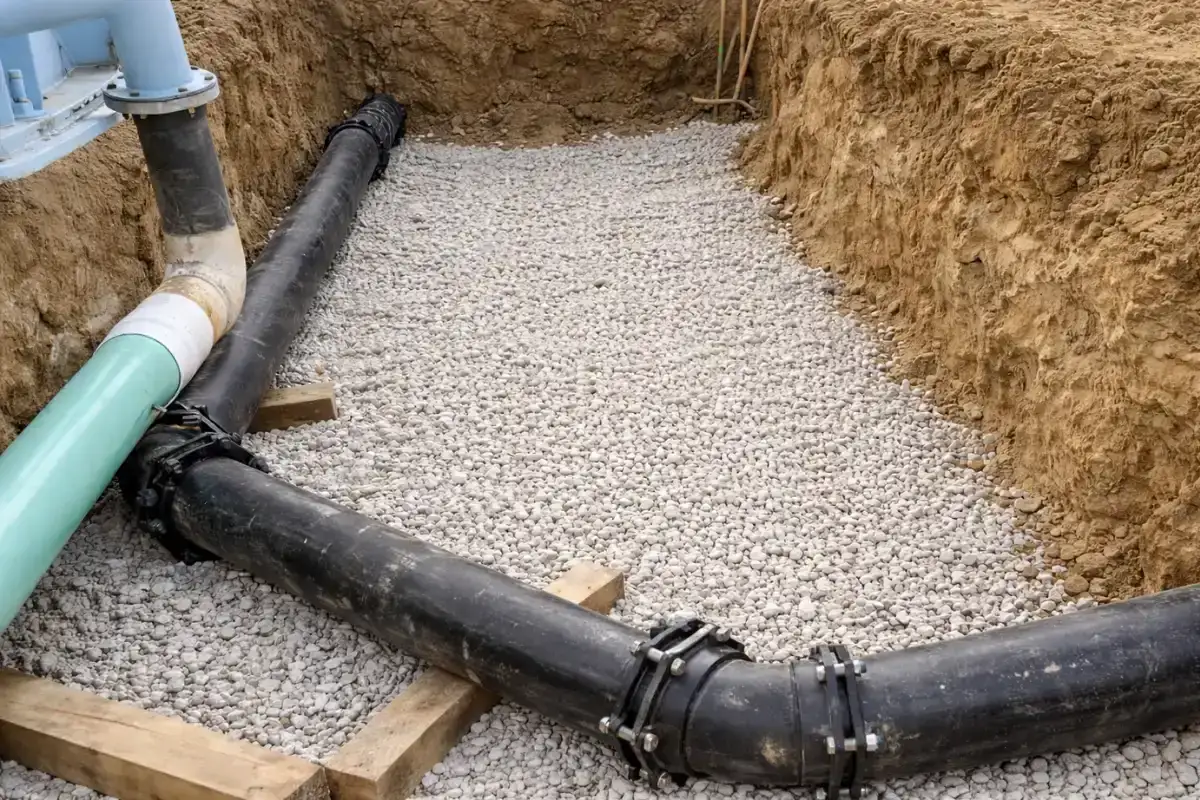
Start with paperwork. Look at your title report, survey and deed. An easement shows up as a recorded strip with a width and a purpose.
Next, find out where the pipe actually runs. Our guide on finding out where your sewer line runs walks through the steps. If you are not sure the pipe is yours alone, read how to find out if your drain is shared.
Before any dig, call 811 and read does 811 locate sewer lines. The call is free, and it covers many buried lines, though not always a private sewer lateral.
When the easement belongs to the town or a utility, talk to them before you hire anyone. When it crosses a neighbor’s land, get the permission in writing. Then hire a licensed contractor who will pull the right permits and keep the dig inside the easement.
Sewer Line Easement FAQs
Can a neighbor build over a sewer easement?
Usually not. A permanent structure on an easement can block the holder’s access, and the holder may make the owner remove it. Check the recorded terms and your local code before building anything.
Do I own the land under a sewer easement?
Yes. An easement gives someone the right to use the strip, not ownership of it. You still pay taxes on it and can use it in ways that do not block access. If you live in Evesham or nearby, the township or sewer authority can tell you where yours sits.
How do I find out if my property has a sewer easement?
Check your title report, survey, deed and plat map. Easements are recorded, so they usually appear there. You can also ask your local sewer utility or the county records office.
Need a Sewer Line Repaired in South Jersey?
The Sewer Kings in Evesham, NJ will locate the line, work within your easement and fix it right. Call for a free estimate.
Call (856) 626-9366 today.