Drain Mapping in Cherry Hill Township, NJ

5.0
& Yelp Reviews


Book A Free Estimate
Submit your information below.

Our Reviews

Why South Jersey Trusts The Sewer Kings


Book A Free Estimate
Submit your information below.
A Record of Every Drain Line on Your Property
Tracing follows one line. Mapping records the whole network, showing how every run connects, where each chamber sits, and how deep the pipe is at each point.
The result is a drawing you can hand to any contractor. It is one of the drain and sewer services in Cherry Hill Township that pays for itself the first time somebody needs to dig on the site.
The Sewer Kings maps single homes, apartment complexes, and commercial sites. Bigger properties get the most from it, because that is where nobody left a record and everybody assumes somebody else has one.
Larger sites almost never have one drainage system. They have several, built at different times by different people, and mapping is how those pieces finally get seen as a whole.
Mapping is the one drainage service that pays off years later. The drawing sits in a file doing nothing until the day somebody needs to dig, and then it saves the whole project.
What a Drain Map Shows
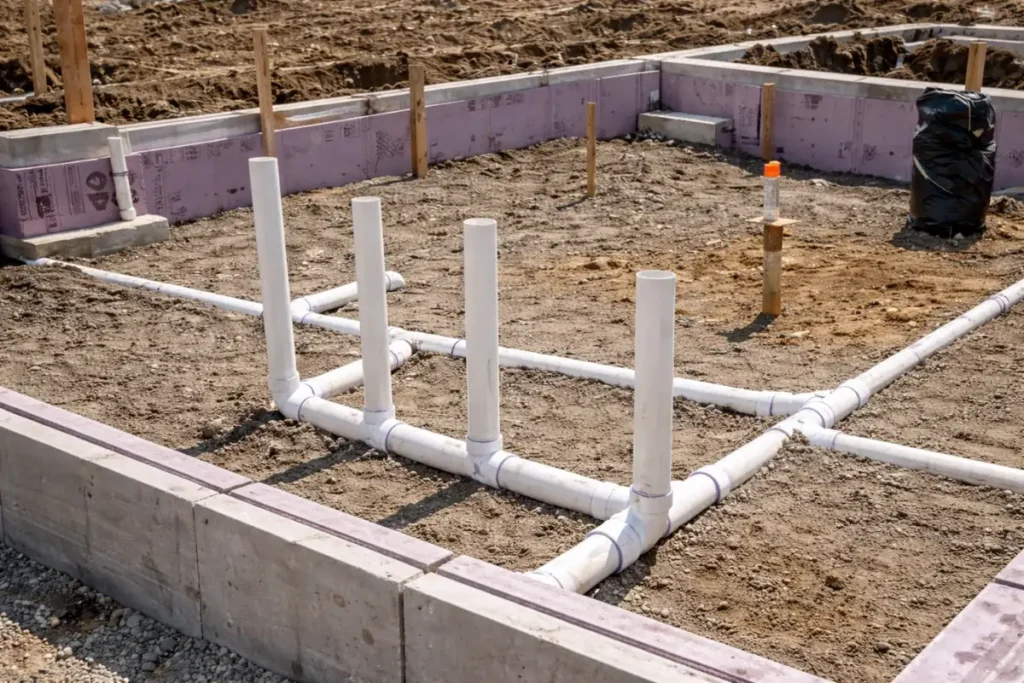
The layout is the heart of it. Every pipe run drawn to position, with junctions, bends, and the direction water travels through each section.
Depths and pipe sizes go on the drawing too. That combination is what any future contractor needs before they can quote work honestly.
Chambers, cleanouts, gullies, and grates get located and numbered. Numbering them means a report can point to a specific structure instead of describing it.
Condition notes ride alongside where we camera the runs. A map that also tells you which sections are in poor shape is far more useful than a layout alone.
Fall between structures gets recorded where it can be measured. Knowing which way a run drops explains a lot about why one section keeps collecting and another never does.
Dead runs get marked as dead. Abandoned pipe that no longer carries anything is worth showing on the drawing precisely so nobody wastes a day investigating it again.
Chamber depths and cover types go on the record. Knowing which structures need heavy lifting equipment is the kind of detail that stops a scheduled visit from being wasted.
How We Build the Map
We start by opening everything. Every cover, cleanout, and grate on the site gets lifted so we can see what connects where before any camera work begins.
Then we trace each run. A camera with a transmitting head travels the pipe while a receiver follows it from the surface, recording route and depth as it goes.
Junctions get proved rather than assumed. Where two runs are thought to meet, we confirm the connection by tracing from both directions.
The measurements become a drawing. Distances are taken from fixed features on site, so the map stays accurate even after landscaping changes around it.
Dye testing settles the awkward ones. Where a signal cannot follow a run, dye put in at one point and watched for at another proves the connection beyond argument.
We work systematically rather than following the interesting bits. Every structure gets visited in order, which is the only way to be sure nothing on the site is missed.
Surface features get drawn in as reference. Buildings, fence lines, and kerbs give the map fixed points so anyone reading it can orient themselves on site.
Who Needs a Drain Map
Anyone planning building work needs one first. An extension, a pool, a slab, or a new parking area over a live drain becomes a costly problem the day it is discovered.
Property managers use maps to plan maintenance. Knowing where every chamber sits turns a scattered set of call-outs into a routine that can be scheduled and budgeted.
Buyers of older or larger properties get real value from it. Cherry Hill Township has plenty of buildings whose drainage was extended piece by piece with no record kept.
Anyone in a shared drainage dispute needs one too. A map showing which run serves which building settles the responsibility question with evidence instead of opinion.
Sites with several buildings need it most. Shared runs, private connections, and old lines from demolished structures all overlap, and nobody remembers which is which.
Facilities teams inherit the benefit. Staff turn over, and a drawing on file outlives whichever caretaker used to know where everything ran.
Older homes with additions are strong candidates too. Every extension added a pipe run, and after two or three of them nobody has a clear picture of the whole system.
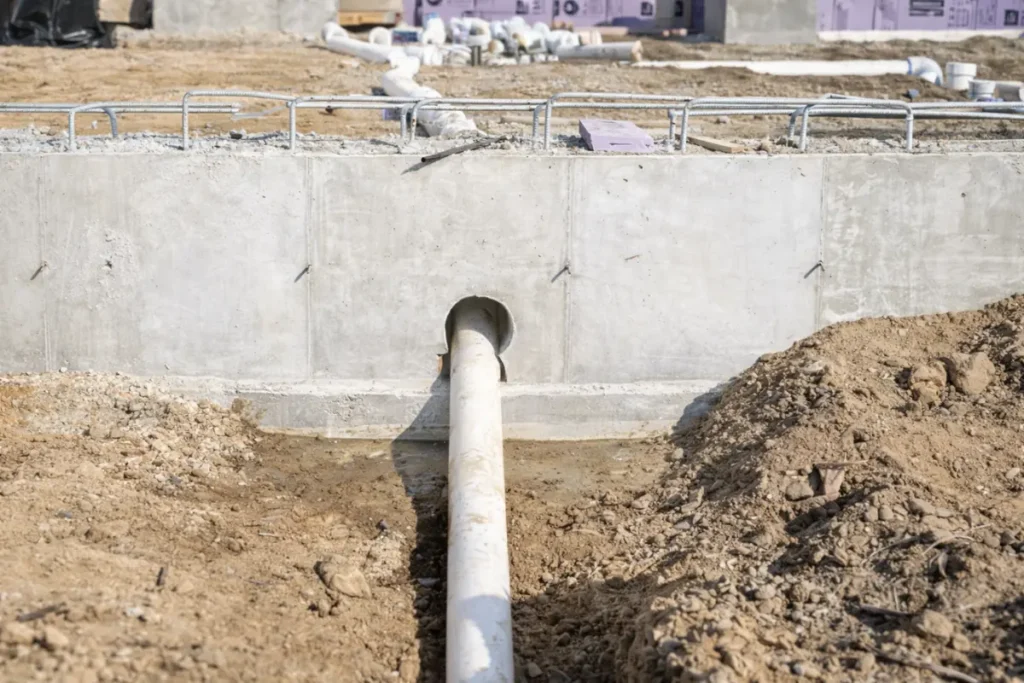
One local crew for every drain, sewer, and pipe problem in Cherry Hill Township.
LICENSED, BONDED, AND INSURED IN CHERRY HILL TOWNSHIP, NJ
Mapping, inspection, cleaning, and repair all come from the same family-owned crew. The Sewer Kings quotes a flat rate for the survey and hands you the drawing to keep.
Using the Map for Repairs and Building Work
The most common use is planning a dig. With route and depth on paper, a repair becomes a small targeted excavation instead of a search across the property.
Architects and builders use it at the design stage. Moving a footing two feet on a drawing costs nothing, while moving a drain after the concrete is poured costs plenty.
Maintenance planning gets easier as well. When a report says chamber four holds sediment, the map tells the crew exactly where chamber four is.
It also keeps its value over time. Add each inspection to the file and you build a history of the system that makes every future decision better informed.
Contractors quote more accurately from a map. Without one, a bid has to include a margin for the unknown, and you pay for that margin whether it is needed or not.
Emergencies get shorter too. When a chamber backs up at night, having the layout on hand means the crew goes straight to the right structure instead of searching in the dark.
Insurers and buyers take a map seriously. It shows the drainage was documented rather than assumed, and that carries weight in a negotiation or a claim.
Keep the drawing with the property records rather than in a drawer somewhere. The Sewer Kings holds a copy on file as well, so a lost map is a phone call to replace rather than a survey to repeat.
Why Choose The Sewer Kings for Drain Mapping in Cherry Hill Township, NJ
A map is only as good as the survey behind it. The Sewer Kings proves every connection on a Cherry Hill Township site rather than drawing what seems likely.
Every Connection Proved
We trace junctions from both directions instead of assuming how the runs join. Guesses on a drawing are worse than no drawing at all.
Condition Recorded With the Layout
Where we camera a run, the pipe condition goes on the file with the route. You get the shape of the system and its health together.
Licensed, Bonded, and Insured
Every mapping survey in Cherry Hill Township is carried out by a licensed New Jersey crew, fully insured for work on your site.
Around the Clock Once You Are on File
Mapping customers get faster emergency response because we already know the site. Our crew answers 24 hours a day across Cherry Hill Township.

FAQs
Frequently Asked Questions About Drain Mapping in Cherry Hill Township, NJ
A single family home usually takes half a day. Apartment complexes and commercial sites take one to three days depending on the number of chambers and runs. We quote after a look at the property.
A drawing of the drainage layout with runs, junctions, chambers, depths, and pipe sizes, plus numbered structures and any camera footage we captured during the survey.
It is if you plan to build, or if the drains keep causing trouble. For simple layouts a trace may be enough. Call The Sewer Kings at (856) 474-2746 and we will tell you which fits.
Book A Free Estimate
Submit your information below.
Related Plumbing Services in Cherry Hill Township, NJ
Drain Tracing in Cherry Hill Township
When the map shows a run that needs following in detail, drain tracing pins the route and depth on the surface.
Our Sewer Line Cleaning Service
For a system that is behaving badly rather than just undocumented, sewer line cleaning clears the blockage and the buildup behind it.