
Why Outdoor Water Management Matters for Cherry Hill Township Yards

5.0
& Yelp Reviews


Book A Free Estimate
Submit your information below.

Our Reviews

Why South Jersey Trusts The Sewer Kings


Book A Free Estimate
Submit your information below.
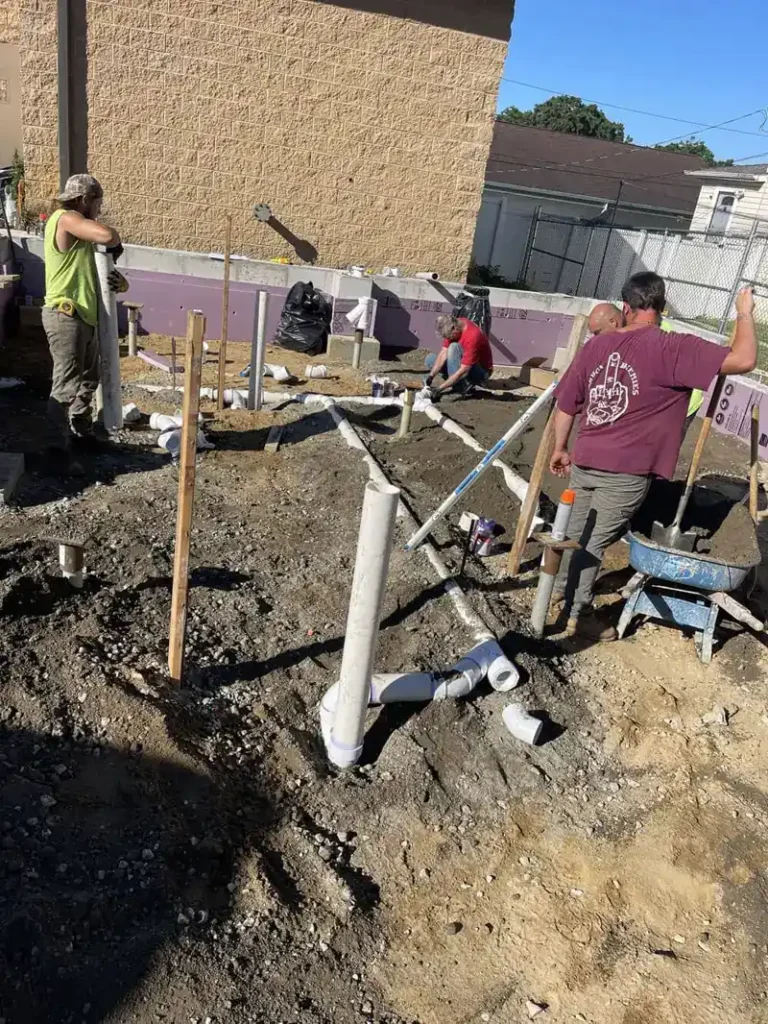
Where Water Goes Around Your Home Matters
Every heavy rain sends a lot of water onto a property. The roof collects it, the lawn soaks it up, and whatever is left runs to the lowest point it can find.
When that low point is next to your foundation or in the middle of your yard, problems follow. Outdoor water management in Cherry Hill Township moves that water away from the house and into a system built to carry it.
This guide from The Sewer Kings covers why yard water matters, where most problems start, and the common ways to fix them. It also covers the upkeep that keeps a system working.
Some yards stay wet for days after rain. Others push water toward the basement every time. Both are signs the water on your property needs a better path.
The fix does not always have to be large. Many yards improve a great deal with one or two changes in the right spot.
Why Yard Water Problems Matter
Wet Basements and Foundations
Water that pools against a foundation looks for a way in. Damp basement walls, musty smells, and water on the floor after rain often start outside.
Soggy Lawns and Dead Grass
Grass sitting in water for days can rot at the roots. Wet spots also turn to mud and ruts under foot traffic.
Washed-Out Soil
Water that runs across a yard carries soil with it. Beds wash out, walkways get undermined, and low spots get deeper over time.
Damage Near Buried Lines
Constantly wet soil around buried pipe can shift and settle. That movement stresses joints and can lead to cracks.
These problems grow slowly, which is why they are easy to put off. Each season of rain adds a little more damage.
The Sewer Kings sees the same pattern on many properties. A small wet spot gets ignored for a few years, then turns into a damp basement, a cracked walkway, or a lawn that never dries out.
Where Yard Water Problems Usually Start
Most yard water trouble begins at the roof. A downspout that empties right next to the house drops a large amount of water in one small area during every rain.
A splash block moves that water only a short distance. On flat or poorly sloped ground, it soaks in right beside the foundation.
Sump pump discharge is a quiet offender. A pump that empties close to the wall sends the same water straight back toward the footing, and the pump runs again soon after.
Grading is another cause. Soil that settles over the years can leave a yard sloping toward the house instead of away from it.
Hard surfaces play a part too. Driveways, patios, and walkways shed water instead of soaking it up. The ground at their edges often takes on far more water than the rest of the yard.
Watering adds to the load. The EPA says residential outdoor water use across the country accounts for nearly 8 billion gallons a day, mainly for landscape irrigation. A sprinkler system set too high can keep an already wet yard soggy.
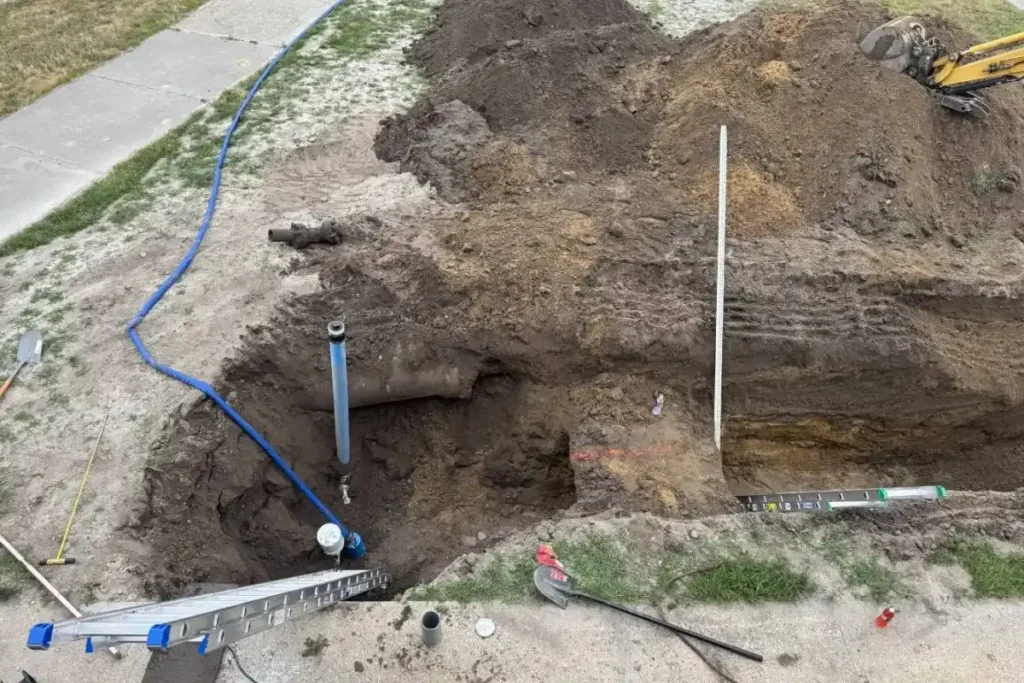
How We Move Water Away From Your Home
Downspout Tie-Ins
Downspouts usually get tied into buried solid pipe first. That pipe carries roof water well past the foundation, which fixes a large share of wet basement complaints on its own.
French Drains
For surface water, we cut a French drain. It is a gravel-filled trench with perforated pipe that collects water along its whole length.
Yard Basins and Grates
Basins and grates handle the spots where water already pools. They catch the water and send it into buried pipe.
A Real Outlet
Every system needs somewhere to end. We run the line to daylight at a lower point on the lot or to a curb. When there is no low ground to reach, it goes into a dry well.
Yard water never belongs in the sewer lateral. Extra water in a sewer line can overload it and cause backups, so outdoor systems stay separate from the pipe that carries waste.
Keeping an Outdoor Drainage System Working
Silt is the slow problem. Fine soil washes into a French drain over the years and packs into the gravel, and once the stone is choked the trench collects nothing.
Leaves and debris clog basins and grates. Clearing them in the fall and after big storms keeps water moving into the pipe.
Downspout tie-ins need a look too. Gutters full of leaves and seeds wash that debris straight into the buried pipe. Clean gutters mean a cleaner line underground and fewer surprises during the next heavy rain.
The buried pipe needs attention less often. When flow drops, we jet the line to scour out settled grit and root hair. Then we run a camera to confirm the pipe is clear end to end.
Check the outlet too. A buried outlet or one blocked by mulch can back water up through the whole system.
A quick walk around the property after a heavy rain tells you a lot. Look for water pooling near the foundation, downspouts that overflow, and spots where the lawn stays wet. Those are the places a system needs attention first.
If water is backing up inside the house instead of outside, the cause is different. Our guide on what to do when multiple drains back up in your Cherry Hill home walks through the steps.

FAQs
Frequently Asked Questions About Outdoor Water Management in Cherry Hill Township
Start by finding where the water comes from. Downspouts, sump pump discharge, and poor grading are common causes. Tying downspouts into buried pipe, adding a French drain, or setting a yard basin can move the water away.
Yes, a French drain can clog over time. Fine soil washes into the gravel and packs it tight. Jetting the pipe and checking it with a camera helps keep the system working.
Yes, The Sewer Kings handles outdoor water management across Cherry Hill Township, NJ. We tie in downspouts, cut French drains, set yard basins, and run each system to a real outlet.
Is Water Collecting Around Your Cherry Hill Home?
The Sewer Kings will find where the water is coming from and give it a better place to go. We are family-owned, licensed, bonded, and insured, and every job gets a flat rate you approve first.
Call us for a free estimate before the next heavy rain.