
What Cherry Hill Township Requires Before a Sewer Line Excavation

5.0
& Yelp Reviews


Book A Free Estimate
Submit your information below.

Our Reviews

Why South Jersey Trusts The Sewer Kings


Book A Free Estimate
Submit your information below.
Permits Come Before the Digging Starts
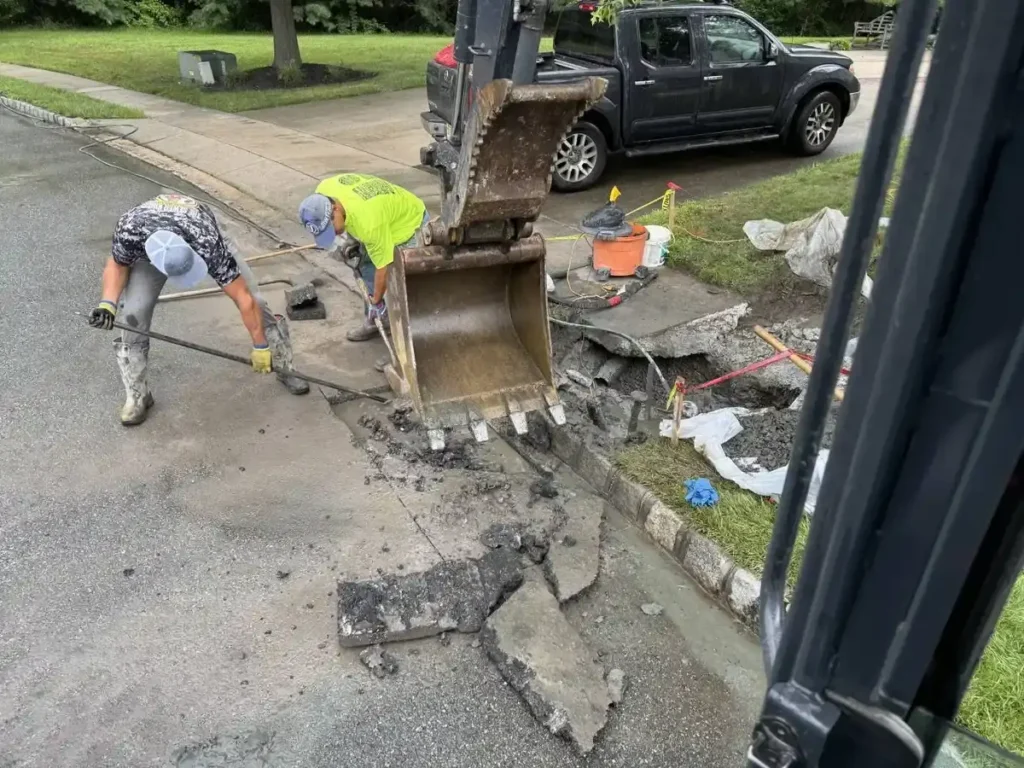
When a sewer lateral has failed and needs to come out, the ground has to be opened. In Cherry Hill Township, that work often touches township property, which means paperwork before any machine moves.
Homeowners do not need to become permit experts. Still, knowing the steps helps you judge any quote you get. It also explains why a proper sewer line replacement in Cherry Hill Township takes some planning before the crew shows up.
A permit is not red tape for its own sake. It protects the public sewer, the street, and the next owner of your home, because the work gets checked before it is buried and forgotten.
This guide covers the two township permits most sewer digs involve, the utility marks that come first, and what inspections look like. The Sewer Kings handles these steps for our customers, but you should know what they are.
Every site is a little different. A lateral that stays inside your yard needs less than one that runs under the sidewalk, curb, and street to reach the main.
Right of Way Permits for Work Near the Street
Cherry Hill Township requires a right of way permit for any work inside the township right of way. According to the township permits page, that includes plans to cut, break into, excavate, or open any township road, street, or avenue.
The township Engineering Department describes the right of way as the area 10 feet back from where the curb meets the street. That detail comes from the Engineering Department page. Most laterals cross that strip on the way to the main.
Sidewalks, Curbs, and Driveway Aprons
The same permit covers repairs to damaged driveway aprons, sidewalks, and curbs. If a sewer dig cuts through any of these, the restoration has to meet township standards.
Applying for the Permit
The township accepts right of way permit applications through its online portal or in person. Online applications still need office approval before work begins.
Sewer Connection Permits for Tying Into the Main
The Engineering Department also issues sewer connection permits. The township states these are required when making any connection to the sewer system.
You may see the township inspector on site during your job. That visit is a normal part of the process and a good sign the work is being done the right way.
That matters on a full lateral replacement. When new pipe ties into the public main, the connection is regulated work, not just a private repair in your yard.
Inspections are part of the process. The Engineering Department issues right of way permits and also performs the inspections for them, so the work gets checked by the township.
This is one reason we ask homeowners to be wary of a quote that skips the permit step. A connection done without a permit can cause trouble at inspection time or when you sell the house.
Ask any contractor you talk to how they handle the connection permit and the inspection. A clear answer is a good sign that the crew has done this work in the township before and knows what the inspector will look for.
Marking Buried Utilities Before Anyone Digs
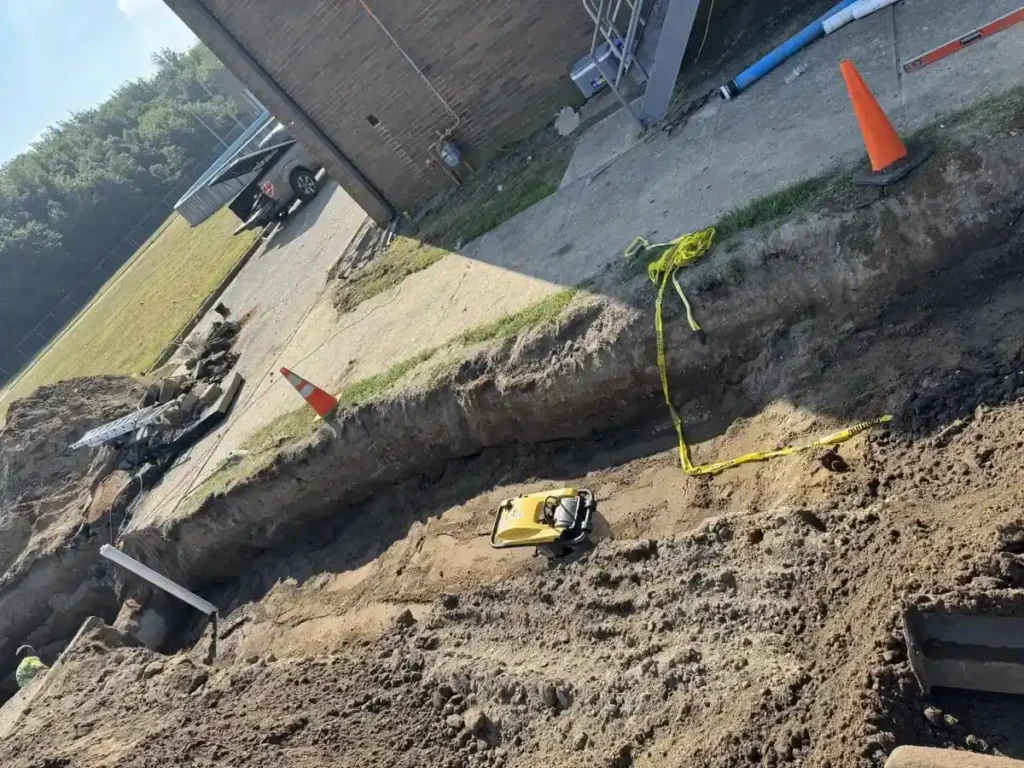
Before an excavation, buried utilities need to be marked. Gas, water, electric, and communication lines often share the same strip of ground as a sewer lateral.
New Jersey uses a one call system for this. The crew doing the dig places the request, and utility companies paint or flag their lines so nobody cuts into them by accident.
The Sewer Kings also tracks the sewer pipe itself. We run a camera through the lateral and follow its signal from above ground, so we dig at the right spot and the right depth.
Private lines are the part utility companies do not mark. Sprinkler pipe, landscape lighting wire, and yard drains are yours, so we ask about them before the job starts.
Marks take a little time to arrive, so the dig date has to allow for them. That wait is normal and it protects everyone on site. Cutting a gas or electric line is dangerous, and it turns a sewer repair into a much bigger emergency.
Emergencies still follow the rules. When a line fails at night or on a weekend, a safe dig still starts with knowing what is buried below.
Ways to Keep the Excavation Small
Not every failed line needs a long trench. A camera inspection often shows that only one section is broken, and a spot repair can fix it through a single small pit.
Where the whole pipe is worn out, trenchless pipe bursting can replace it through two small access pits. The Sewer Kings added pipe bursting for lines from 2 to 6 inches across.
Some lines still need a traditional open cut. Very shallow pipe, a line that has sagged, or pipe right next to other utilities can rule out the trenchless option.
Restoration is part of the plan either way. Lawn, sidewalk, curb, and driveway apron all need to go back in good shape, and anything in the right of way has to meet township standards. We talk through the restoration before the first cut so you know what your yard will look like when we leave.
Knowing the pipe material helps too. Our guide on how old clay and cast iron sewer lines fail explains why older pipe breaks the way it does.

FAQs
Frequently Asked Questions About Sewer Excavation Permits in Cherry Hill Township
Yes, in most cases. Cherry Hill Township requires a right of way permit for work that opens the street, curb, or sidewalk area. A sewer connection permit is needed when connecting to the public sewer.
The contractor doing the work usually applies for the permits. The Sewer Kings handles the permit steps for our sewer jobs, so homeowners do not have to deal with the paperwork themselves.
Often, yes. Pipe bursting replaces the old line through two small pits instead of one long trench. A camera inspection tells us first if the pipe is a good fit for that method.
Planning a Sewer Line Dig in Cherry Hill Township?
The Sewer Kings brings the camera, the locating tools, and the excavation equipment to every job. One family-owned crew handles the whole thing, from the permit to the final backfill.
Call us for a free estimate and a straight answer on what your job will need.