New Construction Septic Systems in Evesham, NJ – Expert Drainage Service

5.0
& Yelp Reviews

Book A Free Estimate
Submit your information below.

Our Reviews

Why South Jersey Trusts The Sewer Kings
Posted onTrustindex verifies that the original source of the review is Google. I recently had to deal with a stressful sewer line repair, and The Sewer King made the entire process incredibly smooth. From the initial inspection to the final cleanup, their team was professional, transparent, and efficient. Mt holly New Jersey.Posted onTrustindex verifies that the original source of the review is Google. Replaced sewer line under slab & garage in one day. Cleaned up so it was like they were never there & good price compared to others.Posted onTrustindex verifies that the original source of the review is Google. I’ve been using the sewer kings for all my inspections for the past couple of months. They’re a great company with an excellent team. They always show up on time and are incredibly reliable and dependable. They’re also honest and extremely affordable when it comes to sewer line inspections and replacements.Posted onTrustindex verifies that the original source of the review is Google. Highly recommend The Sewer Kings. Very easy to work with Mark the technician. He explains everything that needs to be done. The customer service and the scheduling was on point. What I like about them the most is the camera inspection is free. This is what set them apart from other plumbers.Posted onTrustindex verifies that the original source of the review is Google. I can’t say enough, from the person who answered the phone, to the workers who showed up to do the work. This company is without a doubt the most professional, caring, knowledgeable company. They took a hopeless situation to an enjoyable solution. My fullest thanks and appreciation to Marc and Anthony for treating us like family. ThankyouPosted onTrustindex verifies that the original source of the review is Google. The Sewer Kings are an excellent company, and Anthony is amazing! We would never use another company for all of our needs.Posted onTrustindex verifies that the original source of the review is Google. I can’t say enough good things about The Sewer Kings. We had an emergency situation and they responded immediately, which was such a relief. From the moment they arrived, the team was incredibly knowledgeable, professional, and genuinely friendly—they took the time to explain exactly what was going on and what needed to be done. The work was done efficiently and correctly, and the pricing was very fair, especially for emergency service. It’s rare to find a company that combines fast response, expertise, and great customer service, but The Sewer Kings absolutely delivered. I wouldn’t hesitate to call them again and highly recommend them to anyone needing plumbing help—especially in a stressful emergency!Posted onTrustindex verifies that the original source of the review is Google. Thank you for coming to our rescue today on such short notice. Much appreciated for what you do, especially in this terrible weather.Posted onTrustindex verifies that the original source of the review is Google. Anthony, Mark, and their team are amazing! They came out right away to give me options and prices to have our sewer lines fixed/replaced. They were out the next day to do the repairs. Very professional and reasonably priced. They also clean up after themselves and follow up to make sure their customers are satisfied. 100% recommend! Thanks again guys!!Posted onTrustindex verifies that the original source of the review is Google. Recently we had Sewer Kings install a new E-One pump, close out our old septic tank, and connect us to the city sewer line. From day one, their professionalism was top-tier: clear communication, solid planning, and they stayed locked in on the details. The job took four days, and even with tough weather, they kept moving with no complaints and no excuses—just hard work. Pricing was clear; permits and inspections were handled in a timely manner. What really stood out was the follow-up. They didn’t just finish and disappear—they made sure everything was running properly and took the time to answer every question. They made what could have been a stressful project completely hassle-free. If you’re in New Jersey and you need sewer work done right the first time, Sewer Kings is the call. Reliable, knowledgeable, and very professional. Thank you once again, Mark, Anthony, and Durrell!


Book A Free Estimate
Submit your information below.
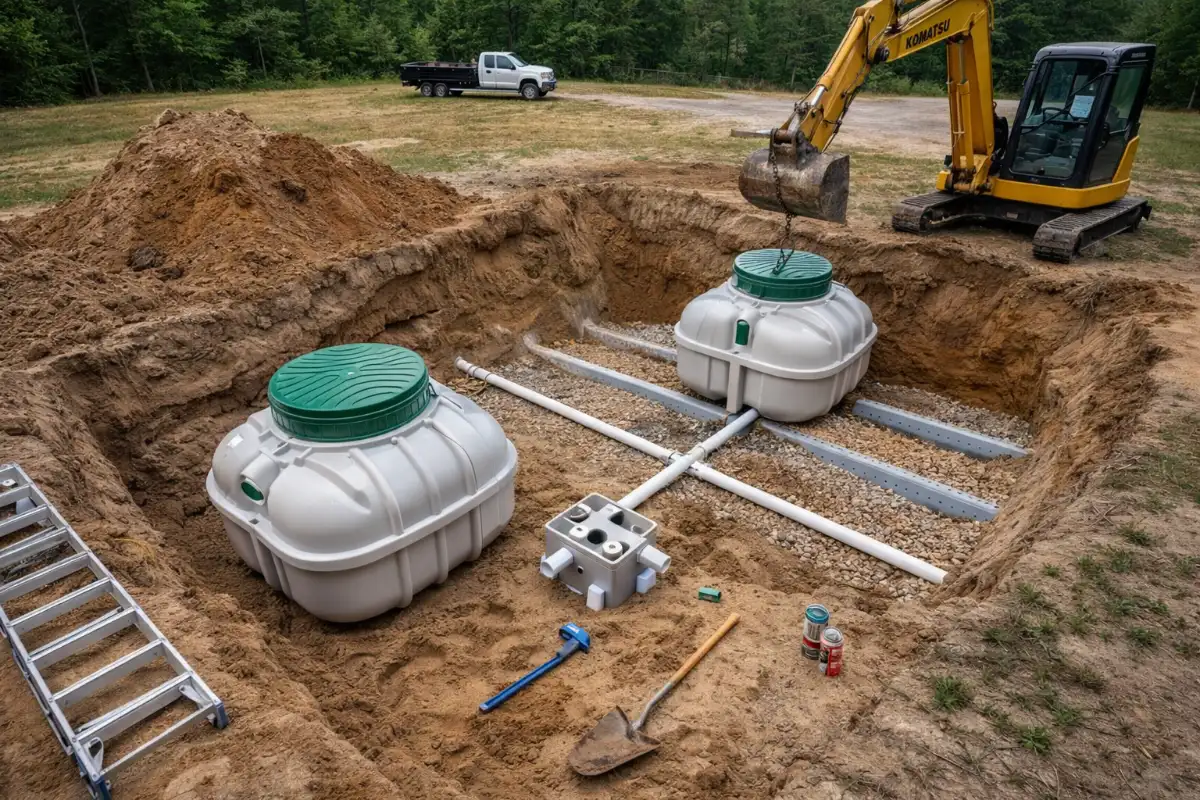
In Evesham, new homes need compliant septic systems before occupancy. This page explains system design, permitting, installation, and inspection for new builds. Licensed drainage contractors handle soil tests through final township approval. Professional drainage service ensures code compliance and long-term performance.
Soil Testing and Site Evaluation Determine System Type in Evesham
New home builders and developers in Evesham need soil analysis before design begins. Perc tests identify absorption rates that determine conventional vs. alternative system requirements. A licensed drainage contractor conducts the percolation test by digging test holes and measuring how quickly water drains through the soil.
Sandy soils common in Burlington County neighborhoods drain faster than clay-heavy areas near Cooper River tributaries. Fast-draining soil supports conventional gravity-fed drain fields. Slower soils may require aerobic treatment units or mound systems. The soil evaluation also measures depth to groundwater and identifies any restrictive layers that could interfere with effluent absorption.
New Jersey Septic Regulations Require Multiple Permits Before Installation
Property owners in Evesham must navigate county health department and township building approvals. Licensed contractors handle permit submissions and ensure designs meet N.J.A.C. 7:9A standards. The process starts with submitting a site plan and proposed system layout to the Burlington County Health Department.
The county reviews all septic plans and conducts mandatory site inspections. After county approval, you apply for a construction permit through Evesham Township. Both agencies verify setbacks from wells, property lines, and water bodies. Missing or incorrect documentation delays construction and increases holding costs.
Our team manages the entire permitting process from application to approval. We know local requirements and maintain working relationships with inspectors, which helps your project move forward without unnecessary delays.
System Design Matches Bedroom Count and Soil Conditions
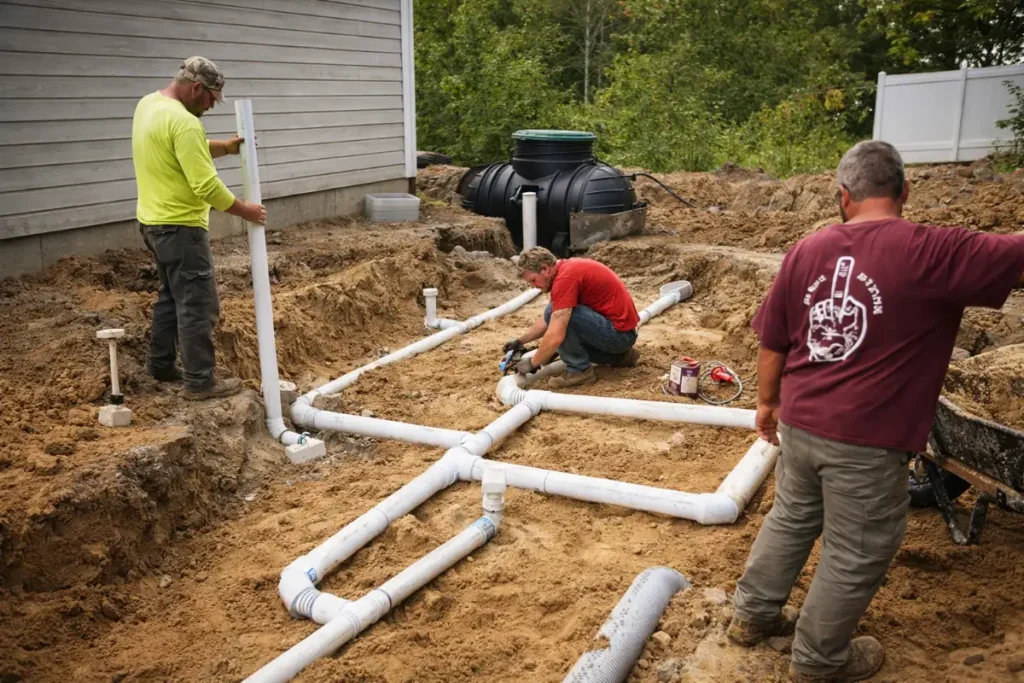
Builders in Evesham select tank size and drain field layout based on planned home specifications. Proper sizing prevents system overload and extends field lifespan to 25-30 years. New Jersey regulations calculate daily wastewater volume using bedroom count, not bathroom count.
A three-bedroom home requires a minimum 1,000-gallon tank. Four-bedroom homes need 1,250 gallons or more. Marlton and Voorhees area developments often use larger tanks for 4+ bedroom homes. The drain field size depends on both projected flow and soil percolation rate.
We design systems that handle your home’s actual usage patterns. Our septic tank installation service ensures proper sizing that provides a safety margin and protects your investment.
Professional Installation Prevents Drainage Failures and Township Rejections
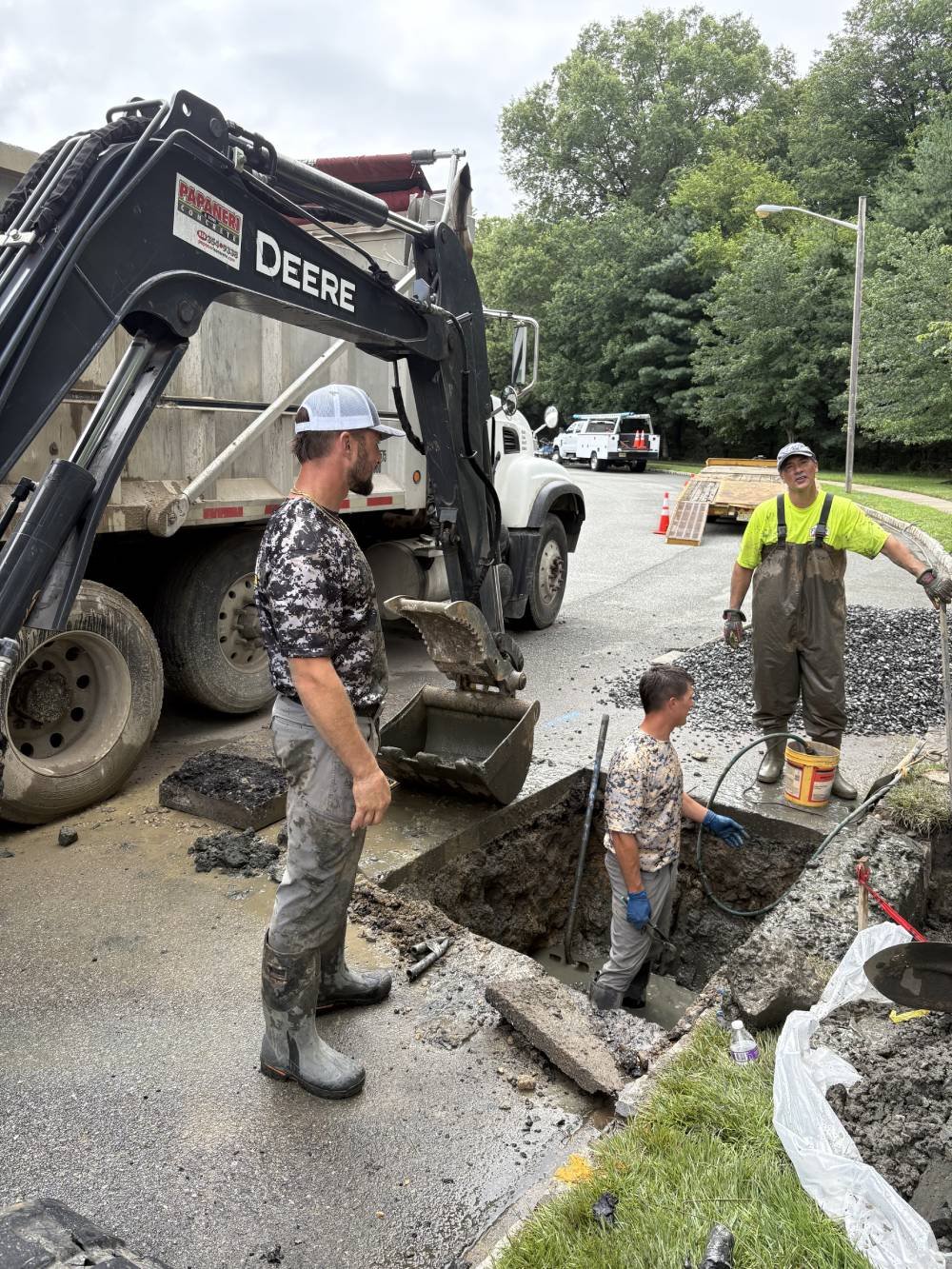
General contractors in Evesham rely on drainage specialists for excavation, tank placement, and field construction. Precision grading ensures gravity flow and uniform effluent distribution across drain field. The tank must sit level on a compacted stone base to prevent settling and pipe misalignment.
High water tables in low-lying Evesham parcels may require mounded or raised bed systems. Distribution boxes need exact positioning to split flow evenly between field laterals. Pipe slopes must fall within a narrow range—too steep causes channeling, too flat allows solids to settle.
Our septic tank excavation crew installs systems to engineered specifications using laser-guided equipment. We verify elevations at every connection point. This attention to detail prevents failures that would require excavating your new yard.
Final Inspections Verify System Meets State and Local Code
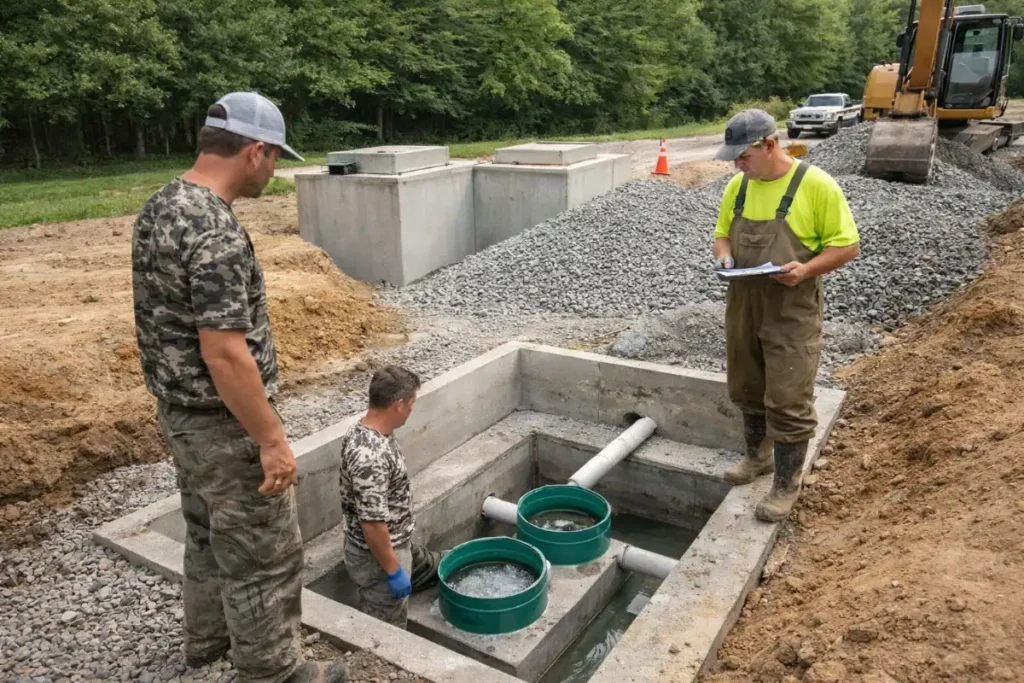
Homeowners in Evesham need health department sign-off before obtaining certificate of occupancy. Inspector approval confirms proper installation and protects property value for future resale. The county inspector checks tank installation, pipe connections, and field construction against approved plans.
Evesham Township building department coordinates final drainage inspection with county health officials. Any deficiencies must be corrected before approval. Missing this inspection means you cannot move into your new home.
We schedule inspections at the right construction phase and accompany inspectors on-site. Our septic system inspection service ensures your work passes the first time because we build to code from day one.
What does installing a new construction septic system in Evesham, NJ involve?
- Conduct percolation test and soil evaluation on property
- Submit site plan and system design to Burlington County Health Department
- Obtain construction permit from Evesham Township
- Excavate and install tank, distribution box, and drain field
- Connect system to home plumbing during rough-in phase
- Schedule health department inspection of completed system
- Receive certificate of approval before occupancy permit

FAQs
Frequently Asked Questions about
New construction septic systems
Installation typically takes 3-5 days after permits are approved. Weather conditions affect the timeline since excavation and backfill require dry ground. Heavy rain can delay work by several days.
Yes, you need a certificate of approval before an occupancy permit is issued. The county health department must inspect and approve the completed system. Your closing cannot proceed without this documentation.
Your lot must meet minimum square footage and setback requirements per county regulations. Setbacks from property lines, wells, and buildings determine whether a lot can support a septic system. A site evaluation determines feasibility.
Alternative systems like aerobic treatment or mound designs may be required. Slow-draining soils need engineered solutions that improve effluent treatment. These systems cost more but allow construction on challenging sites.
New Jersey mandates pumping every 2-5 years depending on household size and usage. Regular pumping removes accumulated solids that would otherwise clog your drain field. You should keep maintenance records for future inspections or resale.
Properly installed and maintained systems do not negatively impact marketability. Buyers in areas without public sewer expect septic systems. A well-documented installation history and maintenance records actually support property value.