Septic Treatment System Installation in Evesham, NJ - Professional Drainage Solutions

5.0
& Yelp Reviews

Book A Free Estimate
Submit your information below.

Our Reviews

Why South Jersey Trusts The Sewer Kings


Book A Free Estimate
Submit your information below.
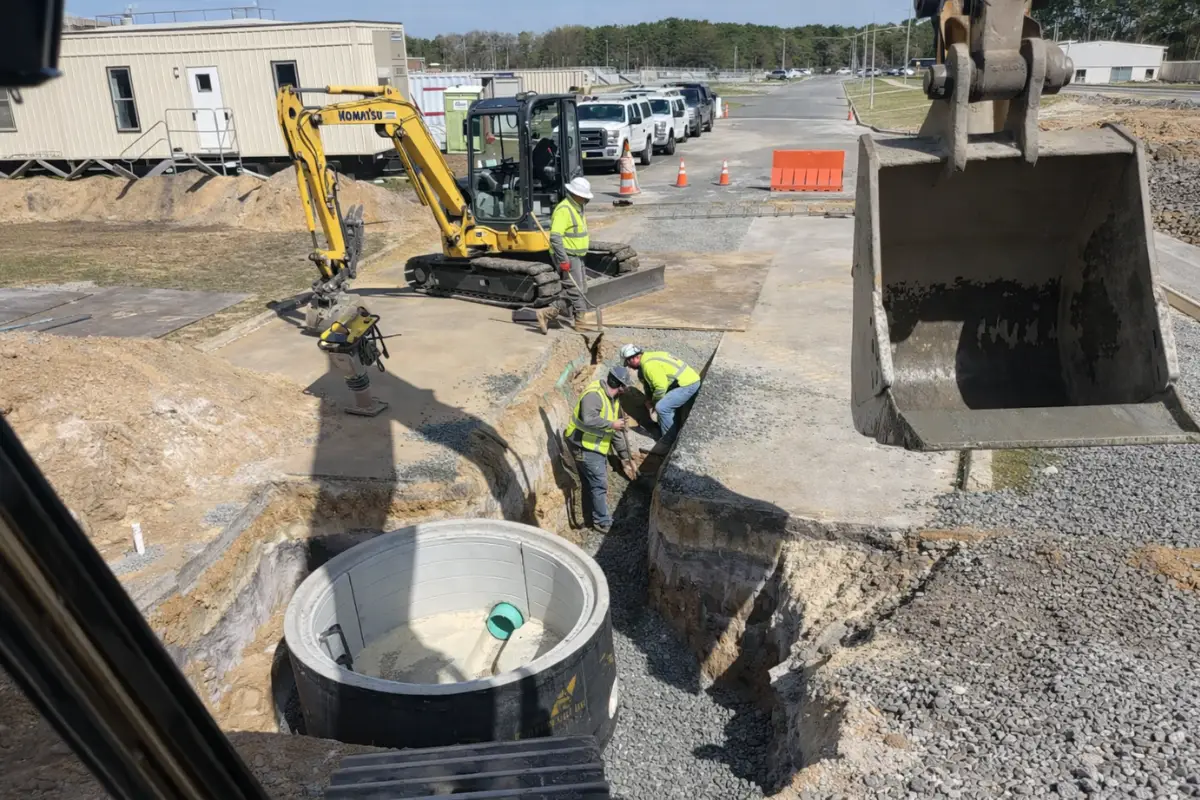
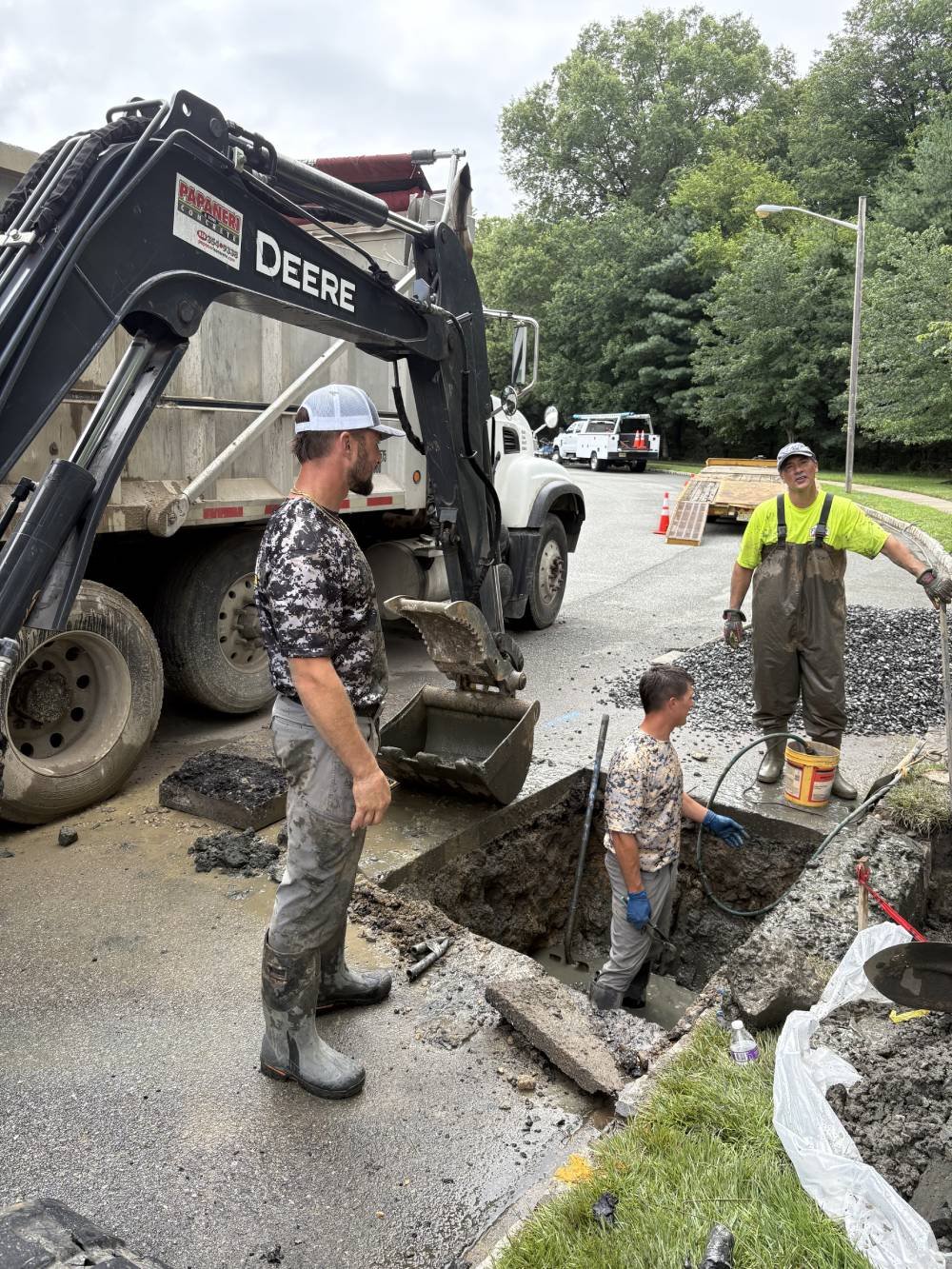
In Evesham, proper septic treatment system installation protects your property and meets township requirements. We handle complete installation for new construction, failed system replacement, and upgraded treatment units. Our licensed drainage contractors manage permits, soil testing, and system design from start to finish. Same-week site evaluations are available across Burlington County neighborhoods.
What does septic treatment system installation in Evesham, NJ involve?
A licensed contractor performs a site evaluation and percolation test. An engineer designs the system based on soil conditions and household size. The township health department reviews and approves the permit application. The excavation crew prepares the site and installs the tank and drainage field. An inspector verifies installation meets NJ DEP regulations. System startup includes final grading and landscaping restoration.
Septic Treatment Systems Handle Wastewater When Municipal Sewer Isn't Available in Evesham
If you live in rural Evesham neighborhoods like the Marlton Pike corridor or Cropwell Road area, municipal sewer lines don’t reach your property. A septic treatment system handles all wastewater on-site. You get complete treatment without monthly sewer bills. This creates long-term infrastructure that serves your home for decades.
Sandy loam soils are common in Burlington County. These soil types require specific drain field designs. We install systems that prevent groundwater contamination. Your system treats wastewater safely while protecting local water sources. The right installation keeps your property compliant and functional year after year.
Treatment systems work continuously to break down household waste. Bacteria in the tank process solids while liquids move to the drain field. The soil provides final filtration before water returns to the water table. This natural process requires no electricity or chemicals when properly designed.
Site Evaluation and Soil Testing Determine the Right Septic System for Your Property
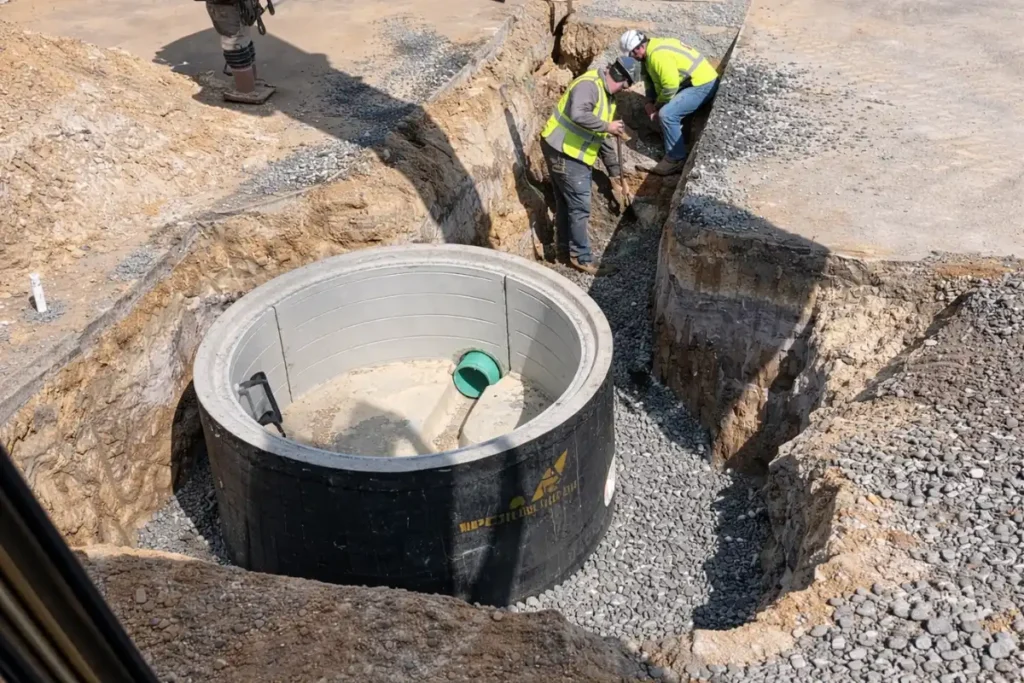
If you’re planning new construction septic systems or replacing a failed system, you need accurate soil data first. Our septic system evaluation shows how quickly water drains through your soil. Percolation testing measures drainage rates in minutes per inch. This tells us the drainage capacity of your property.
Soil composition affects which system types work on your land. Clay soils drain slowly and may need larger fields. Sandy soils drain faster but require careful sizing to prevent contamination. We test multiple locations to find the best placement for your drain field.
A properly sized system passes inspection on the first try. You avoid costly redesigns and delays. Evesham Township requires certified soil scientist reports for all new septic permits per local health code. We coordinate testing and documentation so your permit application moves forward without delays. Our team handles the entire approval process from initial testing through final sign-off.
Professional Installation Ensures Your System Meets NJ DEP and Local Health Department Standards
If you’re replacing an outdated cesspool or expanding your home, your current system may not have enough capacity. We handle the complete septic tank installation process. Our licensed drainage contractors manage permits, inspections, and final approvals. You avoid compliance issues that can delay occupancy or home sales.
Winter frost depths in Burlington County affect installation requirements. Tanks must be installed below the 48-inch minimum depth. We excavate to proper depth and backfill correctly. Your system withstands seasonal ground movement and temperature changes. Proper depth also protects components from surface loads like vehicles or equipment.
Modern septic tanks use concrete or fiberglass construction. We position tanks level and stable on compacted gravel beds. Inlet and outlet baffles get installed at precise heights. Distribution boxes connect to drain field lines with watertight seals. Each connection point must meet code specifications to prevent leaks or failures.
Advanced Treatment Units Work in Lots with Poor Drainage or High Water Tables
If your home sits near wetlands or on an undersized lot, conventional drain fields may not work. Poor drainage conditions require engineered solutions. Aerobic treatment units and mound systems treat wastewater when gravity systems fail. These advanced systems work in challenging soil conditions where standard installations can’t function.
Aerobic units use oxygen to speed up bacterial breakdown. Pumps and air compressors keep the treatment process active. These systems produce cleaner effluent than conventional tanks. This allows installation in areas where soil drainage is limited or water tables stay high year-round.
Properties near the South Branch Pennsauken Creek often face seasonal high water tables. We install engineered systems designed for these conditions. Mound systems raise the drain field above natural grade. Sand fill creates the absorption area when native soil can’t handle the load. Your treatment unit handles wastewater year-round without surfacing or backup problems.
Proper System Sizing Prevents Backups and Extends Equipment Lifespan
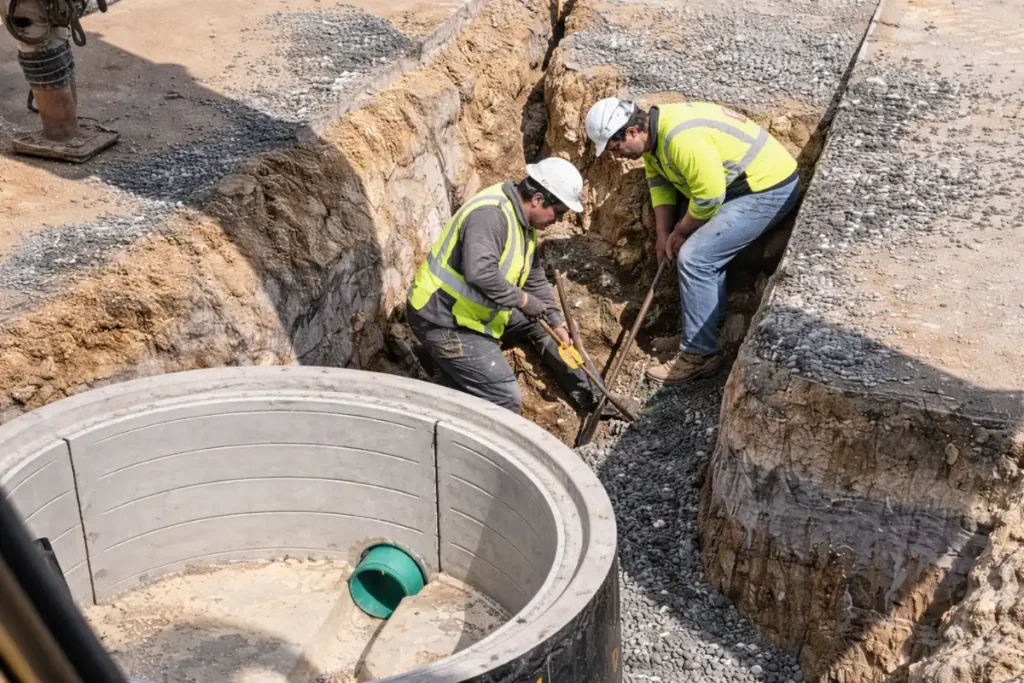
If you’re adding bedrooms or installing high-volume fixtures, your wastewater flow increases. An undersized system can’t handle the extra load. We calculate the correct tank volume and drain field area for your household. Tank capacity must match daily wastewater production. Most homes generate 50-70 gallons per person each day.
This prevents overload failures that cause sewage surfacing on your lawn. Drain fields need enough linear footage to absorb and treat daily flows. We account for soil type, slope, and seasonal moisture when sizing absorption areas. Proper calculations prevent saturation that leads to system backups.
The Evesham building department bases septic sizing on bedroom count, not square footage, per NJ Administrative Code. Each bedroom adds two occupants to the design calculation. A four-bedroom home needs more capacity than a three-bedroom home of the same size. We design your system to meet current requirements and accommodate future needs.
Reserve capacity protects against temporary overloads. Holiday gatherings or house guests create short-term spikes in water use. A correctly sized system handles these events without stress. Proper sizing protects your investment and prevents costly emergency repairs down the line.

FAQs
Frequently Asked Questions about
Septic treatment system installation
Yes, the township health department and NJ DEP both require approved permits before any excavation begins. We handle all permit applications and coordinate inspections throughout the installation process. The approval process includes site plans, soil reports, and system specifications.
Typical installation requires 3-5 days for excavation, tank placement, and drain field construction after permits clear. Weather and soil conditions can affect the timeline. We provide a detailed schedule before work begins so you know what to expect.
Yes, but NJ requires a minimum 100-foot separation between your well and drain field to prevent contamination. We verify setback distances during site evaluation. Proper spacing protects your drinking water supply from any potential cross-contamination.
A minimum 1,000-gallon tank is required for 3-bedroom homes per Burlington County health regulations. We size tanks based on bedroom count and projected daily wastewater volume. Larger homes or homes with high water use need bigger capacity systems.
Licensed contractors include final grading and topsoil replacement in the installation. Full lawn restoration takes 4-6 weeks after seeding. We restore your yard to match existing grade and drainage patterns. Grass grows back over the drain field once soil settles.