
Pipe Bursting vs. Pipe Lining: Which Trenchless Method Is Right for You?
Both skip the trench. Only one gives you a brand new pipe. Here is how to tell which one your line needs.
New Pipe or Coated Pipe
Pipe bursting replaces your sewer line with a new pipe, while pipe lining coats the inside of the pipe you already have. Both are trenchless, so neither needs a trench across the yard.
The best choice comes down to the shape your old pipe is in. A liner needs a pipe that still holds its form. Bursting does not.
Here is how the two compare on cost, lifespan and fit. For more on the replacement side, see our trenchless sewer line replacement service.
How Bursting and Lining Differ
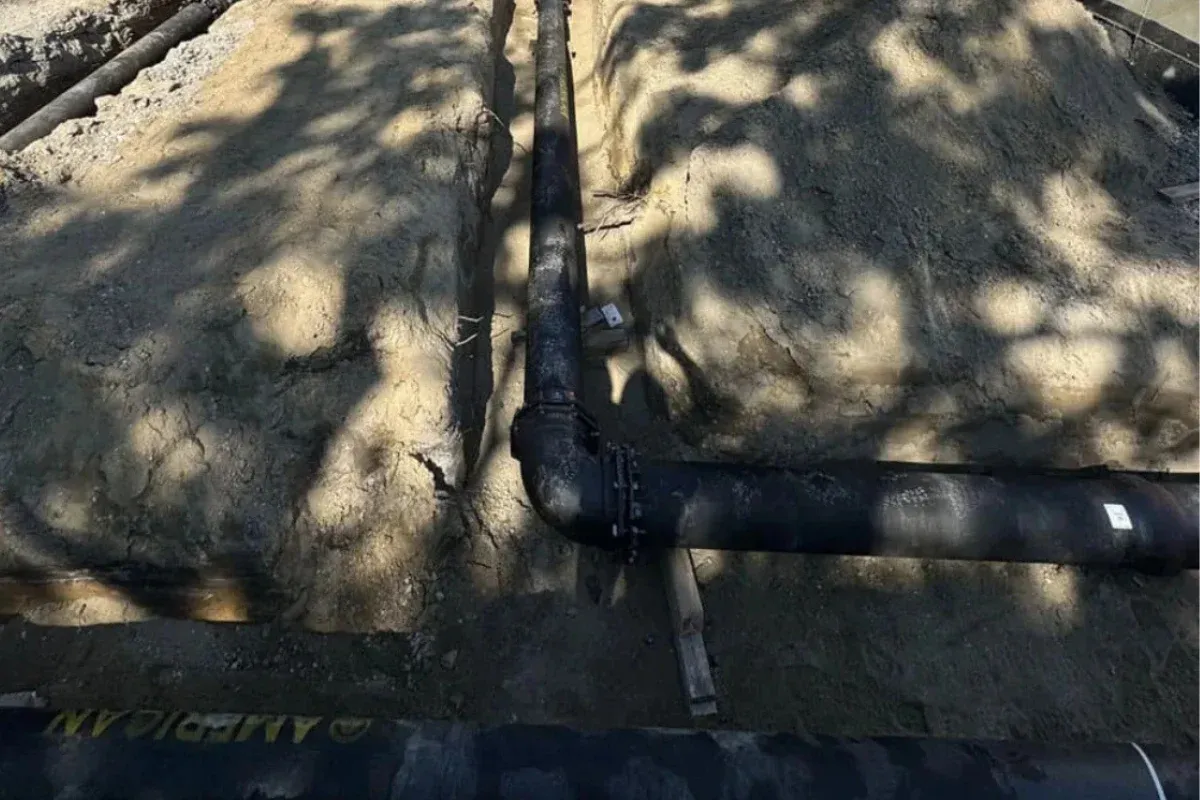
Pipe bursting
A steel head is pulled through the old line. It cracks the pipe outward into the soil while a new pipe is pulled in right behind it. NASSCO describes bursting as fracturing and displacing the old pipe while the new pipe follows.
Pipe lining
A flexible tube soaked in resin is put inside the old pipe and pressed against the walls. It hardens in place and forms a pipe within a pipe. NASSCO calls this cured in place pipe, or CIPP.
What the old pipe has to do
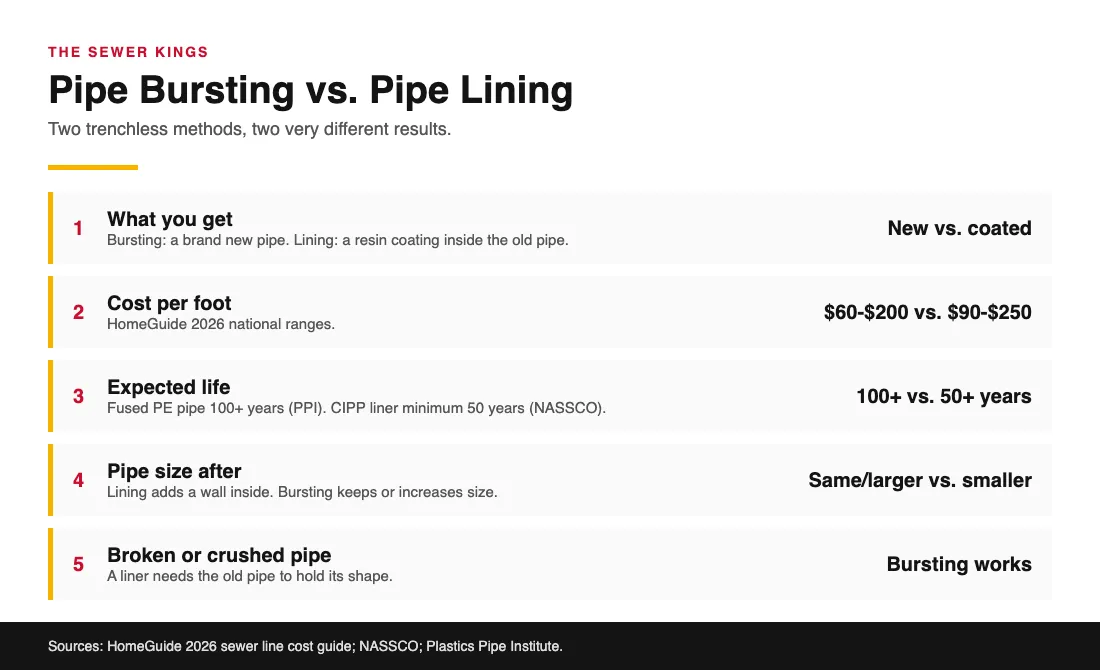
A liner uses the old pipe as its mold. If the line is crushed, badly offset or missing sections, the liner has nothing solid to form against. Bursting only needs a path for the head to follow.
Pipe size after the job
A liner adds a new wall inside the old one, so the opening gets a little smaller. Bursting keeps the full size, and NASSCO notes it is the only one of the two that can make a line bigger.
How long each job takes on site
Both methods usually fit into a short window on a home lateral. Lining needs time for the resin to cure. Bursting needs time to fuse the new pipe and dig the two pits.
Access needed
Lining usually works from a cleanout or one opening. Bursting needs a pit at each end of the run. On some properties that difference alone decides the method.
Cost and Lifespan Compared
The two methods land in a similar price range. HomeGuide’s 2026 sewer cost data lists pipe bursting at $60 to $200 per foot and pipe lining at $90 to $250 per foot.
Angi’s 2026 trenchless data is tighter. It puts bursting at $150 to $190 per foot and lining at $135 to $150 per foot. Either way, the method alone rarely decides the total. Length, depth and access do.
Lifespan
NASSCO states that a properly designed and installed CIPP lateral has a minimum life expectancy of 50 years. For bursting, the Plastics Pipe Institute reports that fused polyethylene pipe systems can deliver more than 100 years of service.
Joints
A liner covers old joints from the inside. A burst line is one fused HDPE piece with no joints at all.
Roots and future repairs
Roots find their way into joints and cracks. A liner seals the old joints from the inside. A burst line has no joints at all, so there is nothing for roots to find.
Connections and branch lines
A liner has to be reopened at any side connections inside the pipe. With bursting, branch connections are handled at the pits. Ask your contractor how either method will handle the connections on your line.
How The Sewer Kings Choose in South Jersey
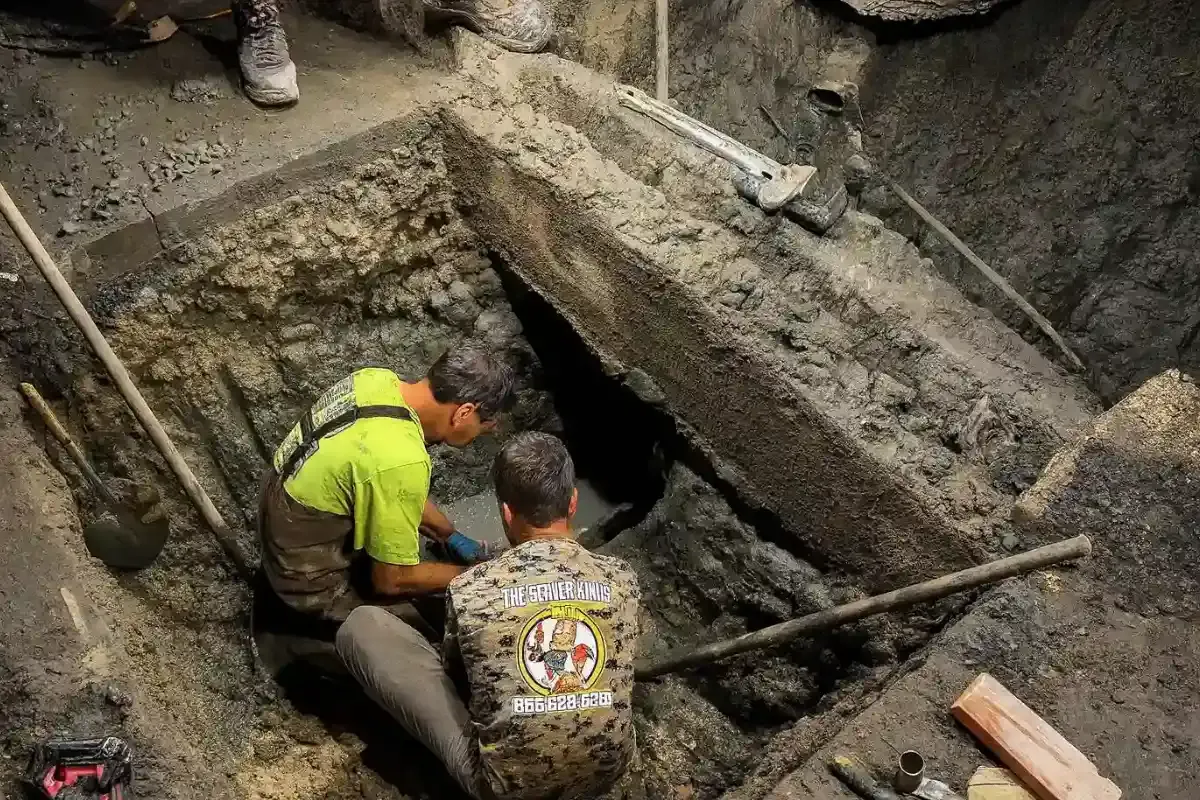
The Sewer Kings offer relining and pipe bursting, so the camera decides, not the sales pitch. Every job starts with footage of the whole line.
If the pipe is cracked but still round, with no big sags or crushed spots, lining can be a good value. If the footage shows a collapse, missing sections or a line packed with roots, bursting is usually the fix that lasts.
Our bursting rig covers lines from 2 to 6 inches wide, which fits most home laterals across Burlington, Camden and Gloucester counties. We pull in HDPE and fuse it into one piece before the pull.
Anthony and Mark Papaneri grew up around water and sewer construction, and our crews still handle open cut work. When neither trenchless method fits, we tell you that too.
Price is not the tiebreaker for us. When lining and bursting cost about the same on a given line, we lean toward the method that fits the pipe’s condition best, because a repair that fails early costs more in the end.
We also check the ends of the line. If the pipe at the house or at the street is badly broken, that section may need a small dig before either lining or bursting can finish the job.
Which Method Should You Pick?
Choose lining when the pipe is sound in shape but leaking at joints or cracks, and when keeping the old path is fine. It is a strong repair for a line that is worn but not broken.
Choose bursting when the pipe is broken, crushed, badly offset or too small. It is also the pick when you want a new pipe rather than a coated old one.
Choose a dig when the line has a deep sag, sits right next to other utilities, or is too collapsed for any head to pass.
If two contractors recommend different methods, ask each to show you the footage and point to what drove the call. A clear answer tied to the video is a good sign.
Whichever method you choose, ask for a final camera run on the finished line. That footage is your proof the work was done right.
If the footage shows a line that is mostly sound with one bad section, ask whether a spot repair makes more sense than either method.
Read more on how pipe relining works, what it costs to line a sewer pipe, and what trenchless pipe bursting is.
Bursting vs. Lining: Common Questions
Is pipe lining cheaper than pipe bursting?
Sometimes, but not by much. National guides put both methods in overlapping price ranges per foot. The length, depth and access of your line usually matter more than the method.
Can you line a collapsed sewer pipe?
No. A liner needs the old pipe to hold its shape so the resin can harden against it. A collapsed or crushed line usually needs pipe bursting or a dig.
Do The Sewer Kings do both methods in New Jersey?
Yes. The Sewer Kings in Evesham, NJ offer relining and pipe bursting, plus open cut replacement. A camera inspection shows which one your line needs before you get a quote.
Let the Camera Pick the Method
The Sewer Kings inspect the line first, then recommend lining, bursting or a dig based on what the footage shows. Family owned, licensed, bonded and insured, and on call 24/7 across Burlington, Camden, Gloucester and Ocean counties.
Call (856) 626-9366 today.