

What Is Trenchless Pipe Bursting and How Does It Work?
A plain guide to the method that replaces a broken sewer line from the inside, without a trench across your yard.
Pipe Bursting in One Minute
Trenchless pipe bursting replaces an old sewer line by breaking it apart underground while a new pipe is pulled into the same path. You get a brand new line, not a patch.
The work happens through two small pits, one at each end of the pipe. The lawn, driveway and walkway in between stay where they are.
This guide covers how the method works, what kind of pipe goes in, and when it is not the right fit. If you already know you need a new line, read about our trenchless sewer line replacement service in South Jersey.
How Pipe Bursting Replaces a Sewer Line
The idea is simple. A cone shaped steel head is pulled through the old pipe. It is a little wider than the pipe, so it cracks the old line and pushes the pieces out into the soil around it.
The bursting head
The head is the tool that does the breaking. It is attached to a new pipe that trails right behind it. As the head moves forward, the new pipe fills the space the old one used to take up.
The puller and cable
A steel cable or rod runs through the old line from one pit to the other. A hydraulic machine in the far pit pulls the cable, and the head follows. NASSCO, the trade group for underground pipe repair, describes the method this way: the head fractures and displaces the old pipe while the new pipe is pulled in behind it.
The new pipe
Most crews use high density polyethylene, known as HDPE. The sections are heat fused into one long piece before the pull. There are no glued joints, so roots have no seam to grow into.
Two pits instead of a trench
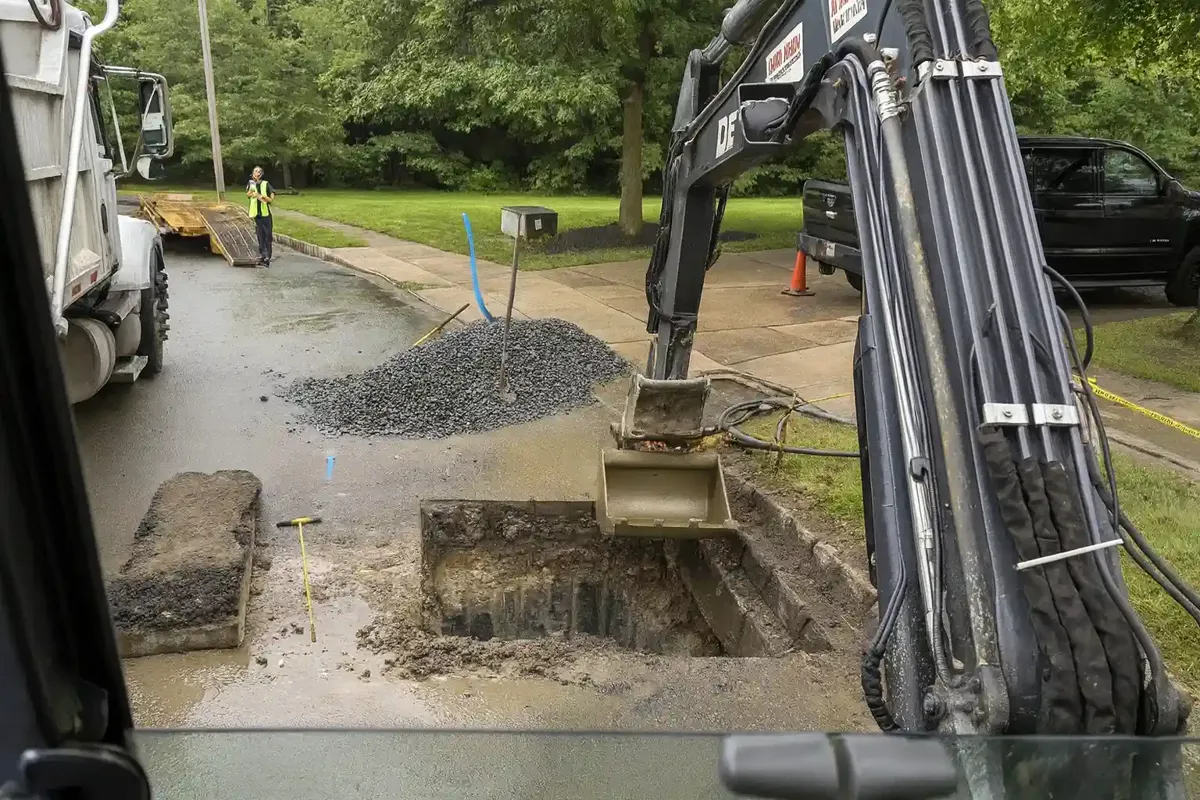
One pit usually sits near the house, where the line leaves the foundation. The other sits near the street connection. Each pit only needs to be big enough for the machine and one worker.
Why the old pipe does not need to come out
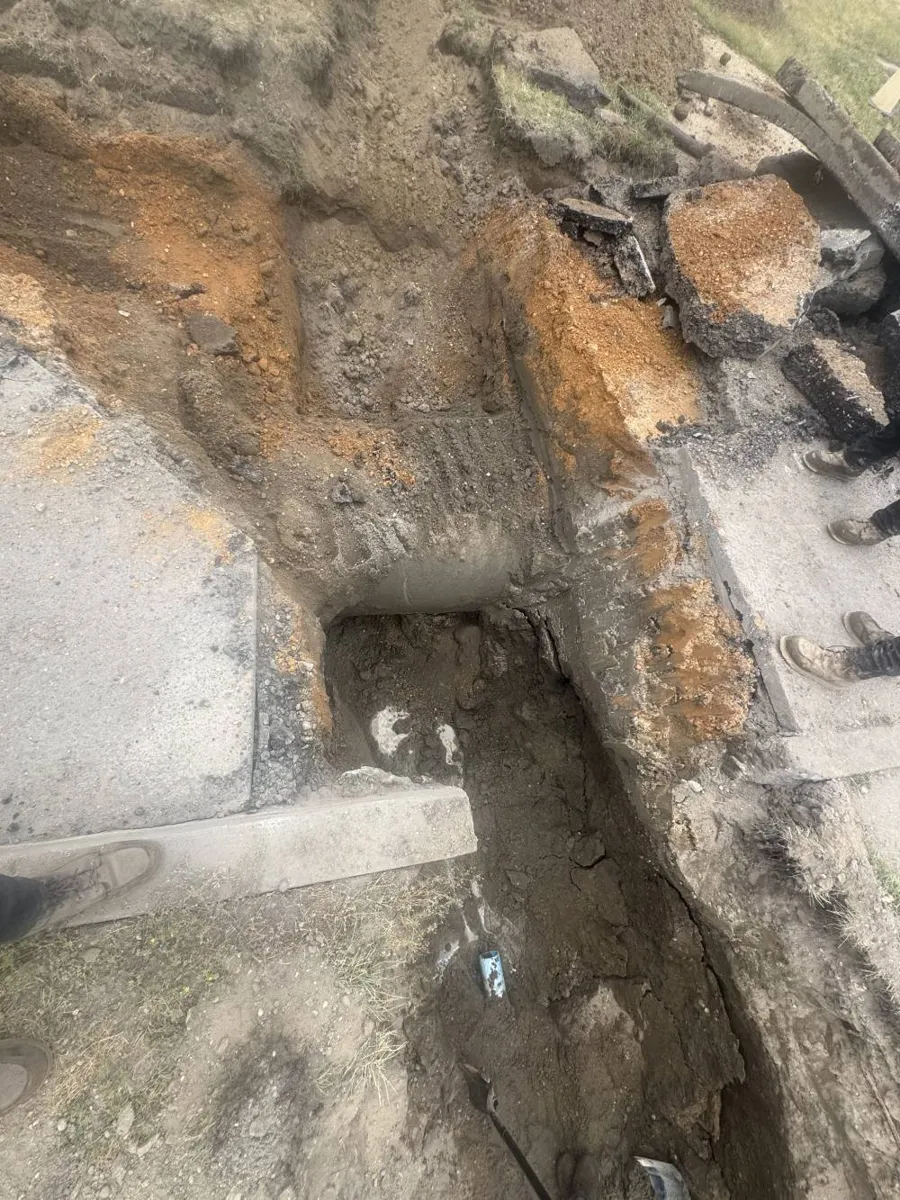
The broken pieces stay in the ground, pushed out into the soil around the new line. They do no harm there. Hauling them out would mean digging the trench the method is built to avoid.
The Four Steps of a Pipe Bursting Job
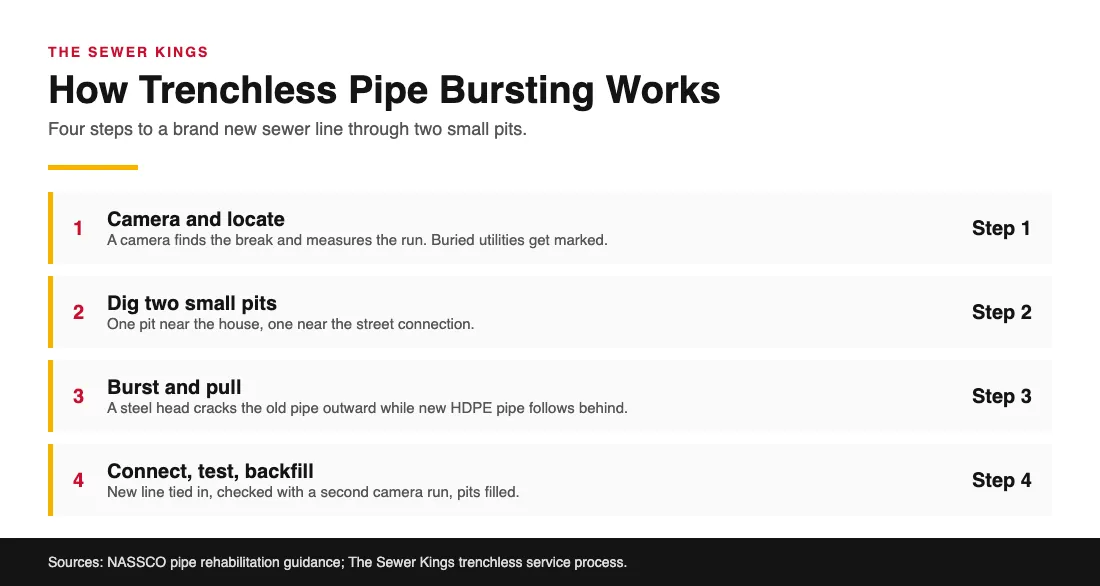
Every bursting job follows the same basic order. The details change with depth and length, but the steps do not.
Step 1: Camera and locate
A camera goes down the line to find the break and measure the run. Gas, water and electric lines get marked so the crew knows what sits near the path.
Step 2: Dig the pits
The crew opens the launch pit and the receiving pit. On most homes these are a few feet across.
Step 3: Burst and pull
The new pipe is fused and lined up. The puller draws the head through the old line, and the new pipe follows until it reaches the far pit.
Step 4: Connect, test and backfill
The new pipe is tied into the house and the city connection. A second camera run proves it flows clean, then the pits are filled and packed down.
The method is also the only common way to make a line bigger without digging it up. NASSCO notes that pipe bursting is the one trenchless method that can upsize a pipe, and it is used on laterals from 2 to 8 inches wide.
The steps look simple, but each one depends on the one before it. A rushed camera run can miss a sag. A skipped markout can put the head next to a gas line. That is why the order never changes.
Most of the time on a home job goes into steps one, two and four. The pull itself is often the quickest part of the day.
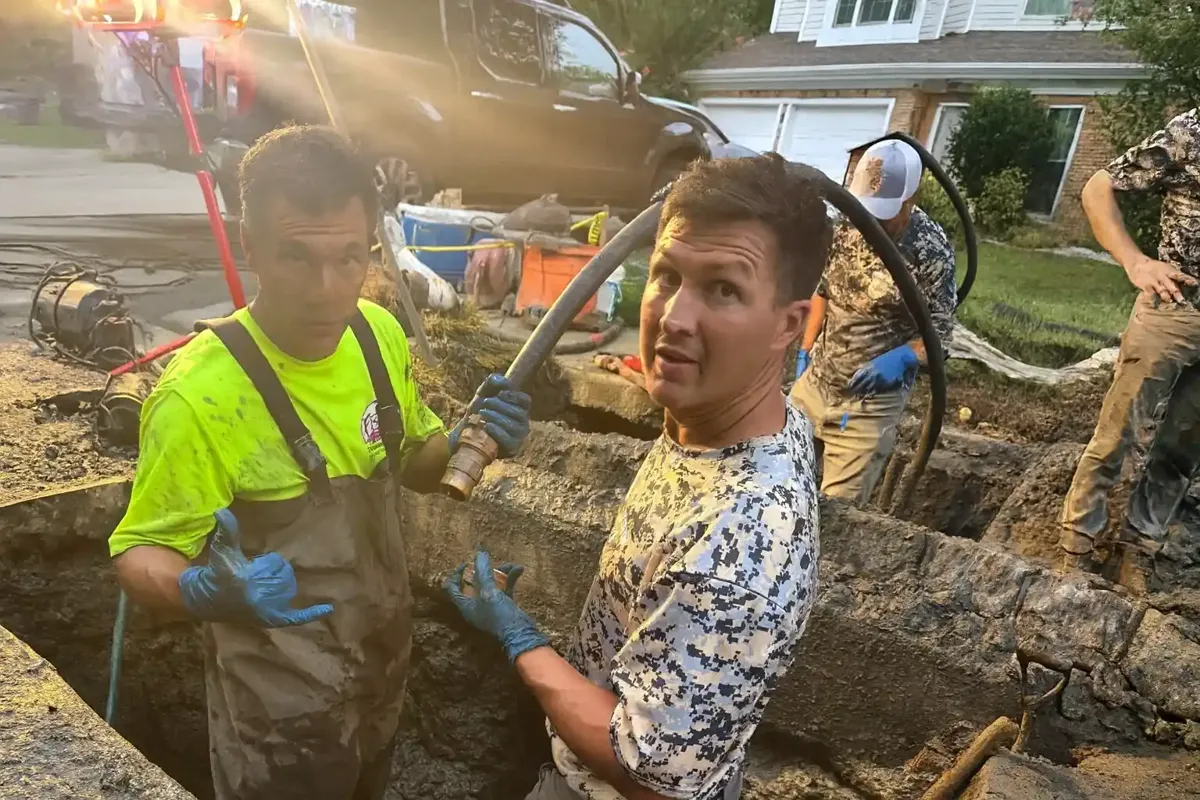
How The Sewer Kings Use Pipe Bursting in South Jersey
The Sewer Kings added pipe bursting this year after years of replacing sewer lines the traditional way across Burlington, Camden and Gloucester counties. Our rig handles lines from 2 inches up to 6 inches wide, which covers most home laterals and many small commercial lines.
Anthony and Mark Papaneri grew up on their father’s water and sewer projects, so the crew still thinks like an excavation company. That matters here. Every bursting job starts with a camera, and if the footage says the line needs open cut work, that is what we quote.
The new line is HDPE, fused into one piece. The Plastics Pipe Institute reports that fused polyethylene pipe systems can deliver more than 100 years of service. That is a long way past the clay and cast iron lines we pull out of older neighborhoods.
The most common local issue is crowding. Older streets often have water and gas services running close to the sewer lateral, so the utility markout in step one is never skipped.
When Pipe Bursting Is Not the Right Fix
Pipe bursting is a strong tool, but it is not for every line. The International Pipe Bursting Association’s lateral guideline warns against using it where other utilities crowd the burst path or where the soil is unstable.
A line that has fully collapsed and packed with dirt can be hard to pull through. A deep sag, where the pipe dips and holds water, may also need a dig so the slope can be fixed. The new pipe follows the old path, sag and all.
Very short repairs are another case. If one joint failed and the rest of the pipe is sound, a spot repair may cost less than replacing the full run.
Ask any contractor who offers bursting whether they also dig. A company with only one tool tends to recommend that tool. A company that does both can pick the one your pipe needs.
If you are weighing your options, compare pipe bursting with pipe lining, look at what trenchless replacement costs, and see how it stacks up against a traditional dig and replace.
Pipe Bursting: Common Questions
Does pipe bursting damage nearby pipes?
It can if other lines sit very close to the sewer path. That is why the crew calls in a utility markout and runs a camera before any digging. When a gas or water service is too close, open cut work is usually the safer choice.
What kind of pipe can be burst?
Clay, cast iron and older PVC lines can all be burst in most cases. The new line is usually HDPE, fused into one continuous piece. The camera shows whether the old pipe is in shape to guide the head.
Is pipe bursting available in South Jersey?
Yes. The Sewer Kings offer pipe bursting from Evesham, NJ for lines from 2 to 6 inches wide. Every job starts with a camera inspection so you know if bursting is the right fit before you pay for it.
Find Out If Your Line Can Be Burst
The Sewer Kings camera the line first, then tell you straight whether pipe bursting or a dig makes more sense. Family owned, licensed, bonded and insured, and available 24/7 across Burlington, Camden, Gloucester and Ocean counties.
Call (856) 626-9366 today.