


Usually no. Boiling water is hotter than most drain pipes are built for, and it rarely fixes a real clog. Here is what it can damage and what works better.
Is Boiling Water Safe for Your Drain?
It depends on your pipes, but boiling water is a risky habit for most homes. Standard plastic drain pipe is not made for water that hot, and a kettle pour does little to clear a real clog. A pro drain cleaning visit is the safer fix.
Many people reach for the kettle first because it is free and fast. That makes sense. But the heat can cause damage you only find later as a slow leak.
This guide covers what boiling water does to different pipes and fixtures, when one pour is fine, and what to do when a drain will not clear.
What Does Boiling Water Do to Drain Pipes?
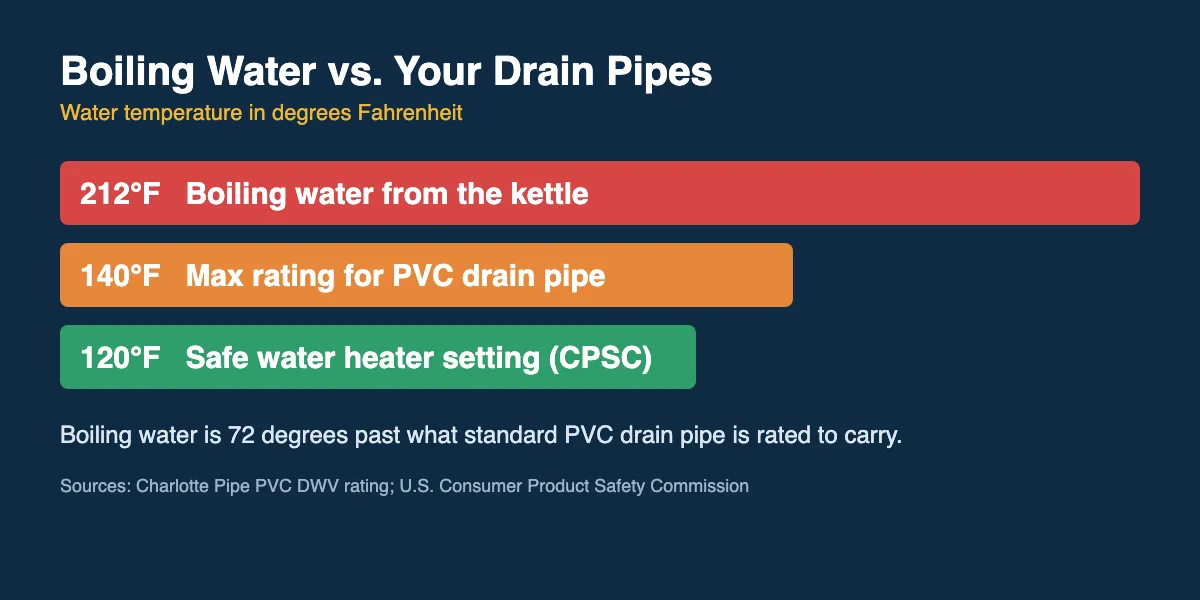
Boiling water is 212 degrees Fahrenheit. Most modern home drains are made of PVC plastic, and that plastic has a heat limit well below boiling.
Charlotte Pipe, a major U.S. pipe maker, rates its PVC drain pipe for water up to 140 degrees Fahrenheit, according to its plastics product knowledge guide. Boiling water is 72 degrees past that line.
PVC Pipe and Glued Joints
Hot water softens PVC. The pipe walls can sag a little, and the glued joints can loosen. One pour may do nothing you can see. Repeated pours add up, and a loose joint under a sink or in a wall leaks slowly.
Metal Pipes
Cast iron and galvanized steel handle heat better. But older metal pipe can be thin, rusty or pitted inside. A burst of heat does not fix that, and it does not clear what is stuck in there.
Sinks, Tubs and Toilets
Porcelain can crack from thermal shock. That is a fast jump from cool to very hot. A boiling pour into a cold toilet bowl or a porcelain sink is a common way people crack a fixture. Heat can also soften the wax ring that seals a toilet to the floor.
Why the Damage Is Easy to Miss
Heat damage hides inside the wall or under the cabinet. You may see nothing for months. Then a joint weeps, the cabinet floor swells and mold starts. By then a simple drain issue has become a plumbing repair.
Does Boiling Water Actually Clear a Clog?
Mostly no. It works on only a few kinds of slow drains, and it can make others worse.
The idea comes from the fact that heat thins grease. That is true for a moment. The trouble is that a drain is a long pipe, and the water cools fast as it travels.
Where It Can Help
A light film of soap or a little grease at the trap may loosen with hot water. If you try it, use water that is hot from the tap, or let boiled water cool for a few minutes first. Run cold water at the same time to cool the pour.
Where It Fails
Hair, wipes, paper, tree roots and packed grease do not dissolve in hot water. Grease also melts, travels down the line and cools into a hard layer farther along. You have moved the clog, not removed it.
Where It Can Make Things Worse
If the drain is fully blocked, the water just sits and heats the pipe and the fixture. A full pot of boiling water in a clogged sink can also splash and scald you. Skin burns fast from very hot water.
The U.S. Consumer Product Safety Commission urges homes to set water heaters to 120 degrees Fahrenheit to prevent scalds, in its tap water scalds publication. Boiling water is far hotter than that.
What Should South Jersey Homeowners Know?
Homes in Evesham, Marlton and the towns around them were built across many decades. That means a mix of drain materials, from older galvanized and cast iron to modern PVC. You may not know which one runs behind your wall.
Newer additions, like a remodeled bathroom or a finished basement, are almost always PVC. A boiling pour that reaches those joints is the risky part.
The Sewer Kings crews open drain lines in this area and see what slow drains are made of. Most are not hot water problems. They are grease, hair, wipes or roots, and none of those melt away with a kettle. A crew can clear that buildup from the inside, and it does not stress your pipes.
If you live in an older home, ask a plumber what your drain lines are made of before you test any heat on them. A short visit can save you a repair bill later.

What Should You Do Instead of Boiling Water?
Start with the gentlest tool that fits the problem. Move up only if it fails.
Try Mechanical Fixes First
A cup plunger works on sinks and tubs. A flat flange plunger works on toilets. A small hand snake, sold at most hardware stores, reaches a few feet into the trap and pulls out hair.
For a slow sink, a plunger or a hand drain snake pulls out hair and soap buildup. Our guide on why a bathroom sink drains slowly shows the common causes.
Skip store-bought liquid cleaners when you can. They can be harsh on old pipe. Read are chemical drain cleaners bad for your pipes before you try one.
Prevent clogs by keeping grease and wipes out of the drain. See what you should never put down your drain for the full list.
Call a pro if more than one drain is slow, the clog keeps coming back, or water backs up. Hard buildup in the line may need hydro jetting, and our post on whether hydro jetting can damage old pipes explains how it works safely.
A plumber can also run a camera to see the cause. If you are unsure what is behind a repeat clog, a quick look is cheaper than guessing.
Frequently Asked Questions
Is it OK to pour boiling water down the kitchen sink?
A rare pour of hot water is low risk for most pipes, but boiling water is not a good habit. Let it cool a few minutes and run cold tap water while you pour. Repeated boiling pours can loosen PVC joints in South Jersey homes.
Can boiling water crack a toilet?
Yes. Porcelain can crack from thermal shock when very hot water hits a cool bowl. Boiling water can also soften the wax ring under the toilet. Use a plunger instead.
Will boiling water melt grease in a drain?
It melts grease for a moment, but the grease then cools farther down the line and hardens again. That can build a deeper clog. A pro clean removes the grease for good.
Need a Stubborn Drain Cleared in Evesham?
The Sewer Kings serves Evesham and the surrounding South Jersey towns. We clear the clog without stressing your pipes. Call us or book a free estimate online.
Call (856) 626-9366 today.