


Is Hydro Jetting Safe for Older Drain and Sewer Lines?
Yes, it can. Hydro jetting is safe on pipe that is in sound shape, but it can make things worse on old pipe that is already cracked, rusted thin, or shifted at the joints. The risk comes from the pipe’s condition, not from the age on the calendar. Our hydro jetting service starts with a camera so we know what we are working with.
This post shows which pipes are at risk, how pressure is chosen, and what to do before anyone jets your line.
Which Old Pipes Are Most at Risk From Hydro Jetting?
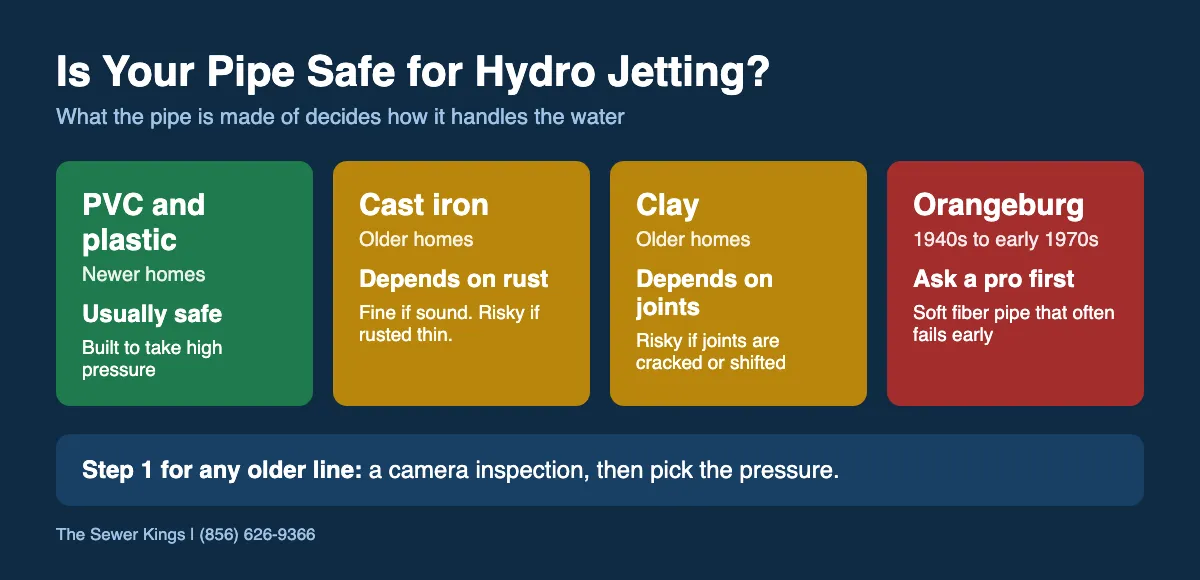
Clay and cast iron are the two older materials that need the most care. Both can be fine for decades. Both can also wear down in ways you cannot see from the surface.
Clay pipe
Clay is strong but brittle. Over time the joints shift, and roots work their way into the gaps. High-pressure water can push into a cracked joint and widen it.
Cast iron pipe
Cast iron rusts from the inside. Rust builds up in layers, and the pipe wall can grow thin. A thin wall may not hold up to a hard blast of water.
Orangeburg pipe
Orangeburg is a pipe made of tar-soaked wood fiber. It is the weakest of the group, so a pro should check it before any jetting.
Signs that a pipe may already be weak include slow drains that keep coming back, gurgling sounds, a sewage smell, and soggy spots in the yard. None of these prove a pipe is damaged. Each one is a reason to look with a camera before any high-pressure work.
Roots are another warning sign. Roots only get into a pipe through a crack or a loose joint. So a root clog often means the pipe already has an opening that water pressure could make bigger.
Newer PVC pipe is a different story. As Benjamin Franklin Plumbing notes, older clay or cast iron pipe can break more easily from existing wear, while PVC is usually better suited to take high-pressure water.
How Much Pressure Does Hydro Jetting Use, and Does It Matter?
Pressure matters a lot. One plumbing company says kitchen lines might see around 1,500 PSI, while main sewer lines can handle up to 4,000 PSI, according to Benjamin Franklin Plumbing. The right number depends on the pipe size and its material.
Our machines can reach up to 4,000 PSI. That does not mean we run them that high every time. A strong, clear PVC line can take more pressure. A thin old pipe gets a lower setting and a gentler nozzle.
A skilled operator also watches the flow, not just the pressure. Water that moves through the line without pushing hard against one weak spot is what cleans the pipe wall safely.
The chart below shows how each common pipe type usually handles jetting.
What Do South Jersey Homeowners With Older Lines Need to Know?
Many South Jersey neighborhoods have homes that are decades old. Their drain and sewer lines may be clay, cast iron, or something older. You cannot tell from the street which one you have.
Age also changes the odds. Mr. Rooter reports that Orangeburg pipe was installed in homes from the 1940s through the early 1970s, and most of it starts showing problems after about 30 years.
Soil, water, and tree roots all take a toll on buried pipe. A line under a big tree or in wet ground can wear out faster than the same pipe in dry soil. Two homes built the same year can have very different pipes today.
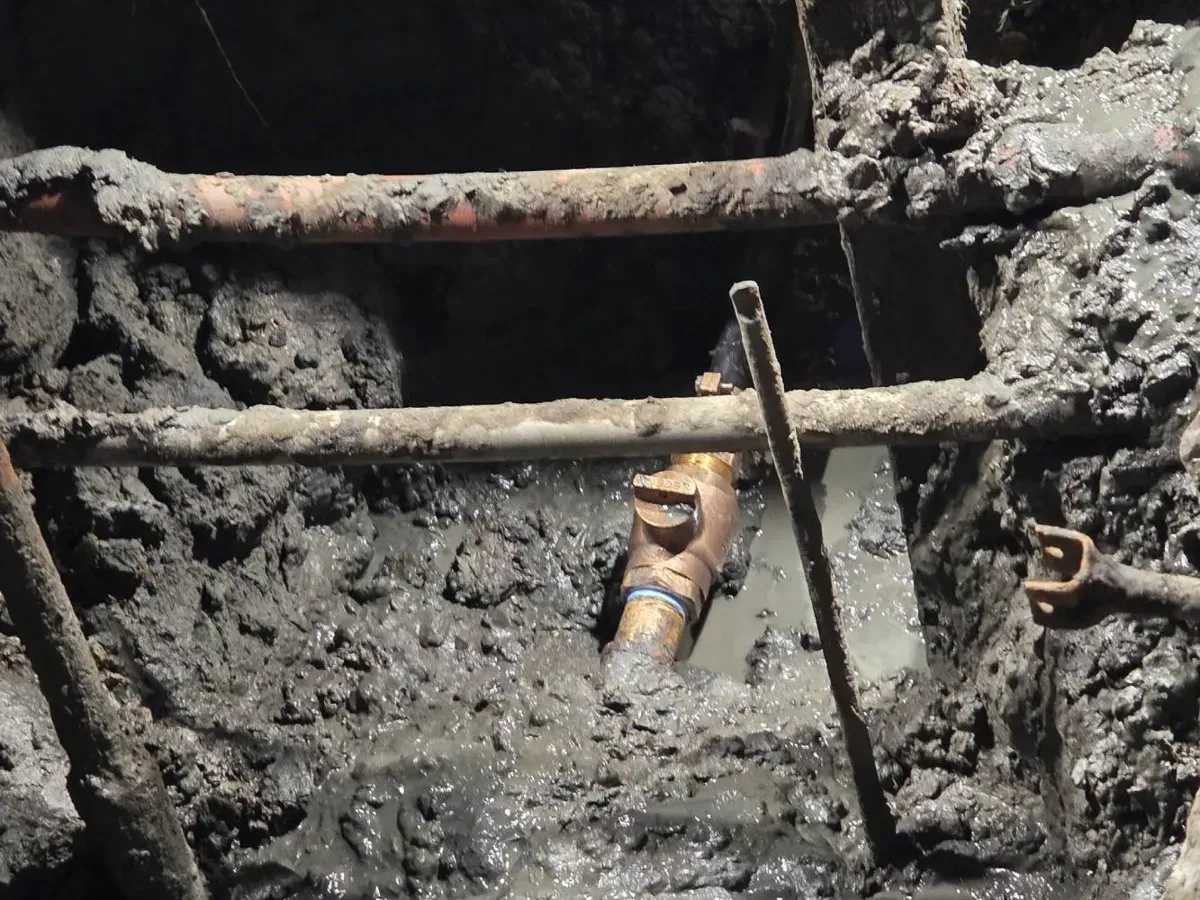
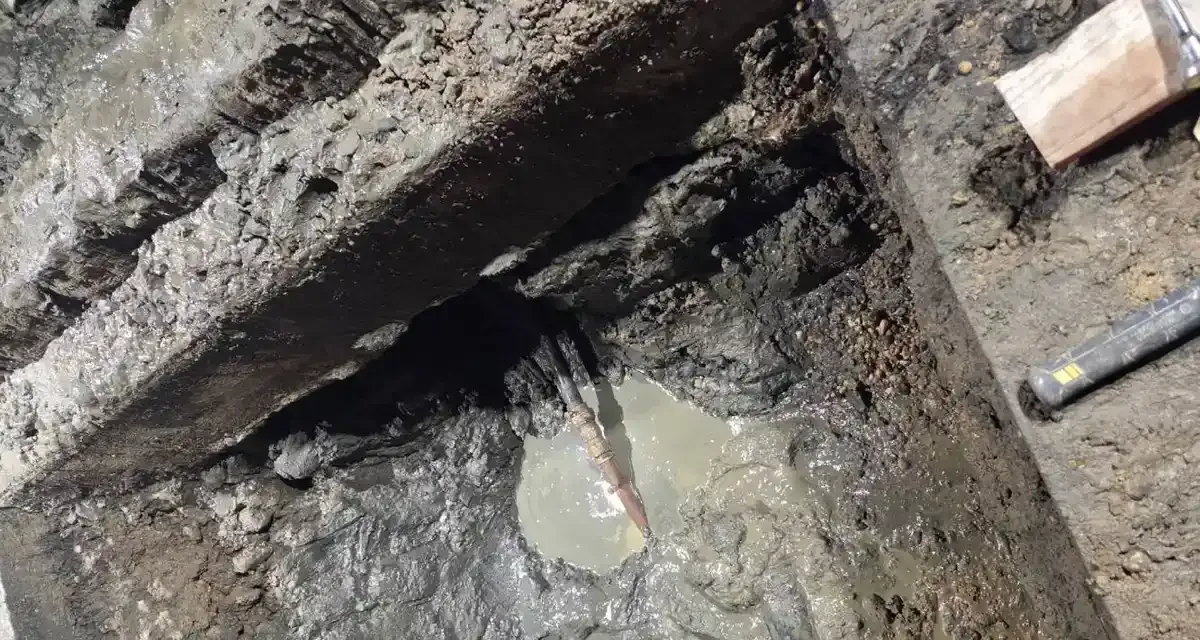
On dig jobs across South Jersey, our crew sees old corroded pipe up close. Some of it is still sound. Some of it is flaking and thin. That is why every Sewer Kings hydro jetting job starts with a camera inspection, not with the hose.
The camera shows cracks, offset joints, sags, and roots. It also shows whether the clog is grease, roots, or a broken pipe. If the pipe is broken, jetting is the wrong tool and repair is the right one.
If you are not sure how old your pipes are, our post on how long drain pipes last in NJ homes is a good place to start. Years of bottled cleaner thin a pipe too, as what harsh drain chemicals do to old pipe explains. If the line is 1950s fibre, read what Orangeburg pipe is and when it fails before jetting it.
What Should You Do Before Hydro Jetting an Old Pipe?
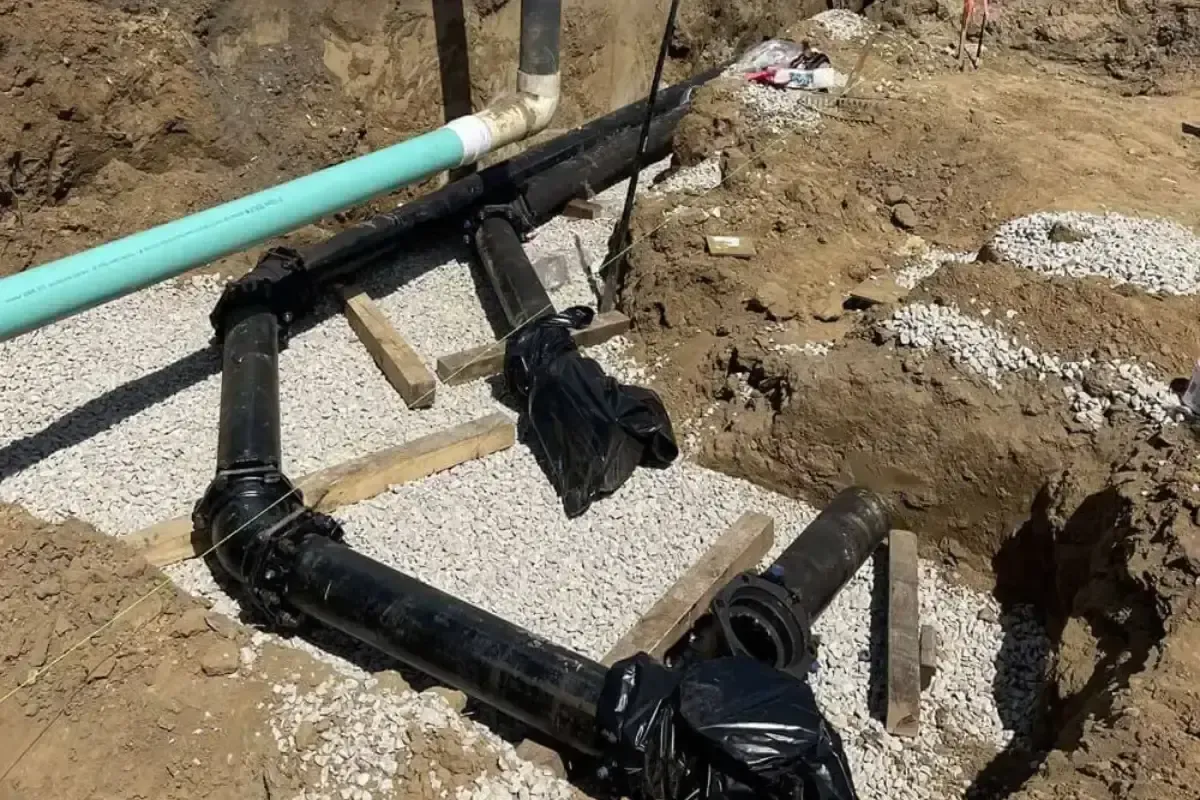
Start with a camera inspection. It is the one step that turns a guess into a plan. If the pipe is sound, jetting can clear years of grease and roots in one visit.
If the camera shows damage, you have choices. A short repair may be enough. A badly worn line may need to be replaced. Jetting a pipe that is about to fail can leave you with a bigger bill and a flooded yard.
Ask to see the camera footage. A good crew will show you the cracks or the clean walls on screen. You should not have to take anyone’s word for it.
It also helps to know the options. Our guide to how hydro jetting works explains the process, and snaking vs. hydro jetting compares costs. If a pipe is past saving, read about pipe relining before you decide. You can also see what hydro jetting costs.
Ask any company you hire three questions. Will you run a camera first? How will you set the pressure for my pipe? What happens if you find damage? A good answer to all three is a good sign.
Jetting still has a place for older homes. Grease, sludge, and roots are tough for a snake to clear. When the pipe is sound, jetting cleans the whole wall instead of poking one hole through the clog.
Hydro Jetting and Old Pipes: Common Questions
Is hydro jetting safe for cast iron pipes?
It can be, if the cast iron is still sound. Cast iron that has rusted thin can be damaged by high pressure. A camera inspection tells us which one you have, and we set the pressure to match.
Can hydro jetting break a clay pipe?
It can if the clay is already cracked or the joints have shifted. Water under pressure can push into those gaps and widen them. Clay pipe in good shape is usually fine at a lower pressure.
What should I do if I think my old sewer line is damaged in Evesham?
Do not jet it first. Have a pro run a camera through the line so you can see what is wrong. The Sewer Kings serve Evesham and the rest of South Jersey. Call (856) 626-9366 and we will look before we clean.
Not Sure If Your Pipes Can Handle Hydro Jetting?
The Sewer Kings inspect your line with a camera first, then clear it at the right pressure. We serve homes and businesses across South Jersey.
Call (856) 626-9366 today.