

Trenchless Sewer Replacement vs. Traditional Dig-and-Replace
A side by side look at the two ways to replace a sewer line, and the pipe conditions that decide between them.
Two Ways to Get a New Sewer Line
Trenchless replacement puts in a new sewer line through two small pits, while traditional replacement digs a trench along the whole pipe. Both end with a new line. The difference is how much of your property gets torn up on the way.
Neither method wins every time. The right choice depends on what sits on top of the pipe, how deep it runs, and what shape it is in.
The Sewer Kings do both, so we have no reason to push one. Here is how they compare. For details on the no dig option, see our trenchless sewer line replacement service.
How Each Method Works
Traditional dig and replace
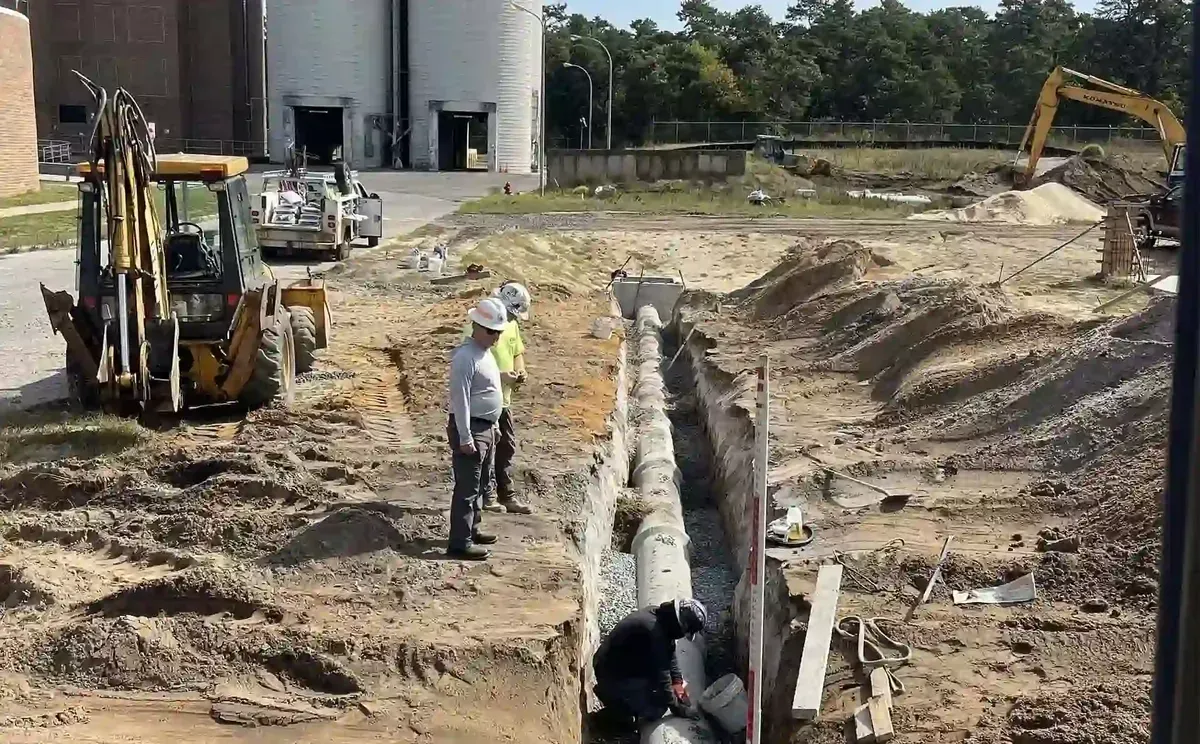
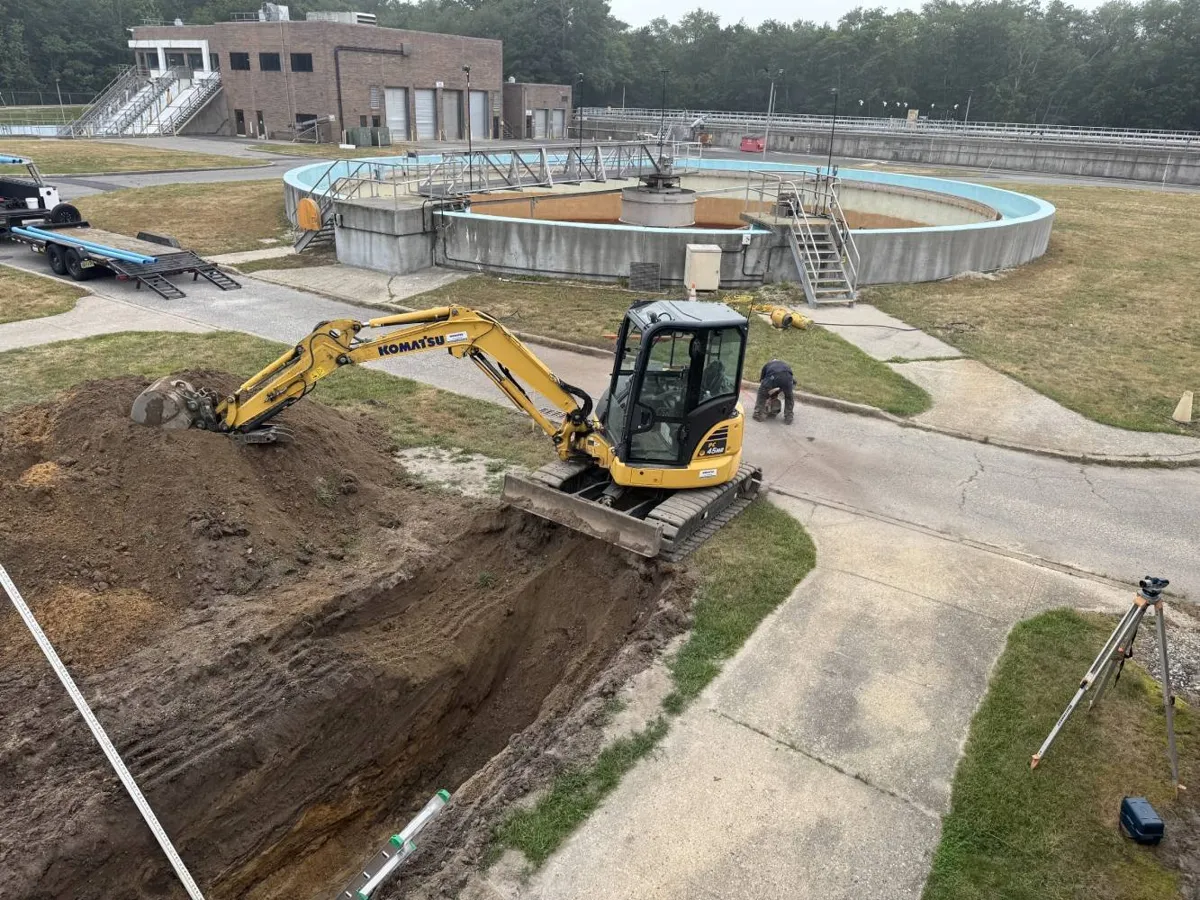
An excavator opens a trench from the house to the street connection. The old pipe comes out, a new pipe is laid on a stone bed at the right slope, and the trench is backfilled and packed down. The crew can see and touch every foot of the line.
Trenchless pipe bursting
A pit is dug at each end of the line. A bursting head is pulled through the old pipe, cracking it outward while a new HDPE pipe follows behind. NASSCO explains that bursting is often chosen when the old line is too far gone for other repair methods.
What stays the same
Both methods start with a camera inspection and a utility markout. Both need a permit in most towns, and both end with a connection at the house and at the street.
What changes
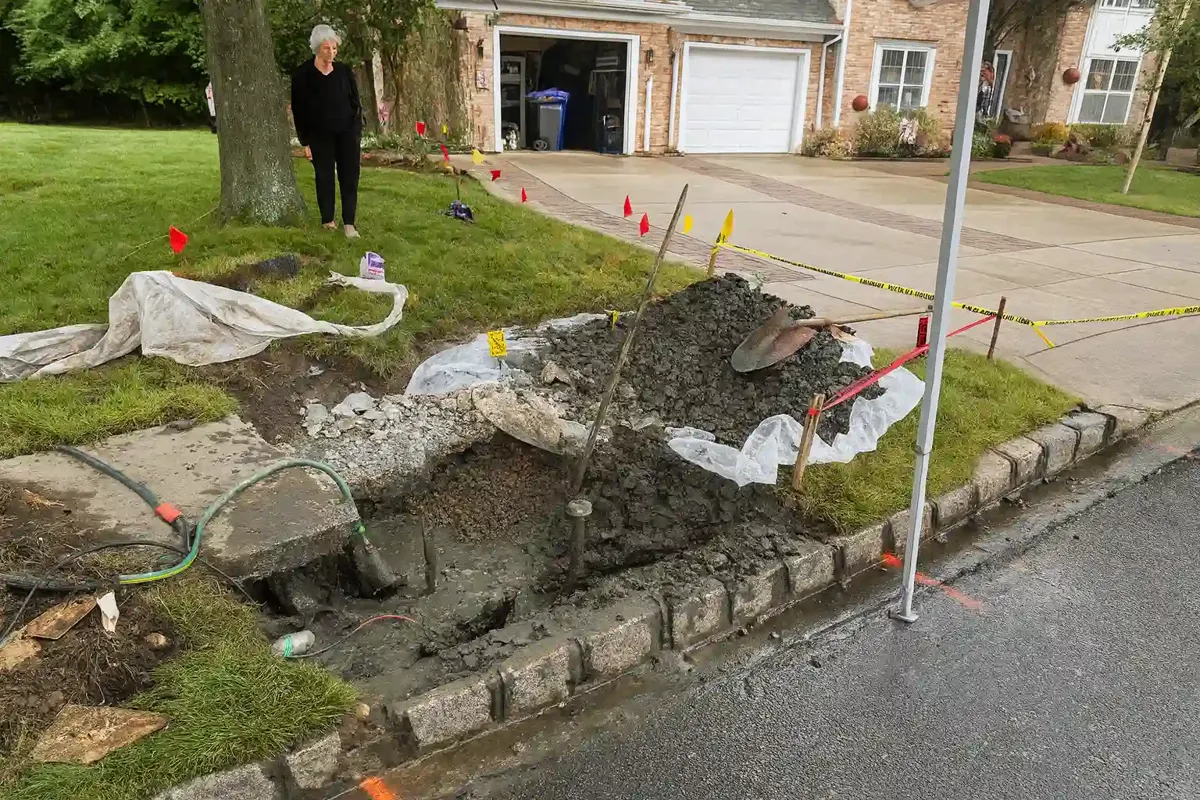
With a trench, the surface above the pipe is removed and rebuilt. With bursting, only two pits are opened. Everything between them stays put, from the lawn to the driveway.
Who does the work
A trench job needs an excavation crew and heavy equipment on site for days. A bursting job needs a smaller crew, a puller and fusion gear, plus a mini excavator for the pits.
Permits and paperwork
Both methods follow the same township permit and inspection steps, so the paperwork does not decide between them.
Trenchless vs. Traditional Side by Side
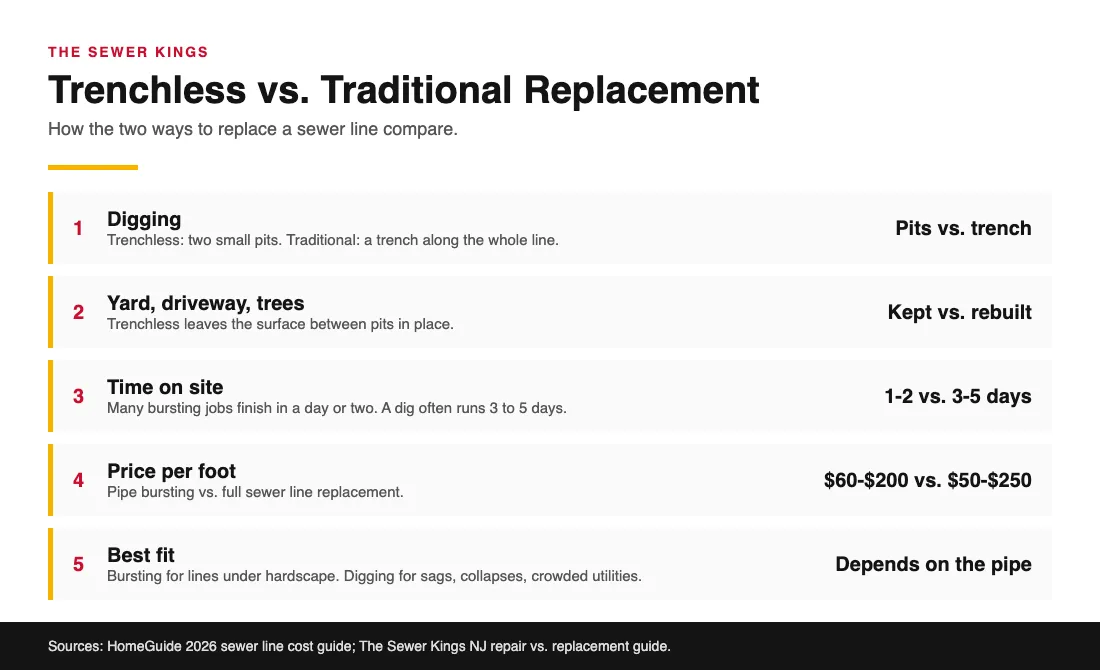
On paper the dig can look cheaper. HomeGuide’s 2026 data puts the trench digging itself at $5 to $12 per foot, and full sewer line replacement at $50 to $250 per foot. Pipe bursting runs $60 to $200 per foot on the same guide.
The catch is restoration. A trench through a driveway or sidewalk has to be rebuilt, and HomeGuide lists concrete removal alone at $3 to $8 per square foot. Landscaping, pavers and mature plantings add more.
Time on site
Our own New Jersey repair vs. replacement guide shows a traditional replacement taking about 3 to 5 days with backfill and restoration. Many residential pipe bursting jobs wrap up in a day or two.
The new pipe
A trench job usually goes in with PVC pipe set on a stone bed. A bursting job uses HDPE fused into one continuous piece with no joints.
Settling after the job
A long trench holds a lot of loose backfill, and it can sink over the following months. Two small pits leave far less ground to settle.
Access to the full pipe
A trench lets the crew see every foot of the new line before it is buried. With bursting, the final camera run is how the new line gets checked.
What We See on South Jersey Properties
The Sewer Kings started as an excavation crew. Anthony and Mark Papaneri learned the trade on their father’s water and sewer projects, and open cut work is still a big part of what we do.
That background shapes how we pick a method. On a shallow line under open lawn, a dig is simple and the lawn grows back. On a line under a paved driveway, a patio or old trees, bursting saves the surface and often the budget.
Crowded ground is the big local factor. Older neighborhoods can have gas and water services running near the sewer lateral. The International Pipe Bursting Association’s guideline advises against bursting where other utilities interfere with the burst path, and in those cases we dig.
Our bursting rig handles lines from 2 to 6 inches wide. Larger lines, or lines that need a slope corrected, go the traditional route with our excavation crews.
We also look at the connection at the street. If the tie in needs work at the main, that part may need a larger dig no matter which method replaces the rest of the line.
Every quote we write names the method and why we picked it. If you want the other method priced too, just ask, and we will show you both numbers.
How to Choose the Right Method
Start with the camera footage. If the line has a deep sag holding water, a dig lets the crew fix the slope. Bursting follows the old path, so it keeps the sag.
Next, look at the surface. The more hardscape and landscaping over the pipe, the stronger the case for trenchless.
Then compare full prices, not per foot prices. Ask each contractor to include pits or trench, permit, backfill and surface repair.
Finally, ask how each method handles the slope. A line has to drop steadily toward the street to drain. If the old line never had the right slope, only a dig can fix that.
When the choice is close, most homeowners pick the method that leaves the least mess for the same money. That is a fair way to break a tie.
If you need more detail, read what trenchless pipe bursting is, check trenchless sewer replacement costs, or see our page on traditional sewer line replacement.
Trenchless vs. Traditional: Common Questions
Which lasts longer, trenchless or traditional?
Both put in a brand new pipe, so both can last for decades. A fused HDPE line from pipe bursting has no joints for roots to enter. A trench line lasts well too when it is bedded and sloped correctly.
Can every sewer line be replaced without digging?
No. A fully collapsed line, a deep sag, or a line crowded by other utilities may still need a trench. A camera inspection shows which method fits before you get a quote.
Do The Sewer Kings offer both methods in New Jersey?
Yes. Our crews in Evesham, NJ do both pipe bursting and open cut replacement. We camera the line first and recommend the method that suits the pipe and the property.
Get the Right Method for Your Line
The Sewer Kings run a camera first and quote the method your line actually needs, trenchless or dig. Family owned, licensed, bonded and insured, and available 24/7 across Burlington, Camden, Gloucester and Ocean counties.
Call (856) 626-9366 today.