


Drain Snakes Explained: What They Do and How Deep They Go
A drain snake is a long, flexible metal cable that breaks up or pulls out a clog, and most reach between 15 and 100 feet. The tool you own decides how far you get. A small hand snake handles a sink. A motorized machine can run a main line. Professional drain cleaning starts with that same choice.
This post covers what a drain snake is, how far each type reaches, and when a snake stops being the right tool.
What Is a Drain Snake and How Does It Work?
A drain snake, also called a drain auger or plumber's snake, is a coiled steel cable with a corkscrew or cutting head on one end. According to HomeTips, it is a flexible cable tool used to break up or retrieve clogs inside pipes.
You feed the cable into the drain and turn it. The head bites into the clog. It either breaks the blockage apart or hooks it so you can pull it back out.
Why a Snake Beats a Plunger on Deep Clogs
A plunger only works near the drain opening. A snake works inside the pipe, past the trap and the first bend. That is why it clears hair, paper, and soft buildup that a plunger cannot touch.
What the Cable Head Looks Like
Most heads look like a tight spring or a small drill bit. Some have a hook for hair. Others have cutting blades for roots. The head you pick should match the clog you expect to find.
What a Snake Does Not Do
A snake opens a channel through the clog. It does not scrub the pipe wall. Grease and scale stay behind, so the same drain can slow down again in a few months.
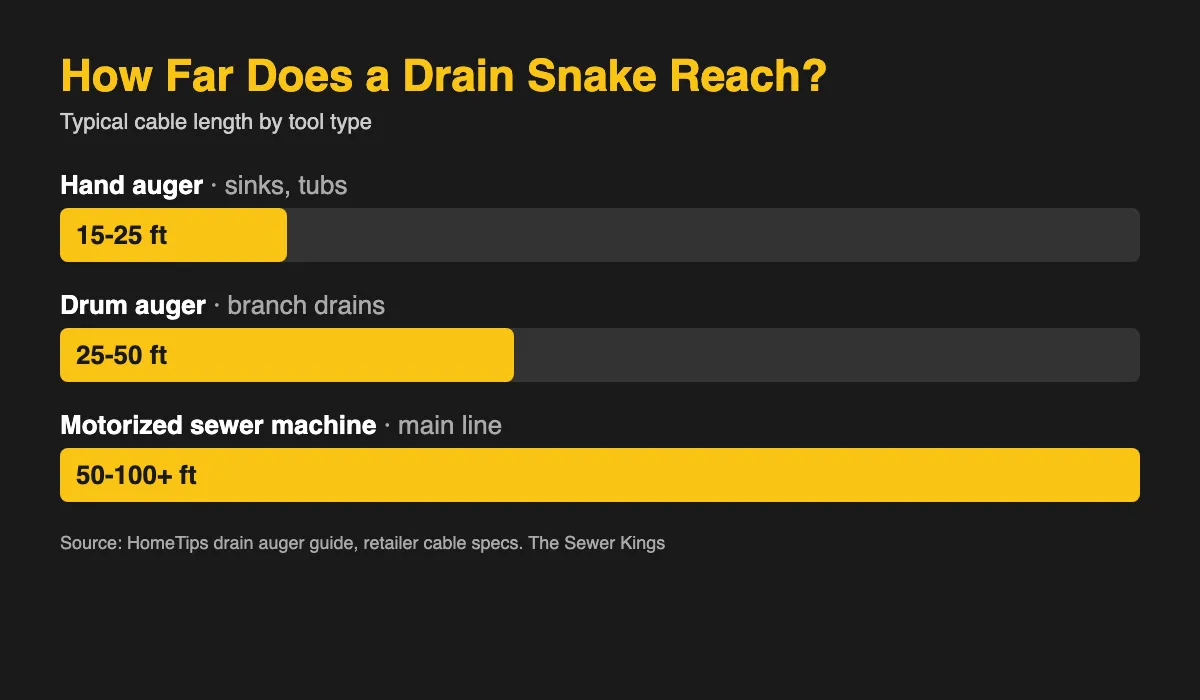
How Far Does a Drain Snake Reach?
Reach depends on the cable length, and cable length depends on the type of snake. HomeTips lists hand augers at 15 to 25 feet and motorized sewer augers at 50 to 100 feet or more.
Hand Auger: 15 to 25 Feet
This is the crank snake sold at hardware stores. It fits sinks, tubs, and short branch lines. It is not built for a main sewer line.
Drum Auger: 25 to 50 Feet
A drum auger stores the cable in a drum, so it feeds out longer and cleaner. Many run off a drill. They work well on branch drains and floor drains.
Motorized Sewer Machine: 50 to 100+ Feet
A sewer machine is a wheeled, powered unit with a thick cable. This is what a technician runs down a main line from the cleanout. It is the only type that reliably reaches from the house to the street.
Pipe Size Matters Too
Thin cable fits thin pipe. A 1/4-inch cable suits a sink line. A main sewer line is usually 4 inches wide, so it needs a thicker, stiffer cable. Pushing a small consumer snake into a large pipe wastes time and can bend or kink the cable.
Cable length is not the same as distance cleared. A snake that is 25 feet long cannot clear a clog that sits 40 feet from your cleanout.
What We See on Snake Jobs in South Jersey
The Sewer Kings is family owned and run by brothers Mark and Anthony Papaneri. They learned the trade working beside their father on government water and sewer projects. Their crews run cable machines and jetters on residential and commercial calls every week, as we explain in our snaking vs. hydro jetting cost comparison.
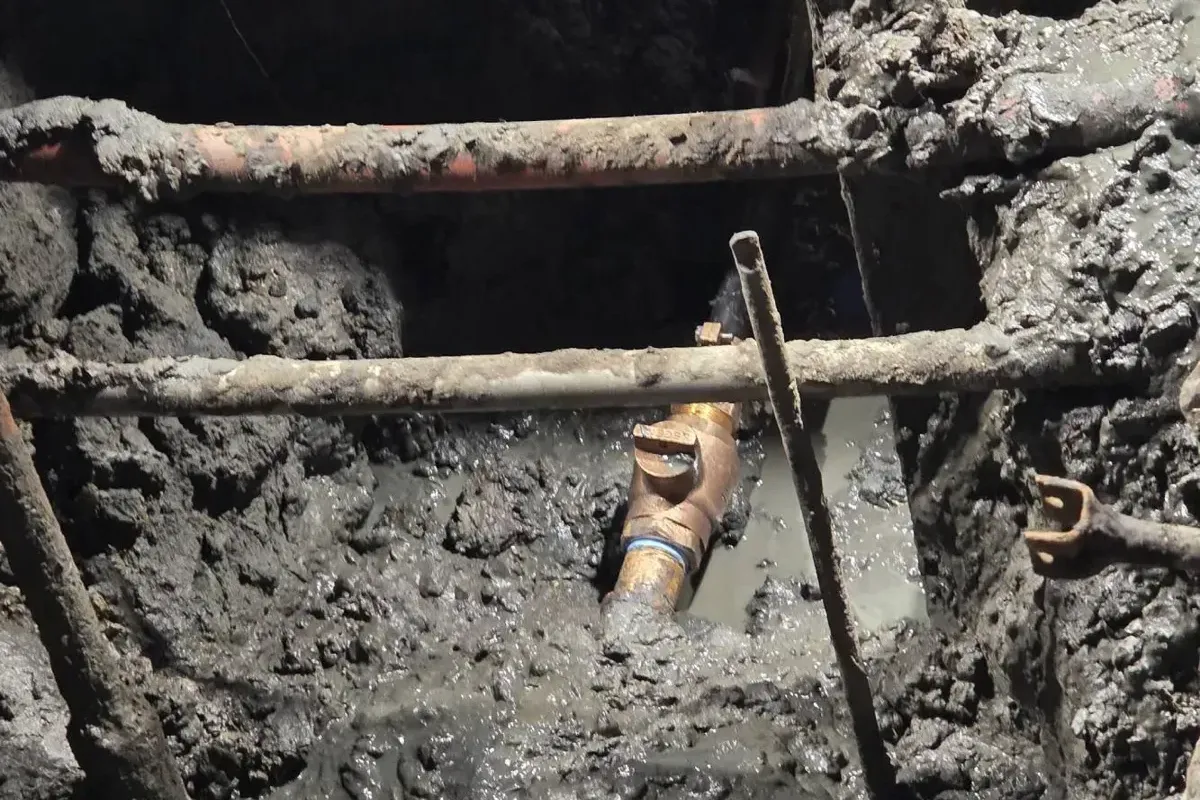
Many South Jersey homes sit on older lines. Old pipe can be rough, cracked, or corroded inside. A cable can catch on those spots or scrape metal loose, which can make a clog worse.
Mr. Rooter notes that improper use can lead to pipe damage and that drum augers are typically only recommended for experts. That matches what we see in the field.
Roots are the other big one. Mature trees in older South Jersey neighborhoods send fine roots into joints. A snake can cut them back, but they grow right back. A camera shows how bad it is before anyone guesses.
When a line keeps clogging, we run a camera first. Then we pick the right tool. Sometimes that is a cable. Sometimes it is a jetter. Sometimes the pipe needs repair.
Should You Snake the Drain Yourself or Call a Pro?
Snake it yourself if the clog is in one sink, tub, or shower and you can reach it with a hand auger. Go slow. Never force the cable. Feed it a foot or two at a time, turn the handle, and pull it back often to clear what it grabs. Wear gloves, because the cable comes out dirty.
Stop if the cable will not move or you feel a hard stop that does not give. That can be a bend, a crushed pipe, or a root mass. Forcing it only makes the repair bigger.
Call a pro if more than one drain is slow, water backs up in a floor drain, or the clog returns within weeks. Those signs point to the main line. Our post on what a sewer cleanout is and where to find it shows where a technician gets access. If the floor drain also smells, see why a floor drain smells.
Also call if you suspect tree roots or a broken pipe. A snake will not fix those. See what hydro jetting is and how it works for the next step up, or read how long drain cleaning takes to know what to expect.
Frequently Asked Questions
Can a drain snake damage pipes?
Yes, if it is used wrong. Forcing the cable or running it through old, corroded pipe can scrape the wall or crack a weak joint. Go slow and stop if the cable binds. If you are not sure what your pipes are made of, call a pro.
How long of a drain snake do I need for a main line?
Plan on 50 to 100 feet of cable for a main sewer line. A 25-foot hand snake will not reach far past the cleanout. A South Jersey home with a long run to the street usually needs a motorized machine.
What is the difference between a drain snake and a drain auger?
Nothing important. The words mean the same tool. Plumbers say auger. Homeowners say snake. A toilet auger is the one exception, since it is short and made only for toilets.
Need a Clog Cleared in South Jersey?
The Sewer Kings clear drains and main lines across Evesham and South Jersey with the right tool for the clog. Call now and we will get a technician out.
Call (856) 626-9366 today.