
Drain Relining vs. Pipe Replacement: Which Fixes a Collapsed Drain

5.0
& Yelp Reviews

Book A Free Estimate
Submit your information below.

Our Reviews

Why South Jersey Trusts The Sewer Kings


Book A Free Estimate
Submit your information below.
Two Ways to Fix a Failing Drain Line
When a drain line cracks, leaks, or starts to cave in, there are two main ways to fix it. You can line the old pipe from the inside, or you can take it out and put in new pipe.
Both work well in the right situation. The mistake is choosing one before anyone looks inside the pipe. Drain relining in Cherry Hill Township starts with a camera survey for exactly that reason.
This guide from The Sewer Kings explains how each method works and when relining makes sense. It also covers when replacement is the only real answer and how the camera decides.
The short version is simple. Relining fixes a pipe that still holds its shape. Replacement fixes a pipe that has lost it.
Knowing that difference helps you read any quote. It also helps you understand why two lines on the same street can need very different repairs.
How Drain Relining Works
Relining builds a new pipe inside the old one. The crew cleans the line first, then draws a liner soaked in resin into the damaged run.
The liner is pressed against the old pipe wall and cured until it hardens. The result is a smooth, jointless pipe inside the original.
Because the new lining has no joints, roots have nowhere to enter. Cracks and small gaps in the old pipe get sealed behind it.
Cleaning comes first for a reason. On old cast iron, scale has to be removed so the liner can bond to a clean wall.
Relining usually needs only access at the ends of the run. That means lawns, driveways, and floors above the pipe can often stay in place.
Relining is not a cure for every problem, though. It seals the pipe it lines, but it cannot change the path or slope of that pipe. That limit is why the camera survey matters so much.
When Relining Is the Right Fix
Relining only works when the old pipe still holds its shape. The liner needs the host pipe as a form to cure against.
Cracks and Leaking Joints
Pipe with cracks, pinholes, or leaking joints along its length is a good fit. The liner seals all of them at once.
Root Entry Points
Lines where roots keep coming in through joints benefit from a jointless liner that shuts those gaps.
Pipe Under Hard Surfaces
When the damaged run sits under a driveway, patio, or finished floor, relining can avoid tearing those surfaces out.
Relining methods follow industry standards. NASSCO, the national trade group for sewer service and pipe rehabilitation companies, sets training and standards used across the trenchless repair field.
When Pipe Replacement Is the Only Real Answer
A collapsed drain is a different problem. When the pipe has caved in, there is no longer a round shape for a liner to cure against, and there is often soil filling the gap.
Heavy sags are another limit. A liner follows the old pipe, so a low spot that holds water stays a low spot after relining.
Replacement also gives you a chance to fix the layout. New pipe can be set at the right slope and depth, and a cleanout can often be added so future service is easier.
Pipe that has broken apart or badly offset joints may also be past lining. The liner cannot bridge a section that is missing or shifted too far.
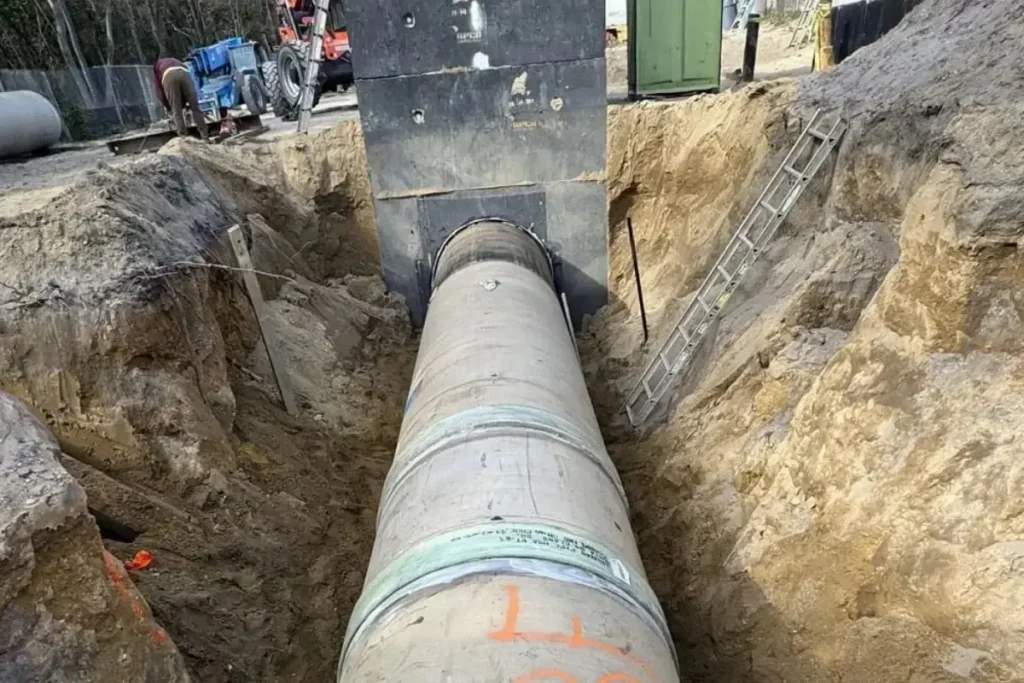
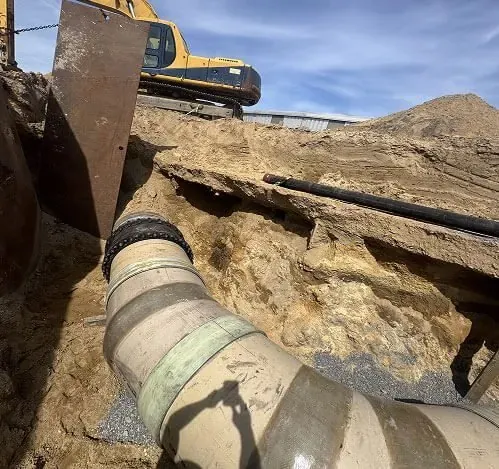
In these cases, replacement is the lasting fix. The crew confirms the failure on camera, finds the spot from the surface, and opens the smallest pit that reaches the damaged run.
New pipe goes in on a bedded base with the slope reset. The trench is backfilled in compacted layers, and a final camera pass shows the finished repair.
When a whole line needs replacing, pipe bursting can be an option. The Sewer Kings can replace many 2 to 6 inch lines through two small pits. A fully collapsed pipe filled with soil can be hard to pull through, though.
How a Camera Survey Decides Between Them
Every job starts with a camera survey. The video shows the pipe material, the damage, how much of the run is affected, and whether the pipe still holds its shape.
If the pipe is cracked but round, relining is usually on the table. If it is crushed, sagging, or broken apart, replacement is the honest answer.
The Sewer Kings says so plainly either way. We would rather tell you a line cannot be relined than sell a liner that fails.
Many lines need a mix. One section may be relined while a collapsed spot is dug up and replaced, and the camera shows where each method fits.
Cost is part of the decision, but it is not the only part. A cheaper fix that does not match the pipe condition often leads to a second repair, so the right method usually saves money over time.
You watch the footage with us and get a flat rate before work begins. That way the choice is based on what is in the ground, not a guess.
Frozen and cracked pipe is one common path to this decision. Our guide on how to prevent frozen and cracked drain lines in a Cherry Hill winter covers how to protect a line before it gets that far.

FAQs
Frequently Asked Questions About Drain Relining vs. Pipe Replacement
Usually not. A liner needs the old pipe to hold its shape so it can cure against it. A fully collapsed drain has lost that shape and normally needs the damaged section replaced.
It depends on the job. Relining can save on digging and restoration when the pipe runs under a driveway or floor. A camera survey and a flat rate quote show which option makes sense for your line.
A camera survey shows whether the pipe is cracked but round or crushed and sagging. The Sewer Kings reviews the video with homeowners in Cherry Hill Township, NJ, and explains which fix fits.
Not Sure If Your Drain Can Be Relined?
The Sewer Kings will survey the line and tell you straight which repair it needs. Our family-owned crew handles relining and replacement, so you get an honest answer either way.
Call us for a free estimate and a clear look inside the pipe.