


Sewer Line Depth: What to Expect Under Your Yard
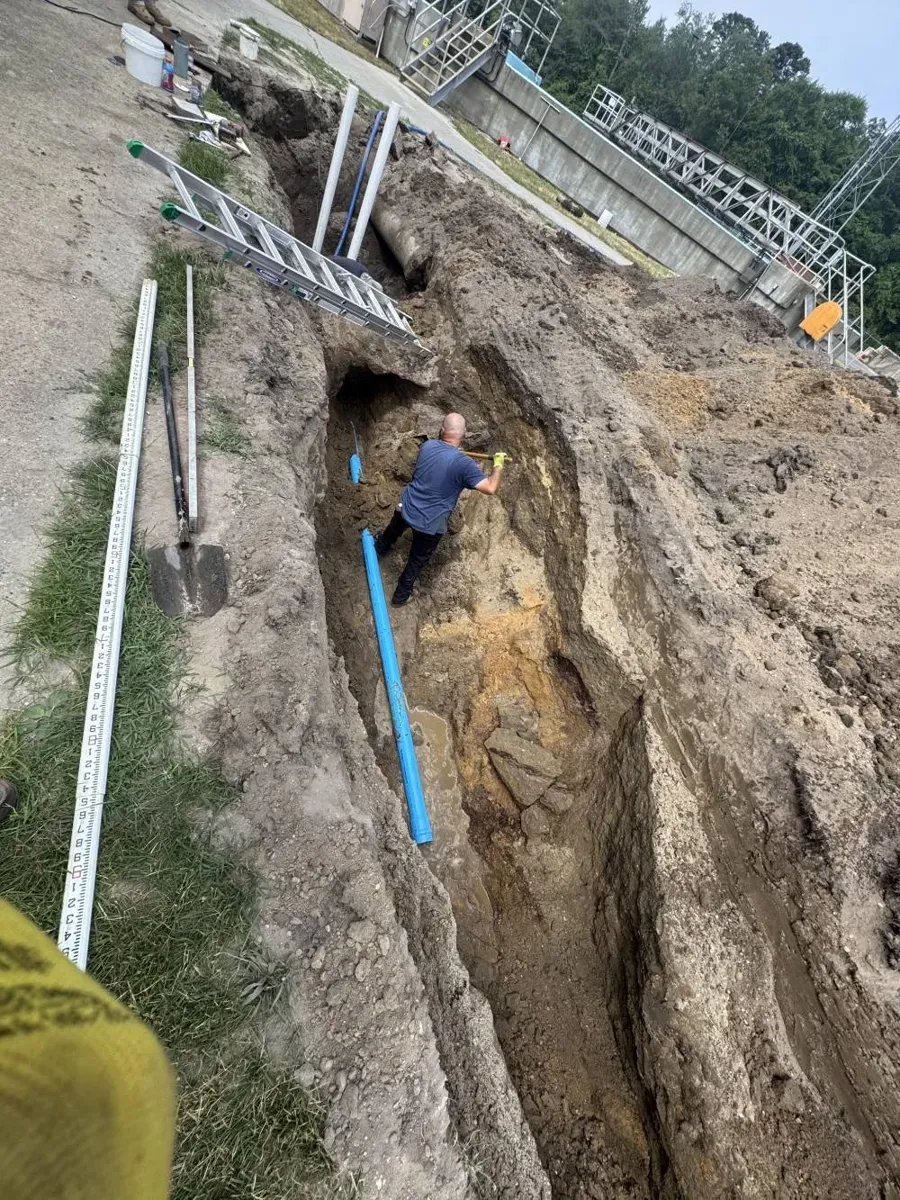
Most home sewer lines are buried between 4 and 7 feet deep in the Northeast, and 2 to 8 feet across the country. The exact depth depends on your frost line, your street, and the age of your home. If you plan to dig, repair a line, or buy a house, knowing this range keeps you safe and saves money. Our excavation team digs to these depths in South Jersey every week.
How Deep Is the Average Home Sewer Line?
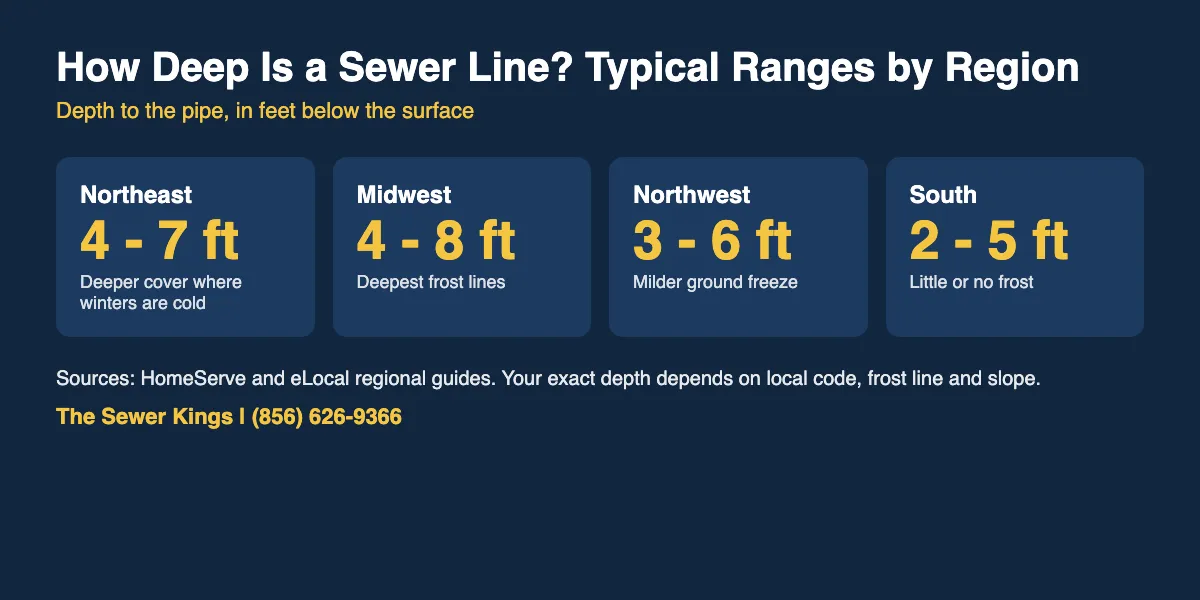
The average home sewer line sits 4 to 7 feet below the surface in the Northeast. HomeServe’s regional guide lists 4 to 7 feet for the Northeast, 4 to 8 feet for the Midwest, 3 to 6 feet for the Northwest, and 2 to 5 feet for the South.
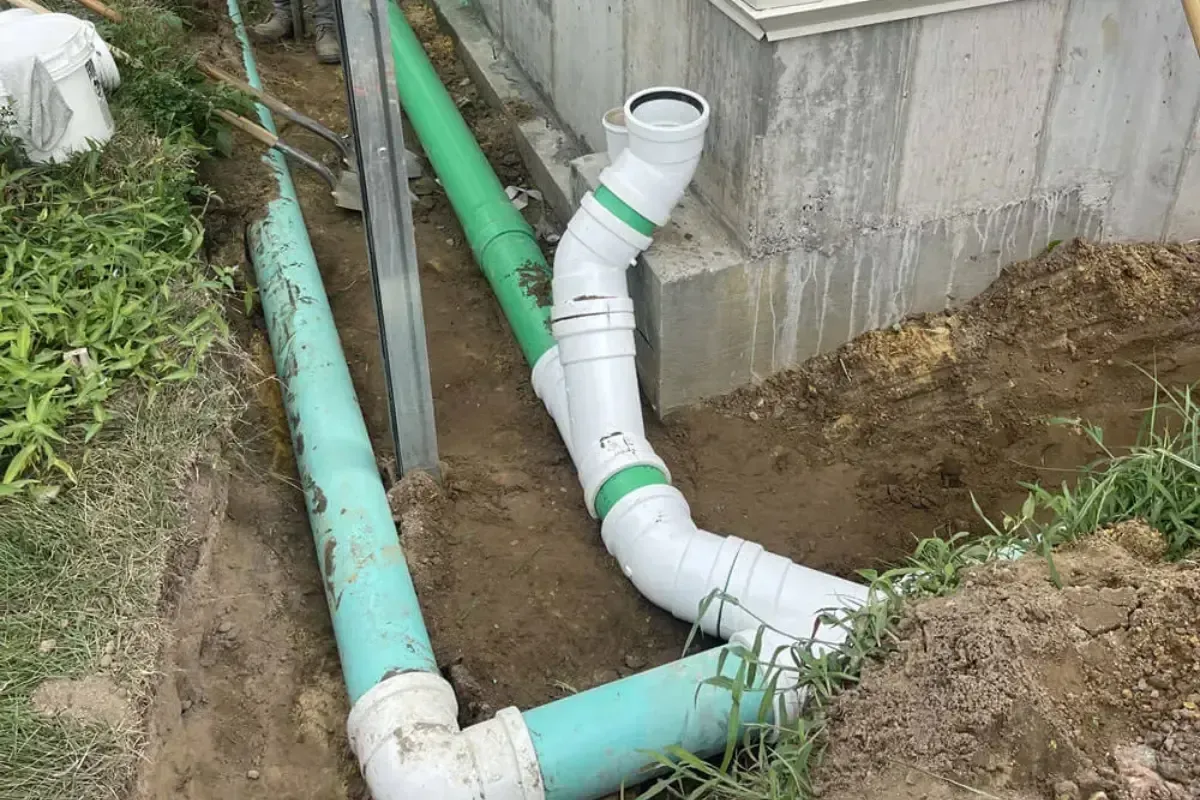
The line starts inside your house, where all the drains meet. It leaves through the foundation wall, usually low in the basement or crawl space. From there it runs underground toward the street.
Near the house, the pipe is often shallow, sometimes only 2 to 3 feet down. It gets deeper as it moves toward the main in the street, because it must slope downhill the whole way.
Why the depth changes along the run
Gravity moves the waste, so the pipe drops a little with every foot. A long run to the street ends up much deeper than the part by your foundation.
A home with a basement bathroom needs a deeper line than a slab home. The pipe has to start lower to carry that waste out.
Older homes can be different again. Many South Jersey lines were laid decades ago, sometimes shallower than today’s standards. The only way to know for sure is to locate the pipe and look at it.
That is why a quoted depth is only a starting point. Two houses on the same street can have lines a foot or two apart in depth.
What Decides How Deep a Sewer Line Is Buried?
Five things set the depth: the frost line, the slope, the street main, local code, and the soil. Each one pushes the pipe a little deeper or a little shallower.
Frost line
The frost line is how far down the ground freezes in winter. Cold regions bury pipes deeper to stay below it. Wastewater is warm and moving, so sewer lines freeze less often than water lines. Deeper cover still protects them.
Slope
Building codes call for a steady downhill grade, often about a quarter inch per foot for a 4-inch pipe. Over 60 feet, that adds up to a drop of 15 inches. Your plumber confirms the exact rule with your township.
The street main
Your line must reach the main sewer in the street. If the main is deep, your lateral ends up deep too. Older streets and newer subdivisions often differ by several feet.
Soil and local code
Sandy South Jersey soil drains well and digs easy. Clay and rock slow the work and sometimes force a different path. Local code sets the minimum cover, so it can add depth on top of the frost rule.
The chart below shows the typical depth ranges by region.
How Deep Do We Dig on South Jersey Sewer Jobs?
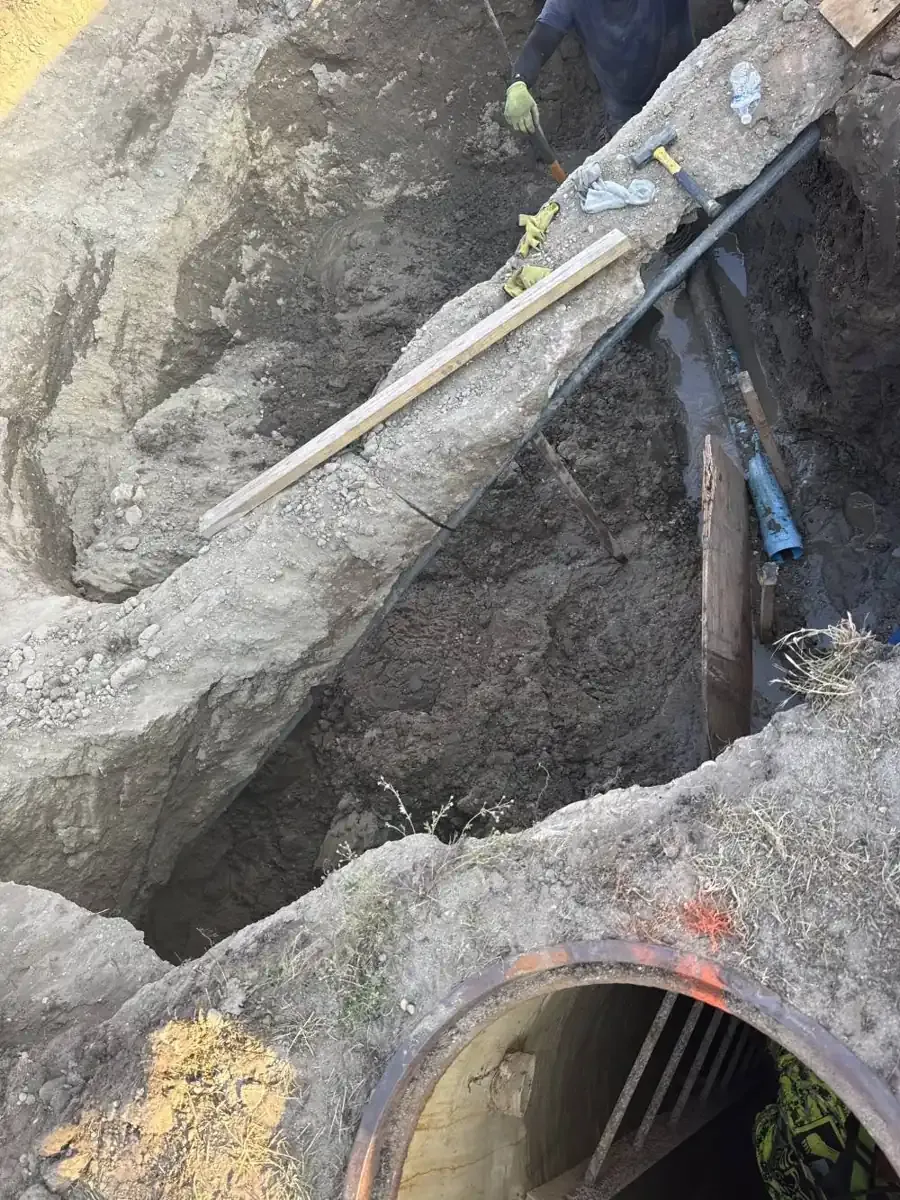
On open-cut repairs in Evesham, Cherry Hill and nearby towns, our crew often works in trenches deeper than a person is tall. The pipe near the street is usually the deepest part of the job.
Before any machine touches the ground, we call 811 for a markout. Gas, water, electric and phone lines share the same ground as your sewer line. Near those marks, we dig by hand.
New Jersey law requires a call to 811 at least three full business days before you dig, and no more than 10. New Jersey One Call sends the request to local utilities for a free markout. It covers small jobs too, such as fences and mailbox posts.
Depth is also a safety rule for the crew. OSHA requires a protective system in trenches 5 feet deep or more, such as shoring or a trench box. That is one reason deep digs cost more than shallow ones.
Every job starts with a plan for the trench walls, the spoil pile and the traffic around the hole. Deeper digs need wider openings so the sides stay stable. That is also why we ask homeowners to move cars, grills and play sets before we arrive.
We also use a sewer camera first, so we know where the pipe is before we dig. A good camera inspection often shrinks the hole, and the bill with it.
How Do You Find Your Own Sewer Line Depth?
Start with the 811 markout and your house records. Our guide on where the main sewer line is typically located shows where the line leaves your home. Our post on how to find where your sewer line runs covers the next step.
Be aware that 811 does not locate every sewer line. Many private lines are not marked, so a camera inspection or a pro locator is the safest way to know.
Never guess and dig. A shovel through a gas or water line is a real danger, and it is costly to fix. Keep digging at least 18 inches away from either side of marked lines, and hire a pro for anything deeper than a garden bed.
If you need a repair or replacement, ask how deep the trench will be and how the crew plans to protect it. The answer affects time, cost and your yard. See our sewer line replacement timeline for what to expect day by day. Depth matters most on old material, so read whether Orangeburg pipe should be replaced. A crew looks for the access point first, and where the sewer cleanout is shows where to find it.
Frequently Asked Questions About Sewer Line Depth
Can a sewer line be too shallow?
Yes. A shallow line can freeze in a hard winter, get crushed by heavy trucks, or be hit by a shovel or fence post. If your line was cut or repaired shallow in the past, a camera inspection can check it. We see this in older Evesham and Cherry Hill neighborhoods.
How deep is the sewer main in the street?
Street mains are usually deeper than house lines, often deeper than house lines. Your township or sewer authority sets the exact depth. Your house line must slope down to meet it.
Do sewer lines freeze?
Rarely. Wastewater is warm and keeps moving, so sewer lines are less prone to freezing than water lines. Deeper burial still adds protection in cold regions, and a line with a dip or clog can collect water that freezes.
Need a Sewer Line Dug, Checked or Repaired in South Jersey?
The Sewer Kings handle sewer line repair, replacement and excavation across Evesham, Cherry Hill and the rest of South Jersey. Call for a free estimate.
Call (856) 626-9366 today.